Hormuz as the new fault line: what an Iranian closure order actually changes
A single IRGC order to close the world's busiest oil chokepoint is being read, in Tehran and in Tel Aviv, as a strategic turning point. The shipping data, the precedent, and the political risks are more complicated than either side admits.
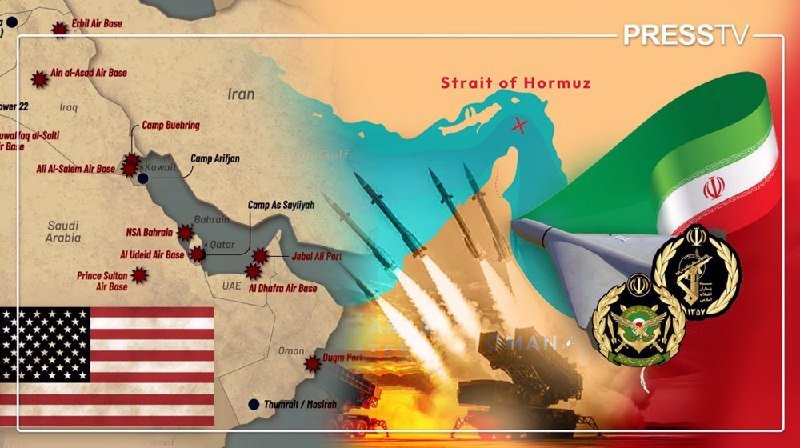
At 06:06 UTC on 21 July 2026, Iranian state outlet Mehr News carried footage and a one-line declaration that the IRGC Navy had been ordered to close the Strait of Hormuz. Within the hour, Al Alam Arabic was running two parallel readouts from the Hebrew daily Maariv: one calling the waterway "the greatest strategic achievement in history for Iran's benefit," the other describing it as "the American maritime failure that the Trump administration is trying to hide." Two translations of the same closure, each already weaponised before a single tanker has been turned back.
The framing matters because the strait carries roughly a fifth of the world's seaborne oil and almost a third of its LNG. A credible closure order, even one that is partly performative, reprices insurance, freight and forward curves in a matter of hours. The deeper question is not whether IRGC fast boats can physically seal a 21-mile-wide shipping lane; they cannot. The question is whether Washington, the Gulf monarchies and Beijing are willing to absorb the cost of testing that claim in real time.
The order, and what it actually says
Mehr's framing is unambiguous: the closure is being read as an assertion of Iranian sovereignty over a corridor that, in law, is shared international water under the 1982 UN Convention on the Law of the Sea. The Iranian announcement treats the strait less as a transit route than as a domestic security zone. According to the Mehr dispatch, the IRGC Navy is the implementing authority, not the regular Islamic Republic of Iran Navy, and the language of "order" rather than "recommendation" is doing real work. It places responsibility on a paramilitary chain of command that answers directly to the Supreme Leader, signalling that any challenge to the closure will be met outside the usual diplomatic channels.
For shipowners, the operative questions are concrete. Will insurance underwriters withdraw hull and war-risk cover from Hormuz transits, as they did during the 2019 tanker incidents? Will classification societies advise masters to divert around the Cape of Good Hope, adding roughly 3,500 nautical miles and ten to fourteen days to Gulf-bound deliveries? Those decisions are made in London and Oslo, not in Bandar Abbas, and they will arrive faster than any naval convoy.
The Israeli read, and why it is being amplified in Tehran
Maariv's twin characterisations are striking for their bluntness. The first, that Hormuz is "the greatest strategic achievement in history for Iran's benefit," is the kind of line an Israeli national-security columnist writes when he believes a strategic reversal has occurred. The second, that it is an "American maritime failure the Trump administration is trying to hide," is sharper still: it accuses Washington of having lost the ability to keep the sea lane open without conceding the political cost of doing so. Al Alam Arabic, an Iranian-aligned outlet, is content to relay both as breaking news, which tells you how Tehran wants the framing to travel.
The pattern is familiar. Iranian state media does not invent Israeli self-criticism; it curates and recirculates it. When Maariv frames Hormuz as an Israeli strategic loss, that is news the Iranian system can use without editing. The implication for Western readers is uncomfortable: the loudest English-language confirmation of Iranian leverage is currently coming through a Hebrew newspaper, via an Arabic channel operated from Beirut.
What the shipping math actually allows
A full physical closure of Hormuz is implausible. Iran's tools are anti-ship cruise missiles, mining, fast-attack craft, and the periodic seizure of commercial tankers. Each of those can move the price of Brent by several dollars a barrel on a bad day; none can hold the waterway closed for more than days at a time without provoking the kind of retaliation that Iran's leadership has spent a decade trying to avoid. The 2019 episode, in which the US Fifth Fleet escorted tankers through the strait after a series of limpet-mine attacks, is the operative precedent. The US Navy retains the capacity to do so again, with two carrier strike groups and a permanent headquarters in Bahrain.
What Iran can do, and what the closure order hints at, is something more interesting: it can raise the transaction cost of every barrel that transits the strait. War-risk premia spike. Charter parties are rewritten. Chinese refiners, who take roughly 90 percent of Iranian crude at a discount and would prefer Hormuz remain open, are placed in the awkward position of either publicly backing a closure that hurts their own supply, or quietly working the phones to keep the lane open. The announcement, in other words, may be less about sealing a waterway than about pricing a new risk into every cargo that crosses it.
What the next ten days will tell
Three near-term signals will show whether this is a posture or a policy. First, the Joint Maritime Information Centre, run by the US Navy in Manama, will issue a navigation advisory; its tone will indicate whether Washington treats the order as a threat or as rhetoric. Second, the war-risk insurance market, dominated by Lloyd's syndicates, will publish revised Hormuz transit premia within 48 hours; a doubling or more is the threshold at which most commercial operators divert. Third, Beijing's foreign ministry will be asked, again, whether a closure is in China's interest; the answer, in any language, will define whether the corridor is genuinely contested or merely being talked up.
The structural read is straightforward and rarely stated plainly in Western wire copy: the era in which the US Navy guarantees free passage through Hormuz as an automatic public good is over. What replaces it is a more expensive, more negotiated arrangement in which Gulf oil reaches East Asian refineries only after several governments have paid, in cash or concession, for the privilege. Iran's closure order is the clearest expression yet of that shift. Whether the strait physically closes or not, the insurance market, the shipping lanes and the diplomatic atmospherics have already moved.
This publication framed the closure as a pricing event rather than a military one, on the view that shipping and insurance markets will reach a verdict before any navy does.