The scout who became the story: a Greenwich indie turns the location department inside out
Greenwich Entertainment's trailer for 'The Scout' turns the unglamorous job of finding the room where a scene happens into the protagonist, and lands in the middle of a long-running argument about who gets to make movies about their own work.
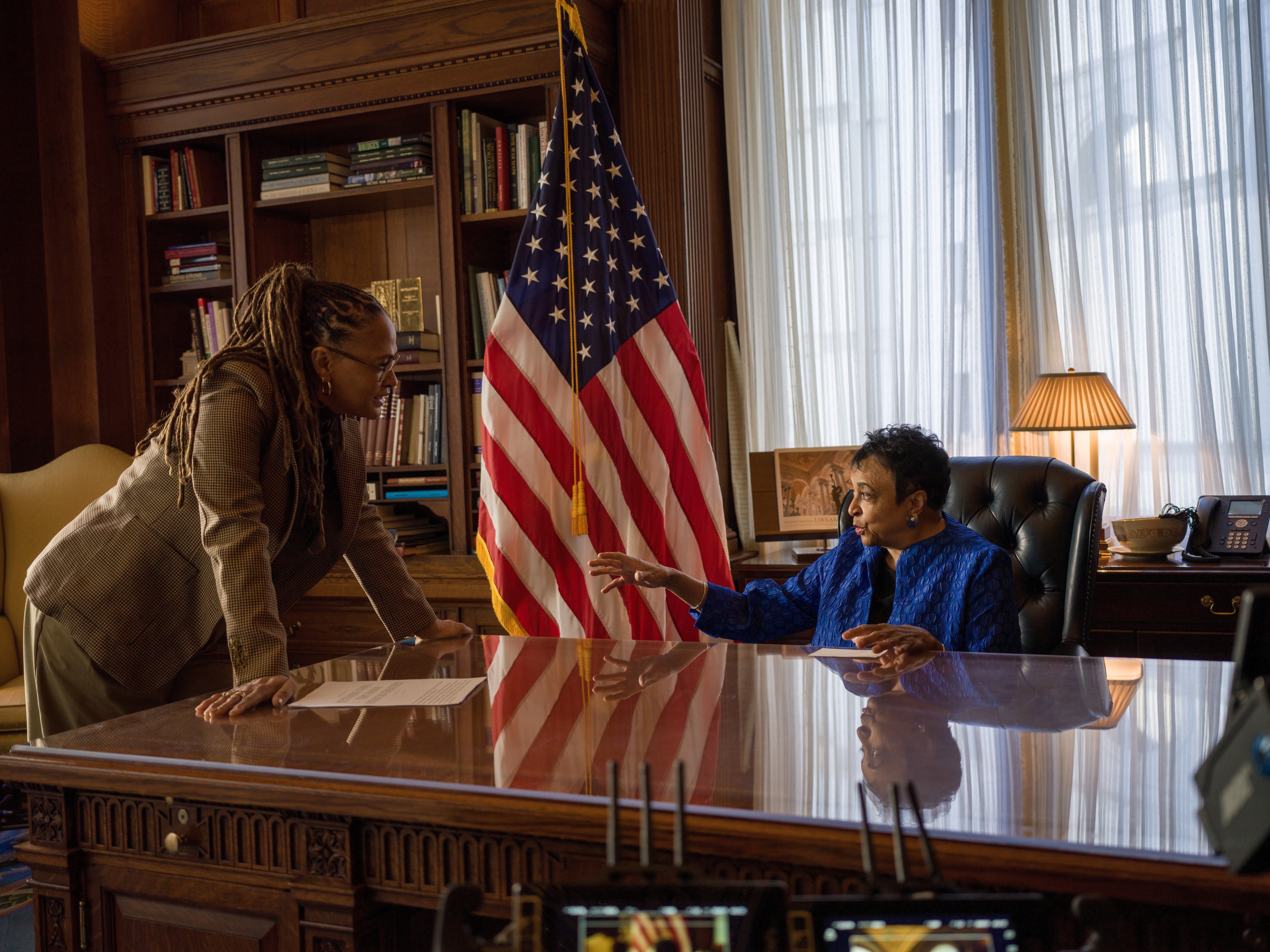
At 6:43 p.m. UTC on 20 July 2026, the indie-film trade channel First Showing posted the first public trailer for "The Scout," a New York-shot autobiographical feature from Greenwich Entertainment built, per the channel's release note, around the unglamorous job of finding the rooms where other people's movies get made. The lead, played by Mimi Davila, asks, on camera, "How'd you get this job?" It is the kind of question the location department rarely gets to answer about itself.
The film lands inside a small but stubborn tradition of labour-process cinema: pictures whose subject is the work, not the worker-as-hero in the inspirational sense. The genealogy runs from the assembly-line documentaries of the postwar period through the service-industry portraits of the early two-thousands indie wave. "The Scout" does not invent that lineage; it borrows it, and in borrowing makes a structural bet that an audience will sit still for an hour and a half inside someone else's logistics job.
The job under the lens
Location scouting, in the trade-press shorthand, is the discipline of translating a page of screenplay into a door, a hallway, a fire escape. The department is small, often one or two people on a low-budget shoot, swelling to a half-dozen on a network pilot. Its practitioners read scripts the way real-estate agents read briefs; its working hours are the producer's panic hours, with phone calls answered at 11 p.m. because a permit fell through and the next day's frame is now a courtyard that may or may not exist.
Greenwich's trailer frames the role as a kind of urban anthropology: Davila's character walks neighbourhoods, reads landlords, holds up a phone to a brick wall to test the light. None of that is invented for the film. The trade has, for at least two decades, been a quietly credentialed profession, with its own working codes and a loose oral curriculum passed between departments.
What the trailer foregrounds, and what gives the picture its edge, is the second-order labour embedded in the job. The scout does not just find; the scout negotiates, persuades, occasionally absorbs the bad temper of a director who has just learned that the only bar in the script does not have a back room. The work is invisible until it fails, at which point the failure is everyone else's.
A small studio, a small bet
Greenwich Entertainment is the kind of distributor that buys four to six titles a year and lives or dies on the festival-to-platform pipeline. Its slate has tilted, in recent seasons, toward adult dramas with a documentary backbone, the sort of film that gets a four-week theatrical run, a critic-circle qualifying window, and then a measured second life on a prestige streamer.
Releasing a trailer through a channel like First Showing, rather than a platform-owned hype cycle, is a deliberate choice. It signals a distributor targeting the trade press, the festival programmers, and the cinephile subscriber base rather than a general-audience algorithmic slot. For a film whose protagonist is a working professional in a niche trade, the audience is the audience that already knows the trade exists, or wants to.
Who gets to tell which work story
The more interesting question the film raises, even in trailer form, is authorisation. There is a long, not-always-flattering history of Hollywood depicting working-class and service-industry jobs: the waitress movie, the bartender movie, the strip-club-with-a-heart-of-gold. Most of them have been told by writers and directors outside the job, sometimes sympathetically, often with a sheen the practitioners themselves do not recognise.
"The Scout" is described by the distributor as autobiographical, a word that does a lot of work. If the film's lead is, as the trailer implies, drawn from the actual experience of the production's location team, then the picture sits inside a small but visible current of self-authored labour cinema: films made by people who have done the job, sometimes while still doing it, on weekends and after wrap.
The countervailing view, common in the trade press and worth airing, is that autobiographical labour cinema can flatten the very texture it claims to honour. The scout on screen is necessarily a scout off screen; the negotiations with a resistant landlord are real negotiations, but they have also been shaped into a scene. The risk is that the film turns a trade into a portrait, and the portrait into a pitch. Davila's trailer question, "How'd you get this job?", reads in that light as both an interview and a defence.
What to watch
The signal moments for "The Scout" will not be the trailer metrics. They will be the festival selection in the autumn window, the qualifying run that determines critic-circle eligibility, and, most diagnostically, the early reviews from the trade and craft press. A film about a department that trade papers cover as a department, not as a personality story, will be read first by people who know whether the brick walls and the light and the permits feel right.
If the picture delivers on its trailer promise, it will join a thin shelf: labour-process films whose makers came up through the job, told the story from the inside, and resisted the temptation to make the work a backdrop for a more conventional arc. If it does not, it will be filed alongside the long list of well-intentioned workplace dramas whose detail checked out and whose drama did not.
The release note offers no release date beyond "forthcoming." That, too, is part of the genre.
Desk note: Monexus framed this as a labour-process story first and a marketing story second, because the trailer's question is a labour question. The wire will likely cover the casting; we read the picture as a bet that the location department can carry a feature on its own.
Wire provenance
This editorial synthesis draws on the following public wire/social posts:
- https://t.me/s/firstshowing
- https://en.wikipedia.org/wiki/Greenwich_Entertainment
- https://en.wikipedia.org/wiki/Location_scouting
- https://en.wikipedia.org/wiki/Indie_film