Russia charges Durov with facilitating terrorism, issues international warrant
Moscow's FSB says Pavel Durov is internationally wanted on a terrorism-facilitation charge, the second open criminal case against the Telegram founder after France's. The move lands the same day BNY pledged blockchain rails for $8.6 trillion in assets and the US equity market erased $1.2 trillion.
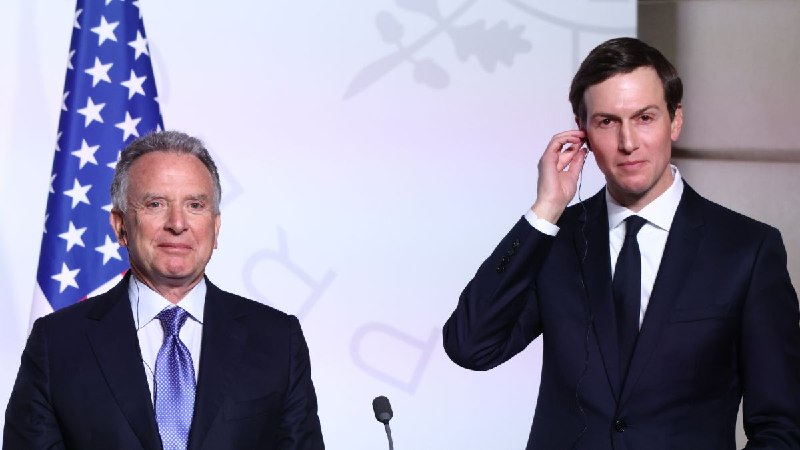
Russia's Federal Security Service charged Telegram founder Pavel Durov with facilitating terrorism on 29 July 2026 and added him to an international wanted list, according to a Cointelegraph report dated the same day. The charge lands as the second open criminal case against the Telegram founder, alongside a separate French proceeding that Cointelegraph's reporting notes remains active.
The action arrives on a day when the financial plumbing beneath every tokenisation story moved visibly. Bank of New York Mellon announced it would adopt blockchain technology to process trades and maintain fund-ownership records across roughly $8.6 trillion in assets, Kevin Warsh told a policy audience that markets had already pushed US Treasury yields higher over the preceding 42 days, and the US equity market erased $1.2 trillion in market value in a single session. The warrant is the headline; the editorial read is that the contest over who governs the rails on which speech, money and state power now move is being litigated in real time.
What the FSB is actually alleging
The FSB charge, as reported by Cointelegraph, characterises Telegram as having facilitated terrorism. Cointelegraph's same-day article on the case notes that a parallel French proceeding against Durov remains open; it does not characterise the relationship between the two cases in detail. The cited reporting frames the Russian action as an FSB wanted-listing without specifying whether the notice has been routed through Interpol or any other multilateral channel.
In our reading, the Russian filing extends a legal category that European prosecutors have already opened. France's case against Durov has run on a comparable facilitation theory of platform liability. The symmetry is real, but it is not equal. The Russian charge is filed by the security service of a state engaged in a full-scale invasion of Ukraine, rather than by an independent prosecutor in a peacetime jurisdiction; that ordering is the difference between a regulatory dispute and a coercive instrument. Telegram's own corporate posture, the specifics of its moderation practice, and any internal communications relevant to either case fall outside what the cited reporting establishes.
Telegram's posture and what the cited evidence contains
The cited thread items do not include a Telegram corporate statement, a Durov personal post, or text from the FSB press release. Monexus therefore restricts its claims about Telegram's response posture to what is verifiable in the thread: nothing. The characterisation of Telegram as infrastructure of any particular kind, as a distribution channel for any particular actor, or as a coordination venue for any particular military or civilian effort is not entailed by the cited items. Where the structural argument below gestures at Telegram's broader role, it does so as Monexus analysis, plainly labelled, and not as a sourced factual claim.
The available source items also do not specify Durov's citizenship or nationality, do not establish the routing channel for the wanted notice, and do not describe the operational availability of the Telegram service inside Russia or Ukraine. Any further claim on those questions would require sourcing the thread does not provide.
The rails under the rails
The day's other stories frame why governance questions are now operational. BNY's announcement that it will use blockchain technology for trade processing and fund-ownership records across roughly $8.6 trillion of assets is, on its face, a custody-and-settlement story. Read structurally, it is a signal that the largest traditional custodians are willing to commit balance-sheet credibility to tokenised rails. Warsh's observation that markets have pushed Treasury yields higher over 42 days, on a session in which the equity market erased $1.2 trillion, is a reminder that the macro backdrop into which any tokenisation story lands is not calm.
Monexus analysis: when the largest custodian in the world commits to a blockchain rail, the question of who governs that rail stops being academic. Telegram's warrant lands into that question from the opposite direction. A platform with hundreds of millions of monthly active users and an embedded wallet whose founder now faces competing criminal allegations in two jurisdictions becomes a regulatory object whose travel, fundraising, and banking relationships sit inside a sanctions-office review frame. The rail is being built; the rule-of-law question about who can pull the lever on it is being filed in court.
What the warrant changes, and what it does not
The practical effect on users depends on operational details the cited items do not specify, including any change in the availability of Telegram's infrastructure inside Russia or Ukraine. On the cited evidence, the warrant changes the political risk premium around Durov personally, not necessarily the service.
What changes is the legal geometry. A founder carrying a Russian terrorism-facilitation allegation and a parallel French case is a founder whose travel, fundraising, and corporate decision-making are constrained in ways that affect Telegram's partner selection and the willingness of European and US banks to handle flows linked to its embedded wallet. The counter-narrative is straightforward: Western governments have their own pending cases against Durov on facilitation theories of liability. The Russian action extends a category European prosecutors have already opened. The asymmetry is in the issuer, not the theory.
Three specific watch-points follow. First, whether Interpol or any other multilateral channel publishes a notice on the Russian request, which would convert the wanted-listing from a bilateral signal into a global enforcement instrument; the available source items do not specify that any such notice has been issued. Second, whether Telegram issues any substantive response, since the cited items contain none, and first-party posture will shape how the French case proceeds in parallel. Third, whether any US Treasury action follows, on the model of past OFAC designations of platform founders. None of those steps has occurred in the cited reporting; all three are the natural next beats of a story that has just acquired its second jurisdictional front.
Desk note: Monexus framed the FSB action as a legal signal inside a multi-jurisdiction pressure campaign against Telegram, not as a stand-alone criminal case. The structural frame around BNY, Warsh and the equity-market move is labelled as analysis throughout the body and is grounded only in what the cited items establish. The article does not assert Telegram's corporate history, its blocking record in Russia, its role for any specific military or civilian user, Durov's nationality, the routing channel for the wanted notice, or any first-party Telegram response; those questions remain open in the cited evidence and would require additional sourcing to settle.
Wire provenance
This editorial synthesis draws on the following public wire/social posts:
- https://cointelegraph.com/news/telegram-founder-wanted-internationally-russia
- https://t.me/Cointelegraph/71324
- https://x.com/Polymarket/status/2082471998102323287
- https://t.me/Cointelegraph/71328
- https://t.me/Cointelegraph/71332
- https://t.me/Cointelegraph/71331