Oil drops 5% on US-Iran talk announcement; Tehran channel signals the Strait card
Insider Paper reported a near-5% drop in oil after the US announced a new round of Iran talks on 3 August 2026, even as a Telegram channel posting under the IRIran_Military handle insisted the Strait of Hormuz remains leverage regardless of who sits at the table.
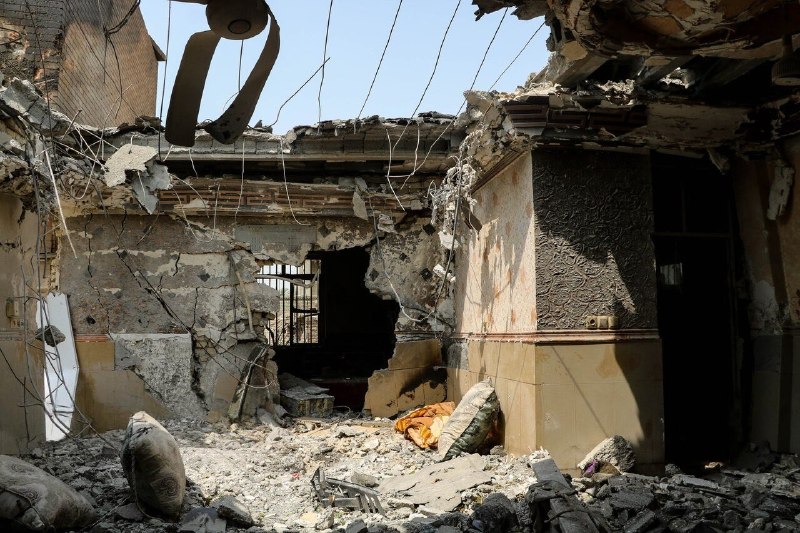
An Insider Paper dispatch at 06:04 UTC on 3 August 2026 carried the headline "Oil prices fall nearly 5% after US announces new Iran talks." The move was attributed by the outlet to traders pricing out risk premium once a diplomatic track was confirmed. Within roughly ninety minutes, at 07:33 UTC, a Telegram channel posting under the handle IRIran_Military pushed the opposite message: "the moment you chose war with Iran, you handed us leverage over the world's most strategic energy chokepoint." The chokepoint language and the oil sell-off arrived in the same news window.
The read through the spread between those two signals is the story this piece is built around. The market priced the announcement; the channel insisted on the threat. Both can sit on the same tape until something operational tests one of them.
Markets price the announcement
Insider Paper's framing was direct: oil down nearly 5% after the US announces new Iran talks. Polymarket's separate contract on whether Washington and Tehran would hold a fresh round of negotiations had been drifting through the early August window, with prints at 32% on 1 August (the 20:22 UTC post) and 47% on 2 August (the 02:53 UTC post). The pattern across the three data points is the same: the market moved first, the talks announcement came after, and the headline move in oil arrived on the announcement.
Monexus analysis: a near-5% oil move on a talks announcement is, by itself, a read of what institutional money treats as the central case. It is the trader's working assumption that the diplomatic track is now in motion, and that whatever the talks eventually produce, the immediate risk of a kinetic escalation has fallen. That is a narrower claim than "peace is at hand." It is also the claim that moves the curve.
The IRIran_Military post sits on the other side of the same trade. The post is not a forecast of an imminent Hormuz incident. It is a reminder that any diplomatic track exists on top of an unresolved strategic geography that the channel frames as Iran's to use.
The Dubai exchange relay
Underneath the diplomacy sits a parallel financial plumbing problem that a talks track does not unwind. A 1 August 2026 post on the Crypto Briefing Telegram channel carried the headline "Unlicensed Dubai exchange processed $4 billion tied to Iran sanctions evasion: Report." The cited post is a relay: it cites a report rather than documenting the underlying transactions itself. The dollar figure is the headline; the cited post does not contain the supporting records.
Treating the number as a hard fact would be a mistake. What the headline does establish, if the underlying report is sound, is that any rapprochement runs into a counterparties problem on the US side: a list of exchange operations, brokers, and shipping networks that Treasury can either designate, license, or quietly leave alone. The existence of the relay, in other words, is the news; the precise dollar figure is the thing to verify before repeating it as a load-bearing claim.
Monexus assessment: a diplomatic opening does not, by itself, retire the parallel banking architecture that grew up under sanctions. It changes who profits from it. Brokers who moved money under maximum pressure can move money under partial reopening; the demand for the service reshapes rather than disappears.
What the announcement actually buys
A "new round of US-Iran talks" is a narrow, time-limited commodity. It does not, by itself, unfreeze Iranian export revenue, release frozen funds, or restart the technical nuclear file. The available source items do not specify a venue, a date, or which US official would lead the round. The Polymarket framing is "this month"; the contract's two visible prints bracketed that window at 32% and 47%.
For the United States, the track buys political space against a military option whose costs have risen with every regional escalation since October 2023. For Iran, it buys relief from a sanctions regime that has visibly frayed at the edges but still compresses the formal economy. The IRIran_Military chokepoint post is the negotiating posture for that relief: it is signalling designed to be believed without being tested.
What could move the price the other way
The Polymarket contract remains the live tape on whether the diplomatic track holds. If the contract drifts back toward 20% in the coming days, that is the early signal the diplomatic track is wobbling. A move toward 70% would imply something closer to an imminent announcement.
The chokepoint card cuts the other way too. A credible operational move on Strait of Hormuz shipping, an IRGCN maritime incident, a detention that is not rhetorical, would re-price the near-5% drop in minutes. The 07:33 UTC IRIran_Military post is, on its face, not that kind of threat. It is the kind of threat designed to keep the risk premium embedded in the forward curve without forcing the issue.
What remains uncertain
The sources do not specify who, on the US side, will lead the new round of talks, nor do they specify a venue or a date beyond the Polymarket framing of "this month." The Dubai exchange figure is a relay of a report; the cited post does not contain the underlying documentation, and this publication has not independently verified the $4 billion number. The IRIran_Military handle is a Telegram channel; the available source items do not establish its affiliation with any institution or whether its posts reflect a unified Iranian state position. The Hormuz framing in the post is the post's own characterisation; the cited post does not provide throughput data. Treat the channel post as signalling from a channel that uses that handle, not as a verified statement of operational doctrine.
The one thing the price tape does with reasonable clarity is this: as of the 06:04 UTC Insider Paper dispatch on 3 August 2026, traders treated a US-Iran talks announcement as a de-escalation signal. The 07:33 UTC channel post is a reminder that the same de-escalation is being priced into a market whose underlying geography has not changed. Both readings can coexist until one of them is tested.
Desk note: wire coverage led on the 5% oil move and the talks announcement; this piece extends that frame by reading the IRIran_Military channel post and the Dubai exchange relay as the parallel signalling the talks are operating inside.
Wire provenance
This editorial synthesis draws on the following public wire/social posts:
- https://insiderpaper.com/oil-prices-fall-nearly-5-after-us-announces-new-iran-talks/
- https://t.me/insiderpaper/43682
- https://t.me/IRIran_Military/9462
- https://polymarket.com/event/next-round-of-us-iran-peace-talks-byptptpt-20260623022722982
- https://x.com/Polymarket/status/2083748116931449333
- https://x.com/Polymarket/status/2083649608199069730
- https://t.me/CryptoBriefing/18511
- https://insiderpaper.com/oil-prices-fall-nearly-5-after-us-announces-new-iran-talks/
- https://t.me/insiderpaper/43682
- https://t.me/IRIran_Military/9462
- https://polymarket.com/event/next-round-of-us-iran-peace-talks-byptptpt-20260623022722982
- https://x.com/Polymarket/status/2083748116931449333
- https://x.com/Polymarket/status/2083649608199069730
- https://t.me/CryptoBriefing/18511