Saylor's personal stack stays put as Strategy prints and trades its own
The executive chairman insists he has never sold a satoshi of his own bitcoin, while the public company he chairs sells bitcoin, holds its preferred dividend, and watches the 200-week moving average.
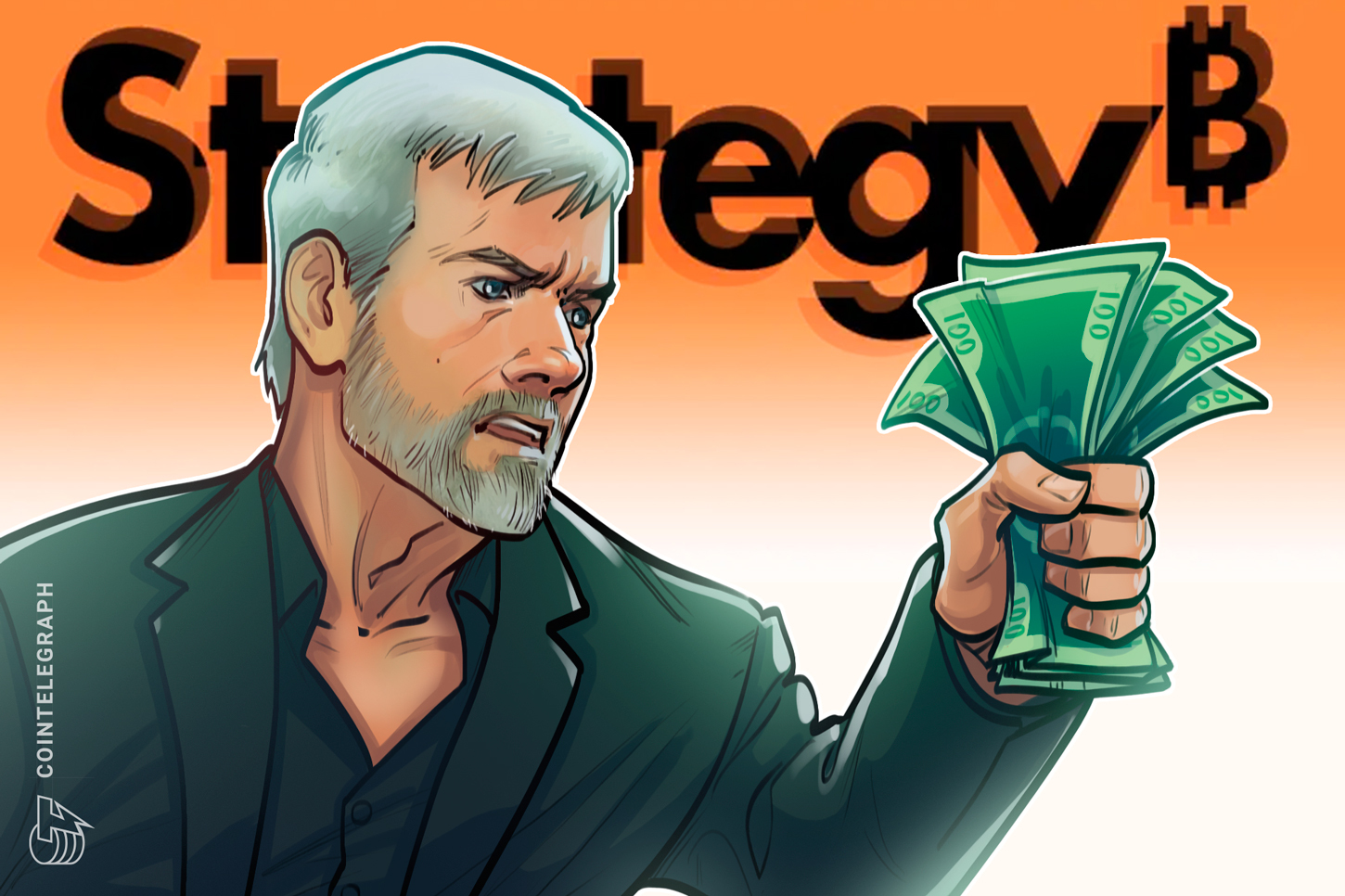
Strategy sold 1,638 bitcoin on 3 August 2026 to fund dividend payments and buy back shares of its STRC preferred stock, the company's second-largest bitcoin disposition of the year, Cointelegraph reported the same day [1]. Hours later, in comments relayed across trading channels, executive chairman Michael Saylor insisted the bitcoin he holds in his own name has never moved. "Not one satoshi," he said, according to a post by the prediction-market account Polymarket on X [2]. "Strategy is a public company, not my wallet," Saylor added in a separate statement carried by WatcherGuru [3].
The juxtaposition is the story. The company that turned a corporate balance sheet into the largest publicly listed bitcoin proxy is now an active seller of the underlying asset, even as the figure most associated with the trade insists his personal exposure is untouched. Both statements can be true. The cleaner reading is that they were designed to be: one wallet is a fortress, the other is working capital.
The corporate wallet is open for business
The 1,638-coin sale was not an isolated move. On 1 August, Strategy's board authorised the company to sell up to $5 billion worth of bitcoin, according to filings relayed by WatcherGuru and Polymarket the same afternoon [4][5]. The size of that envelope matters: it is a programmatic authorisation, not a panic disposal, and it gives the company months of optionality at current prices without returning to shareholders for new permission.
The preferred-stock side tells the second half of the story. Cointelegraph noted that the company held the STRC dividend at 12% in early August rather than lifting it, breaking a pattern of bumping the rate when the preferred traded materially below par [6]. Holding the line on the dividend while selling spot bitcoin is a deliberate arithmetic: the preferred is the funding leg, and spot sales are the backstop when the preferred's price drifts. The Cointelegraph dispatch framed the 1,638-coin sale in exactly those terms, as the second-largest of the year and explicitly tied to STRC redemptions [1].
The personal wallet is a separate instrument
Saylor's personal disclosure does what founder assurances usually do in a market that has learned to discount them: it narrows the question. By separating "my bitcoin" from "the company's bitcoin," he removes one of the most corrosive tail risks from the equity story, the suspicion that the executive chairman is the informed seller. The Polymarket post quotes him as saying he has never sold any of his personal bitcoin, "not one satoshi" [2]. WatcherGuru's relay carries the same message with the public-company framing [3].
That is a credibility claim, not a verifiable balance-sheet line. There is no on-chain proof available in the cited posts of Saylor's personal addresses, and the available source items do not specify any independent verification. But the structural function is clear. Strategy has spent five years convincing investors that the corporate treasury is a vehicle for owning bitcoin, not trading it. A working-capital selling programme at the corporate level does not threaten that thesis; an executive chairman dumping personal coins would.
The 200-week line is the floor everyone is watching
CoinDesk reported on 3 August that Strategy is "now closely monitoring bitcoin's 200-week moving average, a key long-term support level that the cryptocurrency has historically respected" [7]. The 200-week has functioned, across cycles, as the line separating deep bear markets from structural breakdowns. That Strategy is publicly tracking it is itself a signal: the corporate-treasury trade was always pitched as a long-duration bet, and the company's willingness to name the level where it would act shows how thin the margin between conviction and capitulation has become.
The same day's price action underlines the point. WatcherGuru posted that bitcoin had reclaimed $64,000 [8]. A reclaim of round-number resistance during a window in which the largest corporate holder is openly selling is a market that is pricing in supply, not flinching from it.
What this is, and what it isn't
There is a counter-reading worth airing: that a company issuing preferred stock at 12%, buying back that preferred with bitcoin sales, and publicly watching the 200-week moving average is not a treasury story any more, it is a yield story with a bitcoin-coloured balance sheet. Monexus analysis: the preferred is now the product. Bitcoin is the collateral. Saylor's personal stack, held apart, is the marketing.
That reading does not require anyone to be acting in bad faith. It is simply what the cash flows say. The Clarity Act push, Saylor's 31 July call for the US Senate to pass the market-structure bill, carried by WatcherGuru [9], fits the same picture: the regulatory ask is for cleaner rails under the instrument, not for the underlying asset to do anything different.
The uncertainty worth naming is short. The cited posts do not specify how much of the $5 billion authorisation Strategy has drawn down, whether the 1,638-coin sale came from that envelope or from earlier filings, or at what average price the company is currently selling. The preferred's behaviour over the next two quarterly windows will settle the question of whether the dividend hold was confidence or constraint.
Desk note: Monexus framed this as a separation of wallets, not a contradiction. The corporate vehicle and the founder's personal stack now speak with different voices, and reading them as one story misreads both.
Wire provenance
This editorial synthesis draws on the following public wire/social posts:
- https://cointelegraph.com/news/strategy-sells-bitcoin-dividend-strc
- https://x.com/Polymarket/status/2084318725449150585
- https://t.me/watcherguru/14531
- https://t.me/watcherguru/14503
- https://x.com/Polymarket/status/2083577183633604808
- https://www.coindesk.com/markets/2026/08/01/strategy-holds-strc-dividend-at-12
- https://www.coindesk.com/markets/2026/08/03/michael-saylor-s-strategy-is-now-tracking-bitcoin-s-200-week-moving-average
- https://t.me/watcherguru/14533
- https://t.me/watcherguru/14497
- https://cointelegraph.com/news/strategy-sells-bitcoin-dividend-strc
- https://x.com/Polymarket/status/2084318725449150585
- https://t.me/watcherguru/14531
- https://t.me/watcherguru/14503
- https://x.com/Polymarket/status/2083577183633604808
- https://www.coindesk.com/markets/2026/08/01/strategy-holds-strc-dividend-at-12
- https://www.coindesk.com/markets/2026/08/03/michael-saylor-s-strategy-is-now-tracking-bitcoin-s-200-week-moving-average
- https://t.me/watcherguru/14533
- https://t.me/watcherguru/14497