Bitcoin Holds $64K as Hormuz Reopening Hopes Lift Markets, But ING Warns the Long-Term Trend Is Bearish
Bitcoin coiled near $64,000 on 4 August 2026 as reports that Iran may reopen the Strait of Hormuz pushed the S&P 500 to a fresh record. ING disagrees with the relief rally, calling the long-term trend bearish.
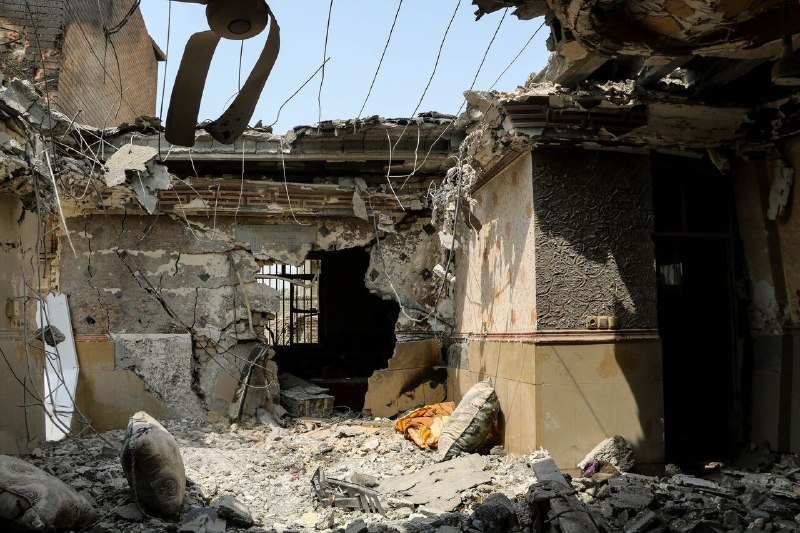
Bitcoin traded in a tight band around $64,000 on the afternoon of 4 August 2026, with the asset's direction effectively outsourced to a strip of water between Iran and Oman. According to Cointelegraph's markets desk, the coiled price action coincided with a record print on the S&P 500, which it valued at a $70 trillion market capitalisation, as traders positioned for a possible reopening of the Strait of Hormuz to commercial oil traffic.
The setup is unusual: a Bitcoin tape held hostage to a tanker lane. Crypto markets have spent two years digesting post-ETF flows, the halving cycle and a procession of US regulatory resets; now the marginal buyer is a commodity desk watching satellite imagery of the Persian Gulf. The read this publication takes from the tape is that the digital-asset complex has become a second-order proxy for the physical-energy complex, with a verdict on Hormuz functioning as a real-time risk-on, risk-off switch.
A chokepoint with a price tag
The proximate trigger was a report, relayed via Unusual Whales and attributed to Reuters, that Iran is considering allowing European nations to remove mines from the Strait of Hormuz as part of a potential shipping arrangement. Cointelegraph's reporting on the same day framed the diplomatic movement as the catalyst for the equity record. Polymarket's account of the news restated the European mine-clearance angle as the headline of a potential deal.
The terms Iran is reportedly demanding, per a Unusual Whales breaking-news post, are not modest: transit fees on commercial shipping, security guarantees against future attacks, an end to the US naval blockade, and what the post framed as further conditions. That list reads less like a confidence-building measure and more like a draft of a settlement. The US side, by contrast, has signalled urgency. US Treasury Secretary Scott Bessent told reporters, per Polymarket, that Washington and Tehran could reach a deal "today or tomorrow" to reopen the strait. A separate Polymarket-cited Reuters dispatch added a more sobering input: the US has used "virtually all" of its long-range precision missiles during the Iran operation, a one-line admission that reframes the entire negotiation as the depletion of a finite weapons inventory meeting an unbudgeable geographic fact.
The ING dissent
The relief rally has not won unanimous assent. ING's analysis, surfaced by Unusual Whales, argues that Bitcoin's long-term trend remains bearish. The view is notable for what it ignores: ING is not contesting the spot print or the Hormuz headline, it is contesting the conclusion traders are drawing from them. In ING's reading, the current squeeze higher is a positioning event inside a still-broader downtrend, not a regime change. That distinction matters because the conviction behind the rally, judging from the equity leg, is precisely that the trend has changed.
Two readings of the same tape are now in open conflict. The bullish case, implicit in the S&P 500 record, is that a reopened Hormuz re-anchors global trade on its pre-war baseline, oil normalises, the inflation impulse fades and risk assets, including Bitcoin, can re-rate on a softer discount rate. The bearish case, as ING frames it, is that the structural flows around Bitcoin remain unfavourable even if the tanker lane reopens on schedule. Monexus finds that both are defensible from the same data, which is precisely why the market is coiling rather than trending.
The weapons inventory nobody wants to discuss
The Reuters detail about US long-range precision munitions is the load-bearing fact of the afternoon, and it is not being treated as such in the equity tape. A force that has expended "virtually all" of its deep-strike inventory in one theatre is, by construction, a force whose deterrent value in a second theatre has been spent down. That has consequences that extend well past Iran. Gulf shipping insurance, Red Sea routing, Korean peninsula signalling and contingencies in the western Pacific all price, at the margin, off the same shelf of missiles. If Hormuz reopens because the US inventory is depleted, the diplomatic outcome has been purchased with a depreciating balance sheet of future options. Polymarket's market on a quantum event breaking Bitcoin by the end of the following year, which Polymarket posted at a 12% probability on 3 August 2026, is a reminder that there are other long-tail risks the tape is not currently discounting.
The Iran file is therefore the energy desk's problem, the equity desk's problem and the crypto desk's problem simultaneously. Each desk reads the same newsprint and prices a different tail. None of them can be right in isolation. The structural pattern, stated plainly: an incumbent power consuming deep magazines faster than it is producing them, a regional power monetising geography because it cannot match inventory, and a digital-asset complex repricing against all of the above in real time.
What to watch into the close of the week
Three signals will determine whether the 4 August print is a turn or a tease. First, whether the European mine-clearance concession is matched by a formal EU naval tasking, or remains an Iranian trial balloon; Reuters reporting on that question will set the credibility of the deal. Second, whether the US side puts a number on "virtually all" of its precision-missile inventory, and whether that number is consistent with the public budget posture. Third, whether ING's bearish call gets traction with the flow desks, or fades into a single-analyst footnote as Bitcoin holds the $64,000 line into the next macro print.
The honest reading of 4 August 2026 is that the market is not yet committing. The chokepoint can stay closed with a deal, and a closed chokepoint with a deal is functionally open. That ambiguity is what is producing the coiled tape on Bitcoin and the record print on the S&P 500 at the same moment. Whoever resolves the ambiguity first, the Iranian side, the US Treasury, or the European mine-clearance flotilla, will also resolve the direction of risk for the rest of the week.
Monexus framed this as a macro tape story driven by a Hormuz settlement, not as a stand-alone crypto rally. The bearish ING line and the long-tail quantum-break market were deliberately surfaced alongside the equity record so the article reads as the day actually traded, rather than as a victory lap.
Wire provenance
This editorial synthesis draws on the following public wire/social posts:
- https://cointelegraph.com/markets/bitcoin-coils-as-hormuz-reopening-time-line-sends-sp-500-to-new-record-high
- https://x.com/unusual_whales/status/2084639743501914337
- https://x.com/unusual_whales/status/2084710207658344458
- https://x.com/unusual_whales/status/2084695359838646318
- https://x.com/Polymarket/status/2084667727445111238
- https://x.com/Polymarket/status/2084655850392600792
- https://x.com/Polymarket/status/2084633006992441777
- https://x.com/Polymarket/status/2084355101162877113
- https://cointelegraph.com/markets/bitcoin-coils-as-hormuz-reopening-time-line-sends-sp-500-to-new-record-high
- https://x.com/unusual_whales/status/2084639743501914337
- https://x.com/unusual_whales/status/2084710207658344458
- https://x.com/unusual_whales/status/2084695359838646318
- https://x.com/Polymarket/status/2084667727445111238
- https://x.com/Polymarket/status/2084655850392600792
- https://x.com/Polymarket/status/2084633006992441777
- https://x.com/Polymarket/status/2084355101162877113