Hormuz deal claim meets a strike: the gap between Trump's announcement and the water
Trump asserted that participating entities had settled on the parameters of a potential framework providing for the immediate reopening of the Strait of Hormuz. Hours later, an unknown projectile hit a merchant vessel near Oman's coast and one crew member went missing.
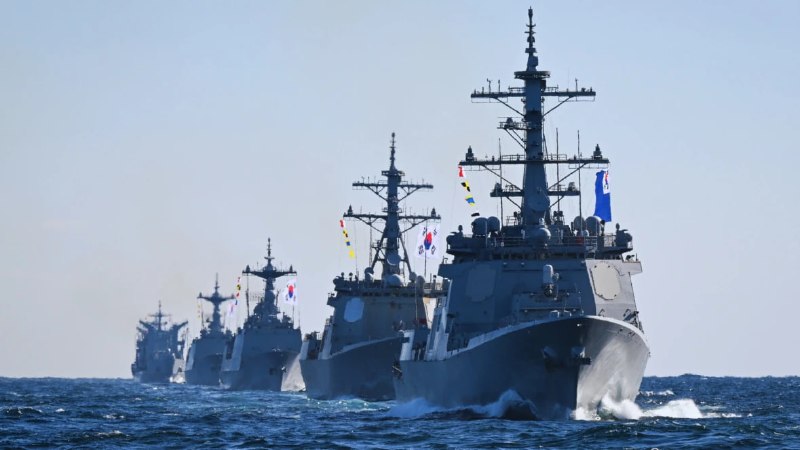
At 01:58 UTC on 4 August 2026, Donald Trump asserted that participating entities had settled on the parameters of a potential framework, which he stated provided for the immediate, complete, and total reopening of the Strait of Hormuz. Hours later, at 09:29 UTC the same day, an unknown projectile hit a ship near Oman's coast in the Strait of Hormuz, leading the crew to abandon the vessel and leaving one person missing. The sequencing is the story: a presidential assertion of restored freedom of navigation, followed within the same day by an incident that does not look like restored freedom of navigation.
The pattern this administration has been testing in public is the same one on display here. A headline-making claim on a marquee venue is followed by an operational reality on the water that complicates the claim. Monexus assessment: the gap between the announcement and the chart has been wide enough, often enough, to move markets. This time it has also put a seafarer in the water in one of the world's most sensitive corridors.
The Hormuz framework, as described
Trump's remarks, carried by the markets account Unusual Whales at 01:58 UTC on 4 August, did not name the counterparties or the document. The characterisation was the headline: a framework providing for the immediate, complete, and total reopening of the strait. Separately, Polymarket's account reported on 3 August 2026 at 15:40 UTC that Trump had announced the Strait of Hormuz was now "completely controlled" by the US Navy. Two claims from the same president, addressing the same chokepoint, in slightly different terms. One is a diplomatic outcome; the other is a force posture. Neither has been independently verified in the source items, and the framework's text has not been published.
Iran's response, as relayed in the Unusual Whales reporting, is a denial of a deal in the terms Trump described. The available thread evidence does not specify whether Tehran is contesting the existence of any framework, a specific variant of one, or the substance of a particular arrangement. Monexus assessment: read narrowly against the source items, Iran's position is a denial of the framework as characterised, not necessarily a denial of every possible negotiation track. The thread evidence alone cannot adjudicate which reading the Iranian statement carries. Without a published document, a fuller Iranian acknowledgement, or an Oman or GCC readout, the framework lives in the gap between Trump's words and the terms Tehran is refusing.
The strike near Oman
At 09:29 UTC on 4 August, the Jerusalem Post's Telegram channel reported that a ship had been hit by an unknown projectile near Oman's coast in the Strait of Hormuz, with the crew abandoning the vessel and one person missing. The report gives no flag, no ownership, no cargo, and no attribution of fire. In a chokepoint that handles a substantial share of seaborne oil flows, an unattributed projectile strike on a merchant vessel is the kind of incident insurance underwriters, naval commanders, and oil traders read as a leading indicator.
The timing matters. The strike landed the same day as the framework claim. The crew's decision to abandon the vessel rather than continue is itself a data point: in merchant shipping, crews ride out superficial damage and only abandon ship when the assessment crosses a line. The available source items do not specify what that assessment was.
The Intel template, sitting in the background
The Hormuz announcement lands against a longer-running shift in how the White House has been pricing its strategic interventions. Unusual Whales flagged on 3 August that the administration has spent months pointing to the Intel deal as a template for how Washington could take equity in strategically important companies instead of just writing checks. The Intel arrangement is not a Hormuz precedent in the legal sense, but it is the model the administration has been selling to markets: the United States as a shareholder, not just a customer, in the infrastructure of national priority.
The Hormuz announcement can be read in that register. A framework that reopens a corridor the US Navy already patrols is, in this telling, the diplomatic equivalent of an equity injection: a claim on the future of a strategic asset, priced into markets before the operational details catch up. Whether the pricing is right depends on the operational details, and the operational details as of 4 August include a strike near Oman's coast and a denial from Tehran of the framework as characterised.
What this looks like from the trading floor
Markets do not need the document to trade the announcement. Polymarket's account was already converting presidential language into a contract specification the day before the framework remarks. The structure is built for that. A retail-accessible venue can reprice a chokepoint on the strength of a presidential sentence, and a subsequent strike can reprice it again. The order of the two moves across 3 and 4 August is the news.
Monexus assessment: the administration's communication strategy is increasingly priced into the spread between announcement and execution. That spread is where the risk now sits, for tanker operators, for oil refiners downstream, and for the seafarers who actually move through the strait. The framework claim, if it holds, validates the template. If it does not hold, the template loses its cleanest test case and the strike near Oman becomes the lead rather than the footnote.
The near-term watchpoints are four. First, a published text or joint readout from the framework. Second, an Iranian official statement clarifying the scope of the denial on the record. Third, identification of the struck vessel, its flag, and an attribution of fire. Fourth, the next Polymarket print on Hormuz-related contracts, which will be the cleanest market signal of whether traders believe the announcement or the strike.
The available source items do not specify the framework's parties, terms, or text; the struck vessel's name, flag, or ownership; the identity of the projectile; or the full text of the Iranian denial. This article has not independently established those details.
Wire provenance
This editorial synthesis draws on the following public wire/social posts:
- https://unusualwhales.com/news/iran-denies-trump-strait-of-hormuz-deal
- https://x.com/unusual_whales/status/2084458801013411914
- https://unusualwhales.com/news/trump-intel-stake-75-billion-country
- https://x.com/unusual_whales/status/2084398403203613135
- https://x.com/Polymarket/status/2084303287176597760
- https://t.me/The_Jerusalem_Post/16904
- https://unusualwhales.com/news/iran-denies-trump-strait-of-hormuz-deal
- https://x.com/unusual_whales/status/2084458801013411914
- https://unusualwhales.com/news/trump-intel-stake-75-billion-country
- https://x.com/unusual_whales/status/2084398403203613135
- https://x.com/Polymarket/status/2084303287176597760
- https://t.me/The_Jerusalem_Post/16904