Trump's Hormuz deadline, the DOJ's Trump settlement reversal, and 75 court losses: a single news day, three competing claims on executive power
On 4 August 2026, the President claimed an immediate, total reopening of the Strait of Hormuz, his acting attorney general unwound part of a Trump-era settlement to satisfy senators, and federal judges ruled in 75 cases that the administration has stifled the speech it promised to protect.
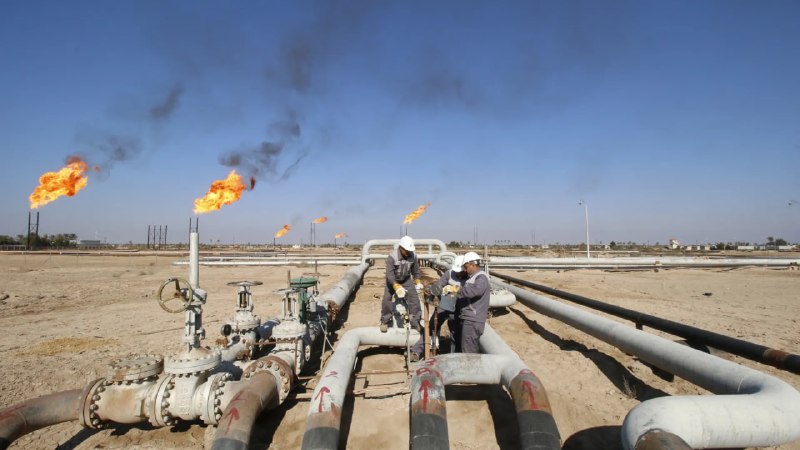
At 01:58 UTC on 4 August 2026, a post on Unusual Whales carried a Trump statement asserting that participating entities had "settled on the parameters of a potential framework" providing for the "immediate, complete, and total reopening of the Strait of Hormuz." Within hours, Iran publicly denied that any such deal had been agreed, according to Unusual Whales' own coverage of the Iranian response. The contradiction landed the same morning that the acting attorney general formally rescinded parts of a settlement his own department had reached with Trump, and a Reuters tally placed the administration's free-speech record at seventy-five adverse judicial rulings. Three claims about the scope of executive power, made within a single news cycle, exposed how the domestic and the geopolitical are now running on the same clock.
This publication reads the day's bundle as a single object. Each item, on its own, is a routine dispute: a deadline that Tehran rejected, a settlement that senators refused to leave alone, a running litigation count. Together they describe a White House that is simultaneously promising a maximalist foreign-policy outcome, narrowing the legal perimeter of its own past conduct, and losing courtroom arguments about the speech rights it claims to champion. The thread that runs through the three stories is the distance between executive assertion and the institutional record that catches up to it.
The Hormuz claim and the Iranian counter
The President's Hormuz statement, as relayed by Unusual Whales at 01:58 UTC on 4 August 2026, was structured as an announcement of fact: a framework, a reopening, a timetable. A Polymarket news account at 00:24 UTC the same day had already framed the demand as immediate, with Trump insisting Iran "fully reopen" the strait "by tomorrow." A second Polymarket item, timestamped 23:53 UTC on 3 August, captured the same President's earlier characterisation of the Iran conflict as "working out very, very well" for the United States. The sequence matters. The "very, very well" line preceded the framework announcement by roughly two hours; the "by tomorrow" ultimatum preceded it by roughly ninety minutes. The President moved from upbeat assessment to deadline to declared settlement inside one news cycle.
Iran's denial, as reported by Unusual Whales, collapsed the timeline back into uncertainty. Without an Iranian readout that confirms the parameters, the "framework" exists only as an American assertion. That asymmetry is the story. The strait is one of two chokepoints through which a significant share of seaborne oil moves; any operational disruption moves crude benchmarks within hours. Yet the public record on 4 August 2026, drawn from the available items, contains only one side's version of a deal. Monexus analysis: when an executive announces a foreign-policy outcome ahead of the counterparty's confirmation, the announcement itself becomes a pressure instrument, and the verification lag is where the leverage lives.
The DOJ reversal and the Senate's veto
At 15:46 UTC on 4 August 2026, The Epoch Times reported that the acting attorney general had "formally rescinded parts of a settlement his department made with Trump, satisfying senators' concerns." The phrasing is precise and worth holding on to. The Department of Justice did not withdraw the entire settlement; it unwound parts of it. Senators, whose confirmation votes sit behind any permanent occupant of the office, had raised objections that the acting head could not politically absorb and instead answered by reopening the underlying instrument. This is not a court-ordered remedy. It is a self-correction under legislative pressure, performed by an official whose tenure depends on the very chamber that demanded the change.
The episode sits inside a longer pattern in which acting leadership has been used to extend control past the points at which the Senate's advice-and-consent power bites. Each time the Senate extracts a concession, it reasserts the structural reality that an acting principal remains accountable to a confirmed successor's eventual review. Monexus finds that the 4 August rescission is best read as the institutional cost of keeping an acting official in place: every settlement that principal signs is revisable, and the revisability is itself a constraint on what the executive can finalise through an unconfirmed office.
The seventy-five rulings and the speech promise
The third thread of the day is the most quantitatively specific. According to a Reuters item posted on X at 14:45 UTC on 4 August 2026, federal judges had ruled in seventy-five cases that the Trump administration has "stifled" the very free speech it vowed to "bring back." Reuters framed the count as a tally running against the President's own stated commitment. The number is large enough to suggest a pattern rather than a string of unrelated defeats; it is small enough that each case is traceable. Either way, the metric now exists in the public record and the administration has not, in the cited items, offered a court-by-court rebuttal.
The legal terrain here is the collision between the First Amendment and the executive's enforcement discretion. When a president describes a regulatory or prosecutorial posture as a return to free speech, and federal courts repeatedly find the posture suppresses speech, the distance between rhetoric and record becomes a measurable thing. Monexus assessment: seventy-five is the kind of count that converts a normative debate into a ledger debate. The argument stops being about whether the administration's instincts are right or wrong and becomes a question of how to explain a specific, accumulating body of adverse findings.
Three stories, one executive posture
The temptation is to treat the Hormuz announcement, the DOJ rescission, and the seventy-five rulings as separate files. They share a single underlying posture: the assertion of executive reach, followed by the institutions that push back. In Hormuz, the pushback is Iranian and arrives as a flat denial of a deal that the White House had already declared. In the DOJ matter, the pushback is senatorial and arrives as a partial unwinding of a settlement the department had signed. In the free-speech litigation, the pushback is judicial and arrives as a running count of adverse rulings.
The geometry is the same in each case. An executive branch actor stakes out a maximalist position. A counterparty, foreign or domestic, refuses to validate it on the announced terms. The original assertion does not collapse, but it stops being the only authoritative reading of the situation. That is what an institutional order does: it converts unilateral announcements into negotiated outcomes, slowly, in public.
What the day does not yet tell us
Three uncertainties remain unresolved in the cited material. First, the Iranian denial of the Hormuz framework is reported through a single secondary channel; Monexus has not independently established the wording of Iran's official statement, the venue in which it was made, or whether a third-party readout from a Gulf intermediary will follow. Second, the DOJ rescission is described in terms of "parts" of a settlement; the specific clauses reopened, the senators involved by name, and the underlying case are not specified in the available items. Third, the seventy-five-case count is sourced to a Reuters wire item that aggregates the rulings; the breakdown by circuit, by issue area, and by remedy granted is not contained in the cited post. Each gap is a place where the day's narrative could thicken or thin over the next forty-eight to seventy-two hours.
There is also a counter-reading worth taking seriously. A defender of the administration's posture would argue that announcements of maximalist positions are a normal tool of presidential diplomacy, that partial rescissions of acting-era settlements are routine mid-course corrections, and that any litigation count reflects the aggressiveness of plaintiffs' bar as much as the substance of the underlying conduct. The Monexus reading does not dismiss that view. It notes only that on this single news day, each of the three stories moved from presidential assertion toward an institutional counterweight, and the direction of travel was uniform.
The stakes over the next quarter
If the Hormuz "framework" turns out to be real, the immediate winners are oil-importing economies that had begun pricing in a sustained closure; the losers are the Iranian negotiating position and the credibility of any deadline a future administration might set. If the framework is not real, the administration absorbs the cost of an unsustained announcement and Iran keeps its bargaining chip. If the DOJ rescission expands into a fuller reopening of the underlying settlement, the Senate has reasserted its gatekeeping role in a concrete case; if it does not, the precedent is that acting principals can sign durable instruments subject only to political complaint. If the seventy-five-case count continues to grow, the First Amendment posture becomes a documented record rather than a campaign promise; if it stabilises, the count freezes as a measurable baseline against which future administrations will be compared.
The single date to watch is the one the President named in his own ultimatum: "by tomorrow," as relayed by Polymarket at 00:24 UTC on 4 August 2026. The Hormuz deadline is the cleanest test of whether the day's announcements can survive contact with their counterparty. The DOJ and litigation tracks will run on longer clocks. But on 4 August 2026, the question the news cycle posed, in three registers at once, was the same: how much of what the executive asserts can the institutions around it confirm.
Wire provenance
This editorial synthesis draws on the following public wire/social posts:
- https://t.me/epochtimes/137861
- https://theepochtim.es/6uart6
- http://reut.rs/45DALL3
- https://x.com/Reuters/status/2084651849269829641
- https://unusualwhales.com/news/iran-denies-trump-strait-of-hormuz-deal
- https://x.com/unusual_whales/status/2084458801013411914
- https://x.com/Polymarket/status/2084344631467065770
- https://x.com/Polymarket/status/2084336776622026874
- https://t.me/epochtimes/137861
- https://theepochtim.es/6uart6
- http://reut.rs/45DALL3
- https://x.com/Reuters/status/2084651849269829641
- https://unusualwhales.com/news/iran-denies-trump-strait-of-hormuz-deal
- https://x.com/unusual_whales/status/2084458801013411914
- https://x.com/Polymarket/status/2084344631467065770
- https://x.com/Polymarket/status/2084336776622026874