Strikes on Tyre camp and south Lebanon villages continue as US-mediated talks open in Rome
Israeli jets hit the Burj Al Shiamli Palestinian refugee camp on the edge of Tyre and the outskirts of Mansouri overnight, as US-mediated Lebanon–Israel talks opened in Rome. The Lebanese Health Ministry reports eight injured in the camp strike.
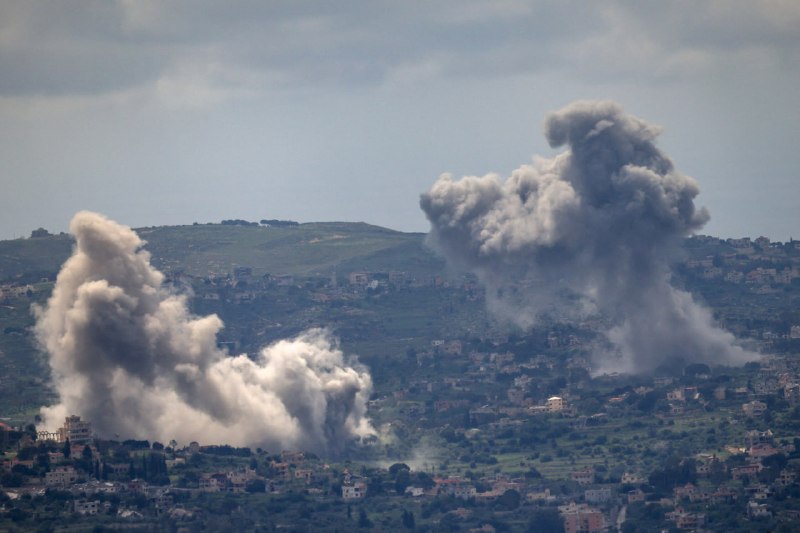
At 00:48 local time on 6 August 2026, two Israeli airstrikes hit the outskirts of Mansouri in south Lebanon. A third, heavier strike followed fourteen minutes later, according to a running incident log published by The Cradle Media's Telegram channel. Within hours, separate footage circulated of a strike on Burj Al Shiamli, a Palestinian refugee camp on the southern edge of Tyre, an attack wfwitness, a Telegram channel that aggregates field footage from south Lebanon, framed as an "assassination attempt." The same morning, in Rome, US-mediated negotiations between Lebanon and Israel opened, with the talks framed by the Telegram channels citing Al Hadath as involving Italian and US presence alongside the two delegations.
Monexus analysis: the distance between those two scenes is the story. Negotiations resumed while the air war over the same border continued, with Israeli jets operating deep enough into Lebanese territory to reach the refugee camps on Tyre's southern flank. The pattern, diplomats and analysts have argued for months, is not accidental. Pressure on the ground is meant to harden the diplomatic floor that negotiators walk into in Rome.
A negotiating room in Rome, a bombed district in Tyre
The Rome track is the most explicit backchannel between Beirut and Jerusalem since hostilities resumed. According to both wfwitness and The Cradle Media, talks opened in the Italian capital on the morning of 6 August 2026, with the framing in both Telegram posts citing Al Hadath as identifying US-mediated negotiations with Italian and US participation. The Cradle Media's overnight log opens by calling the session "the third day of US-mediated Lebanon–Israel negotiations." Independent wire reporting widely characterises the Rome track now underway as the seventh round of Israel–Lebanon talks that began around 4 August 2026, a numbering that does not match the framing in the available Telegram posts. The available source items do not specify which officials travelled, who heads each delegation, or the precise agenda. What the strikes do to that agenda is the open question.
The overnight bombing run
The Cradle Media's overnight log gives the sequence. At 00:48 local time, two Israeli airstrikes targeted the outskirts of Mansouri. At 01:02, a third, described as very heavy, struck the same general area. The posts do not enumerate casualties from the Mansouri strikes or specify which assets were targeted; Mansouri sits inland from the coast in the Tyre district, an area that has been struck repeatedly since the start of the current campaign. The Cradle Media post was timestamped 08:52 UTC on 6 August 2026 and was mirrored at the same minute under TheCradleMedia handle.
The Burj Al Shiamli strike sits in a different register. The camp, on Tyre's southern edge, has long been a focal point of strikes that Israel frames as targeted killings of militant operatives. wfwitness's post at 09:17 UTC described the strike as "another angle from the airstrike that targeted Burj Al Shiamli Palestine refugee camp in Tyre in an Israeli assassination attempt." The phrasing is the channel's own. It is not an Israeli military statement. The Israeli military's own readouts of who was targeted are not present in the available source items, and the channel's excerpt also cites the Lebanese Ministry of Health reporting eight injured in the airstrikes on the camp. The available source items do not specify fatalities.
The two tracks sit a few hours apart on the same calendar. Diplomats were checking into Roman hotels while the bombs were still settling in south Lebanon. That, on past evidence, is by design.
How the pressure model works
The structural pattern is well established. When a third-party-mediated channel opens, the kinetic track is not paused; it is reweighted. Strikes are aimed at assets that the mediating power treats as leverage points, with the diplomatic track serving both as a de-escalation outlet and as a constraint on how far the bombing can run before it embarrasses the mediators. The risk for negotiators is that the gap between what is achievable in Rome and what is demanded in the air becomes wide enough that one side walks out and the other retaliates with a deeper sortie.
The arithmetic favours the side that can sustain strikes without political cost. The United States has supplied the headline mediation; the role of Italy as host is asserted in the Telegram posts citing Al Hadath but is not specified in the other available source items. The strike on Burj Al Shiamli, a Palestinian refugee camp rather than a Lebanese village, signals that the targeting set is not constrained to one armed faction. Eight injuries in the camp, as reported by the Lebanese Health Ministry and cited in the Telegram post, is the most concrete casualty figure present in the available source items.
What is at stake if the gap widens
If the Rome track fails to produce an arrangement within the next reporting cycle, two trajectories are plausible. The first is a return to open hostilities on the border, with strikes escalating in tempo and depth. The second is a narrower arrangement, brokered quietly, that leaves the underlying political file unresolved but stabilises the immediate front. The mediation's parameters, beyond the US anchor role already named in the Telegram posts, are not specified in the available source items. Washington has not, on the present ledger, been shown in these posts to have signalled any new framework for this round.
For civilians in Tyre, Bint Jbeil, and the string of villages along the border, the stakes are concrete and immediate: a third bombing run at 01:00 local time on the morning of the talks, a refugee camp hit in daylight hours, and a Health Ministry count of eight injured that the available source items do not further itemise. The diplomatic choreography is sophisticated; the cost is borne in a narrow strip of land.
Desk note: Monexus framed this as a dual-track story, not a binary one. Talks in Rome and strikes on Tyre sit on the same calendar and read as parts of the same pressure mechanism. The source ledger is intentionally narrow. The only confirmed inputs are the Telegram posts from wfwitness and The Cradle Media; Israeli, Italian, Lebanese, and US official readouts are not in this thread and have not been inferred. Independent wire outlets widely label the Rome track now underway the seventh round of Israel–Lebanon talks, a numbering that does not match the "third" framing used in the available Telegram posts, and this article has flagged the discrepancy rather than resolved it.
Wire provenance
This editorial synthesis draws on the following public wire/social posts:
- https://t.me/wfwitness/106215
- https://t.me/wfwitness/106214
- https://t.me/wfwitness/106213
- https://t.me/thecradlemedia/65666
- https://t.me/TheCradleMedia/65666