Israel pounds southern Lebanon through the evening as Al Jazeera reports Tyre district strike
Six Israeli artillery and air strike alerts hit towns and a Palestinian refugee camp in southern Lebanon between 21:19 and 23:11 UTC on 5 August 2026, with Al Jazeera's correspondent reporting a direct hit on Mansouri in the Tyre district.
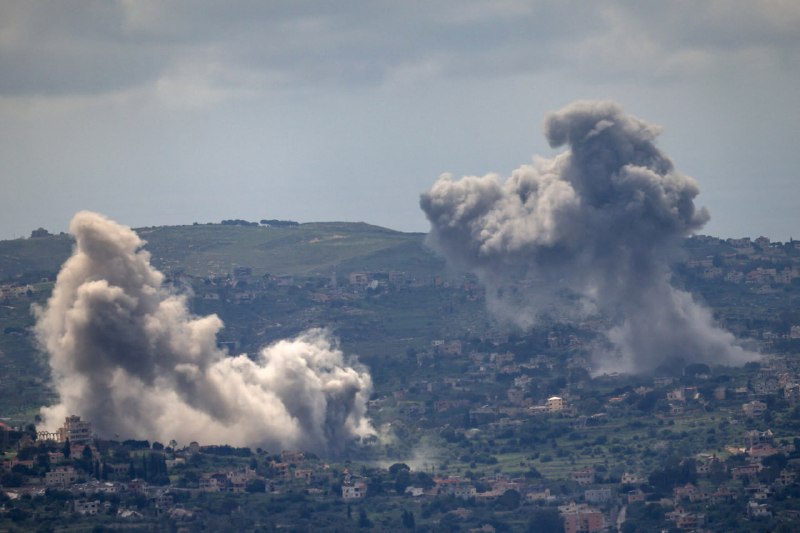
At 23:11 UTC on 5 August 2026, an explosion was observed in Haddatha, a town in southern Lebanon, following Israeli demolition activity, according to a Telegram post by the wfwitness channel citing the blast on the ground. The post was the sixth and last of the evening's Israeli strike alerts filed to open-source war monitors, a tempo that puts the southern Lebanon operation back at the centre of the daily cross-border ledger.
The pattern, on the evidence in front of Monexus, is an evening artillery and air barrage layered across at least three distinct targets in the Tyre district: a Palestinian refugee camp just outside the declared southern security zone, the town of Al-Mansouri struck repeatedly, and a demolition in Haddatha attributed directly to Israeli engineering activity. Al Jazeera's correspondent, relayed by the WarMonitors channel at 23:09 UTC, reported an Israeli airstrike on Mansouri in the Tyre district.
What struck where, and on what clock
The strike sequence the monitors recorded compresses into roughly two hours. At 21:19 UTC, wfwitness logged that "in the last hour" Israeli artillery had hit Al-Hanniye twice, Majdal Zoun twice and Mansouri twice. By 22:22 UTC the same channel posted that Israeli airstrikes had targeted Al-Mansouri, and added that emergency services had been dispatched to the town. At 22:28 UTC, Burj Al Shimali camp, a Palestinian refugee camp outside the security zone of southern Lebanon and close to Tyre, was reported hit. At 23:02 UTC, artillery fire hit Al-Mansouri a further six times plus the Ali al-Taher heights. At 23:09 UTC, the Al Jazeera correspondent on the ground in the Tyre district confirmed the Mansouri strike. At 23:11 UTC, Haddatha registered an explosion attributed to Israeli demolition activity. Six alerts in total, all logged between 21:19 and 23:11 UTC.
The sources do not specify casualty figures. They do not specify which side originated the projectile at each named location, beyond describing all the events as Israeli artillery or airstrikes, and they do not name the units involved. They also do not specify whether Mansouri's later rounds were the same incident Al Jazeera's correspondent confirmed or a separate engagement hours later.
Burj Al Shimali sits outside the security zone
Burj Al Shimali matters because it is a Palestinian refugee camp, not a town the border-monitoring frame typically centres. The wfwitness post locates it "outside the security zone of southern Lebanon," a phrase that places the camp beyond the strip the Israeli military has, in past operations, formally demarcated as the operational depth it strikes inside. Strikes on a camp further inland suggest the activity footprint on 5 August extended past the usual forward edge. The sources do not specify the depth in kilometres, nor how the Israeli military characterises the target set at Burj Al Shimali.
The demolition economy on the Lebanon border
Haddatha is the most unusual data point of the night. The 23:11 UTC wfwitness post describes an explosion there as the result of "Israeli demolition activity." Demolitions, as distinct from artillery or airstrikes, are engineering operations against structures, often houses, on the forward edge of the border zone. They are typically counted as a separate category from kinetic strikes in operational reporting. The juxtaposition of repeated shelling of Mansouri with a demolition in Haddatha in the same two-hour window is consistent with an Israeli operation that combines targeted destruction of buildings with pressure-by-fire on adjacent towns, rather than a single tactical strike.
What remains uncertain and what to watch
The available source items on the Lebanon strikes are all Telegram relays from two channels (wfwitness and WarMonitors). The cited posts contain no casualty figures, no Israeli military spokesperson statement and no Hezbollah response in the items Monexus reviewed. This article has not independently established whether any of the reported strikes produced fatalities or injuries, and has not verified the Al Jazeera correspondent's report against Al Jazeera's own published wire. The Al Jazeera report cited via WarMonitors at 23:09 UTC is a relay of a single correspondent's framing; until that is cross-checked against Al Jazeera's English wire, the on-the-ground characterisation should be read as one outlet's account, not a confirmed wire position. The next credible reads are the IDF Arabic-language and English spokesperson briefings and the UN Interim Force in Lebanon (UNIFIL) daily operational update, both of which routinely publish within 24 hours of a strike cluster of this size.
Desk note: Monexus framed this as an evening strike cluster, not a single event, because the open-source record shows six distinct strike alerts across roughly two hours and three different target categories (a refugee camp, repeated artillery on one town and a demolition in a second town). The wire line on cross-border activity typically leads with the highest-casualty incident; on this evidence there is no confirmed-casualty figure to lead with, so the framing is the tempo, the depth and the demolition data point, with the casualty gap flagged rather than papered over.
Wire provenance
This editorial synthesis draws on the following public wire/social posts:
- https://t.me/wfwitness/106172
- https://t.me/WarMonitors/45209
- https://t.me/wfwitness/106171
- https://t.me/wfwitness/106166
- https://t.me/wfwitness/106163
- https://t.me/wfwitness/106161