Blasts on Qeshm, talks through Muscat: Iran walks two tracks in the Strait of Hormuz
Iranian state media said air defences engaged hostile targets near Qeshm on 6 August 2026, hours after Tehran confirmed an Oman-mediated framework for transit through the strait. Both signals landed in the same news cycle.
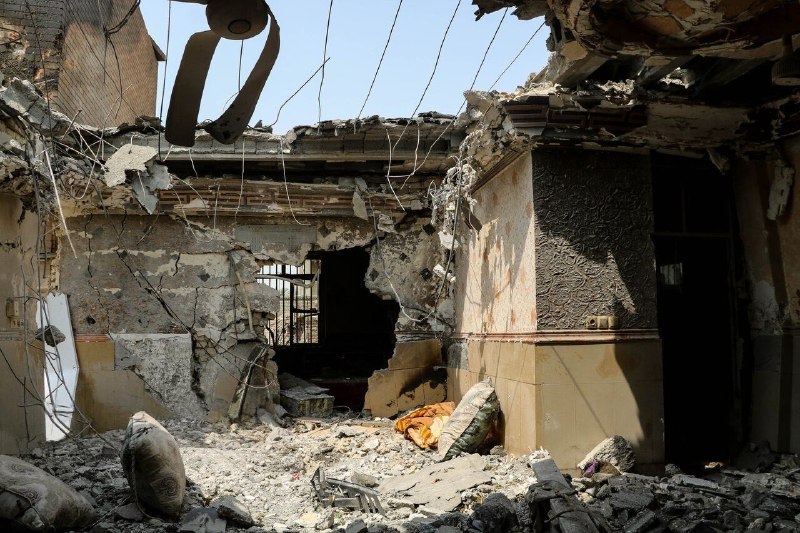
Two explosions were heard on Qeshm Island in Iran's Hormozgan Province at approximately 18:15 UTC on 6 August 2026, according to Telegram channels tracking regional military traffic. Within roughly ninety minutes, Iranian state news agency Tasnim reported that the blasts were the result of Iranian forces engaging hostile targets at the entrance to the Strait of Hormuz, with officials saying details of the operation's results would be released later (Tasnim via Clash Report, 6 Aug 2026).
The incident is the most concrete military signal out of Tehran since negotiations mediated by Oman moved into operational phase. Earlier the same day, at 17:42 UTC, Fars News, an outlet affiliated with Iran's security establishment, said an informed source at the Iranian Foreign Ministry confirmed that under the framework of negotiations between Iran and Oman, ships would initially enter the Strait of Hormuz through the northern corridor (Fars via @wfwitness, 6 Aug 2026). Two distinct tracks, diplomatic and kinetic, are now running in parallel.
What Qeshm tells us
Qeshm is Iran's largest island in the Persian Gulf, sitting astride the southern approaches to the strait. A military exchange there, on the same day a transit corridor was being formalised, is not a coincidence Monexus would expect. The reading that fits the evidence: Tehran is signalling to the ships, insurers and underwriters who price Hormuz risk that the terms of passage are negotiable in both directions.
Initial reports from Telegram channels tracking Iranian airspace put the count of audible blasts at four by 18:17 UTC (@wfwitness, 6 Aug 2026), before Tasnim's later characterisation reframed the event as an interception. The discrepancy between initial eyewitness-style reports of "explosions heard" and the official framing of "hostile targets engaged" is itself a piece of information. One interpretation: Iran intercepted incoming projectiles or drones and is presenting the intercept as an offensive action to project control of the corridor. Another: the blasts were a domestic test, and Tasnim's hostile-targets line is the public framing. The available source items do not specify which, and this article has not independently established the origin of the incoming fire or the type of munition intercepted.
The Oman channel, made operational
Oman has spent two decades as the Gulf's back-channel of choice for Tehran. The framework disclosed through Fars converts that channel into a routing protocol. Under the arrangement reported by the Iranian Foreign Ministry source, ships will initially transit through the northern corridor of the strait. That wording is consequential: it implies sequenced entry, a defined lane, and a presumption of order rather than free navigation. It also implies a counterpart who will be told which ships, when.
The northern corridor is the route closest to the Iranian coast and to Qeshm. A negotiated transit regime that funnels traffic past an island where air-defence batteries are active is, in plain terms, a transit regime whose price Iran can adjust hour by hour. Monexus analysis: the same diplomacy that produces a corridor also produces the leverage to close it.
Structural read: two currencies at once
What is being priced in this news cycle is not oil alone. Two currencies are moving simultaneously. The first is the market price of Hormuz risk, which is the discount shipping firms and insurers apply to a barrel that has to traverse a chokepoint under negotiated terms. The second is the political currency of who controls the rules of passage. Tehran is selling the first while spending the second. Western wires tend to cover this as an Iran-vs-US story. The structural read is different: it is a sovereign claiming the right to set terms on its own littoral, with Oman as convenor and the US as the absent counterparty.
Stakes, and what to watch
If the Oman-mediated corridor holds for the next 48 to 72 hours without a follow-on intercept, the read settles: kinetic action on 6 August was calibration, not rupture. If a second engagement follows within that window, or if transit through the northern corridor is formally announced as conditional on vessel registration with Iranian authorities, the framework morphs from a confidence-building measure into an instrument of coercion. The files to watch are the Lloyds List and TankerTrackers transit tallies for the northern corridor, and any second readout from Tasnim on the operation's results, which officials said on 6 August would be released later.
Desk note: wire reporting on this story will lead with the blast. Monexus is leading with the conjunction, blast plus corridor, same day, same island. The combination is the story.
Wire provenance
This editorial synthesis draws on the following public wire/social posts:
- https://t.me/wfwitness/106287
- https://t.me/ClashReport/91742
- https://t.me/intelslava/92212
- https://t.me/wfwitness/106276
- https://t.me/intelslava/92209
- https://t.me/wfwitness/106275
- https://t.me/wfwitness/106273