Ruto's five-day message run sets the terms for the 2027 contest
Across five Telegram statements in 72 hours, William Ruto has defined the re-election battle as one over constitutional delivery and unity. Kithure Kindiki supplied the second-term defence two days earlier.
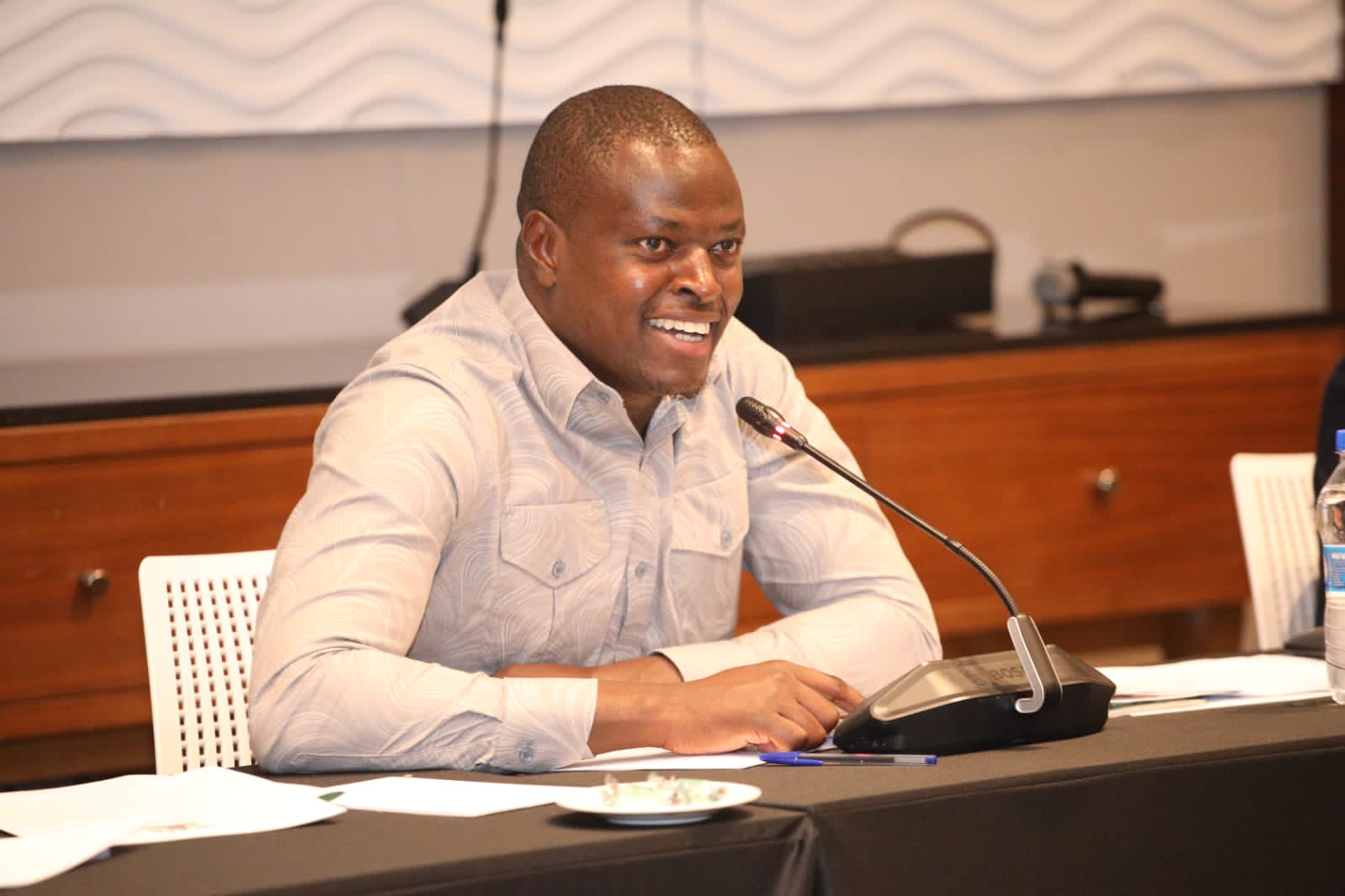
On 5 August 2026 at 10:10 UTC, President William Ruto called for a national conversation among Kenyans on how the country can fully implement the constitutional provisions aimed at driving development and economic prosperity, according to a Telegram bulletin from The Star Kenya. Five statements traced to the same outlet across roughly 72 hours, four of them on a single day, set out a coordinated rhetorical architecture: unity across religion and ethnicity, an inclusive government, a development frame anchored in the Constitution, and a demand that political rivals produce policy rather than tribal appeals.
Running beneath those statements is a coherent campaign frame: constitutional delivery on the substance, Kenyan unity on the moral cover, and a refusal to cede the policy ground to opponents. Deputy President Kithure Kindiki has already supplied the second-term predicate. Whether the architecture holds against the country's economic pressures is the open question.
The five statements
The Star Kenya's Telegram feed carried four separate Ruto statements on 5 August 2026, in the following order: at 07:54 UTC the president reaffirmed his commitment to building an inclusive government that reflects Kenya's diversity, with every citizen framed as deserving equal representation regardless of background; at 08:31 UTC, he challenged political opponents to present clear agendas and policy proposals, saying that Kenya's future cannot be built on divisive politics, hatred or tribalism; at 09:11 UTC, he reaffirmed his responsibility to ensure every Kenyan feels included regardless of religion or ethnicity; at 10:10 UTC, he called for the national conversation on constitutional implementation. A fifth statement, on 4 August, had already framed the contest as one between democratic gains and the economic progress that must match them, with equal opportunity to improve livelihoods as the test.
Read individually, each is a topical remark. Read as a sequence, they lay down a layered claim: the president owns the constitutional project, the unity project, and the policy test. The Star Kenya carried each item as a separate bulletin, which is the visible form of the message discipline.
Kindiki's ground work
On 3 August 2026 at 05:52 UTC, two days before Ruto's burst of statements, Deputy President Kithure Kindiki defended the president's second-term bid on The Star Kenya's feed, arguing that the Kenya Kwanza administration had earned the right to seek re-election. The bulletin cited the administration's record on, in the outlet's framing, reviving the economy and accelerating infrastructure development; the Telegram excerpt as published does not enumerate those achievements in detail, and this article has not independently catalogued them.
The substantive content is the public endorsement. Kindiki is a named member of the Kenya Kwanza ticket and a senior constitutional office-holder; his signing on to the re-election argument, via the same outlet, two days before the president's intensified messaging, gives the later statements a multi-voice character.
Monexus analysis: what the framing actually says
Two things sit beneath the rhetoric, on this publication's reading. First, the Constitution itself is the load-bearing claim. By calling for a national conversation on full implementation, Ruto inserts the presidency into a cross-party project while reserving the right to define what counts as implemented. Second, the unity message recasts the moral terrain of the contest. If the president is the sole credible voice of inclusion, his critics are positioned as exclusionary by default. The two strands reinforce each other: the constitutional frame supplies the substance, the unity frame supplies the moral cover. This is the editorial synthesis offered here, not a direct characterisation by any of the principals.
The opposition's counter, on this assessment, has to address both at once, on a stage where the presidential megaphone dominates. The Telegram aggregation of Ruto's remarks five times in three days is the visible scaffolding for that megaphone.
Stakes for 2027
The August 2026 messaging puts down three markers that will shape the run-up to the 2027 general election. The president will campaign on constitutional delivery rather than personality. The deputy president has signed on publicly to make re-election a referendum on the administration's record. And the political class has been put on notice that policy, not grievance, is the test the ruling side will apply.
What remains uncertain is whether the constitutional-implementation frame will carry weight against more immediate economic anxieties. The available source items do not specify Ruto's position on cost-of-living pressures or on the fiscal trajectory under the Kenya Kwanza government. The unity line travels only as far as the economy allows, and the deputies and ministers who follow Kindiki onto the airwaves will inherit that constraint. The next test will be legislative rather than rhetorical: whether the National Assembly moves a constitutional-implementation bill before the budget cycle closes, and whether Kindiki's framing of the administration's record survives an end-of-year fiscal review.
This article relied on Telegram-threaded bulletins published by The Star Kenya between 3 and 5 August 2026. No wire outlet has yet independently confirmed the remarks or supplied full transcripts; the framing here is drawn from the bulletin text itself, with analytical synthesis clearly labelled.
Wire provenance
This editorial synthesis draws on the following public wire/social posts:
- https://t.me/TheStarKenya/36919
- https://t.me/TheStarKenya/36914
- https://t.me/TheStarKenya/36909
- https://t.me/TheStarKenya/36902
- https://t.me/TheStarKenya/36842
- https://t.me/TheStarKenya/36765