Sea drones off Yalta: Ukraine's theater of pressure on the eve of a city holiday
HUR's Group 13 ran Magura naval drones off occupied Yalta on 7 August 2026, on the eve of the city's holiday, destroying a Russian Pantsir-S1 air defence system and a military crane.
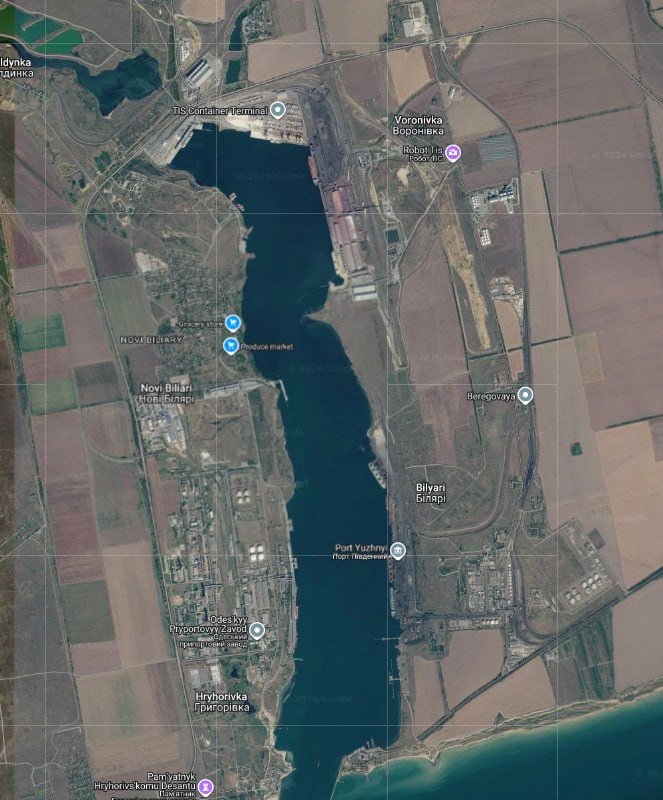
On 7 August 2026, Ukraine's military intelligence directorate (HUR) ran a small fleet of Magura naval drones into the waters off Yalta on the eve of the city's holiday, and used them to strike a Russian Pantsir-S1 short-range air defence system and a military crane on the southern Crimean coast. Kyiv Post's Telegram channel reported the value of the Pantsir alone at about $15 million. The date was not incidental: the unit, HUR's Group 13, framed the operation as a revival of the old Ukrainian navy practice of sending warships past the Crimean coast, and the available source items describe the strike as timed to the city's holiday on 7 August, with Clash Report explicitly placing the operation on the eve of Yalta's city day.
That framing is the news. Ukraine is no longer using sea drones as a quiet attrition tool; it is choreographing them as theatre. The shift matters because it changes how Moscow, and the people living under occupation, read what is happening in the Black Sea.
A naval parade, on purpose
The Yalta operation landed inside a window of escalating Ukrainian pressure on occupied Crimea. The four source items describe the strike in slightly different registers but agree on the essentials: Magura surface drones were used, the target set included a Pantsir-S1 and a crane, and the timing was tied to the city's holiday. WarTranslated, summarising HUR's own write-up, called it a "naval parade" off Yalta's waters. The Clash Report described Group 13 as having "staged" the event for Yalta's coast on the eve of the city's day. The Telegram channel osintlive, reposting WarTranslated, captured the rhetorical flourish: a return of the tradition of Ukrainian warships appearing off Yalta.
A naval parade is, by definition, a public act. The drones were not optimised for secrecy; they were optimised to be seen and understood. From a Russian command perspective, the practical loss is one Pantsir battery and one crane. From a political perspective, the loss is the assumption that Crimea is a quiet rear area.
What was actually destroyed
The Kyiv Post Telegram item, published at 11:42 UTC on 7 August, is the most specific on material outcomes: a Pantsir-S1 worth about $15 million, and a military crane, both in occupied Crimea, both hit by Magura platforms operated by HUR's Group 13. The $15 million figure is named in the Kyiv Post item; the available source items do not specify where that figure originates beyond HUR's own framing. WarTranslated's subsequent posts confirm the Pantsir strike and add the parade framing. The four source items together establish the unit (Group 13), the platform (Magura), the target class (Pantsir-S1 plus crane), the location (occupied Crimea, off Yalta), and the date (7 August 2026, on the eve of the city's holiday).
The available source items do not specify the exact launch platform, the precise launch coordinates, or whether any Russian air defence crews were killed or captured. Monexus has not independently established those details.
Why Pantsir, why now
A Pantsir-S1 is not a glamorous target. It is a wheeled, self-propelled combination of short-range surface-to-air missiles and anti-aircraft cannons, intended to protect other assets from low-flying aircraft, drones, and cruise missiles. Each battery costs roughly the price of a small apartment block in a European capital. Losing one to a $200,000-class naval drone is the kind of exchange rate that keeps defence planners up at night.
The deeper problem for Russia is doctrinal. Pantsir batteries are supposed to live close to the things they protect: airfields, command nodes, radar sites, ports. The fact that one was reachable by sea drone off Yalta, on the eve of the city's holiday, tells you something about either the perimeter's coverage or the saturation of Ukrainian drone production. Both readings are unflattering.
Theatrical pressure, real costs
There is a counter-narrative worth taking seriously: a parade is a distraction, and distractions get people killed. Critics of the framing argue that publicising a Magura strike as a "return of tradition" risks inviting Russia to harden Crimean harbours, double up Pantsir coverage around Sevastopol, and treat every future maritime approach as a spectacle to be punished. On the evidence available, that critique has force. Ukrainian operations in Crimea have repeatedly forced Russian commanders to spend money and attention on coastal defence they would rather spend on the land front.
The dominant read still holds. Ukraine's sea-drone campaign has been running on a logic of cumulative cost: each Pantsir, each helicopter, each logistics crane removed from the Black Sea coast is a small subtraction from Russia's ability to use Crimea as a launch pad. Theatrical framing sharpens the political message without changing the arithmetic. Ukraine is telling the people of Crimea, and the soldiers stationed there, that the rear is not safe and the calendar does not protect them. The Pantsir, on the eve of a city holiday, is the punctuation mark.
Desk note: Monexus framed this as an HUR operation confirmed through the agency's own channels and relayed by WarTranslated, Clash Report, and Kyiv Post's official Telegram. We did not name Russian casualties or specify launch coordinates, because the available source items do not. The "parade" and "return of tradition" framing is HUR's own, not our invention. The $15 million Pantsir figure is taken from Kyiv Post's Telegram item and attributed to HUR's reporting; the available source items do not specify an independent provenance for the dollar value.
Wire provenance
This editorial synthesis draws on the following public wire/social posts:
- https://t.me/Kyivpost_official/38431
- https://t.me/wartranslated/17909
- https://t.me/ClashReport/91834
- https://t.me/osintlive/562575
Follow the event.
These dated source records provide context. They do not retrospectively verify this archive article.
A dated voting record is evidence of one decision. Use the original UN record before turning it into an alignment label.
Visual explainer · historical vote of 2022-03-02 →