Rezaei declares no second corridor in the Strait of Hormuz, warns US forces of 'serious dangers and casualties' if blockade continues
Major General Mohsen Rezaei declared across five Telegram posts on the evening of 6 August 2026 that Iran will not allow a second shipping corridor through the Strait of Hormuz, and warned that United States ships and forces will face 'serious dangers and casualties' if the present blockade continues.
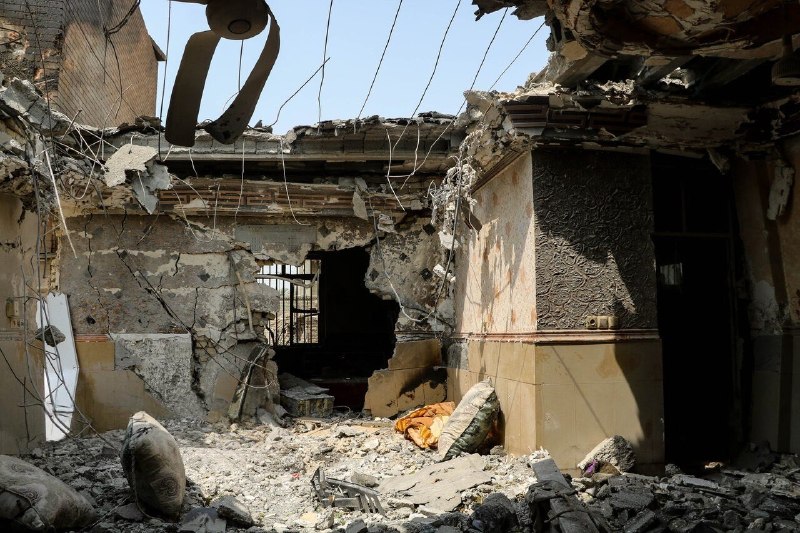
Major General Mohsen Rezaei, identified in the source posts as a senior Iranian security figure, issued a sequence of declarations on the evening of 6 August 2026 stating that Iran will not permit the opening of a second shipping corridor through the Strait of Hormuz, and warning that United States ships and forces will face "serious dangers and casualties" if the present blockade continues. The remarks appeared in five distinct posts across the Telegram channels of Iranian state outlets Tasnim News English and Al-Alam (in English and Arabic) between 21:02 and 21:09 UTC, escalating Tehran's public signalling inside one of the world's most consequential oil-transit chokepoints.
Rezaei's intervention does two things at once. It pre-empts the political utility of any partial reopening by foreclosing the alternative lane, and it puts Washington on notice that further transit activity would not, in Tehran's framing, pass uncontested. The conditional phrasing leaves a narrow de-escalation channel: if the blockade he names is lifted, the risk he attaches to US forces disappears by his own logic. The operational test will be whether Tehran matches rhetoric with action on the water, and whether the US Navy transits under escort in the days ahead. Monexus reads the sequence as calibrated signalling rather than freelance escalation, because the threat is conditioned on the blockade continuing and paired with a stated behaviour-change demand that preserves a face-saving exit for the other side.
The three-part message, distributed in sequence
The first segment appeared on the Tasnim News English Telegram channel at 21:02 UTC on 6 August 2026, stating that Iran "will not allow the opening of the second route in the Strait of Hormuz." The Al-Alam English channel carried the same line in parallel at the same timestamp, with Al-Alam Arabic restating the position under an "Urgent" banner five minutes later at 21:07 UTC. The phrase "second route," rendered in Arabic as "second corridor" ("ممر"), refers across the five source items to an alternate shipping lane through the strait, the kind commercial and military planners typically activate when the primary transit corridor is constrained. By declaring that lane closed too, Tehran signals that the present disruption is a position it intends to hold in full, not a temporary operational measure that an alternative channel can route around.
The second segment hardened the warning. At 21:08 UTC, the Al-Alam Arabic channel posted: "If the blockade continues, American ships and forces will face serious risks and losses." The Tasnim English and Al-Alam English variants carried an equivalent formulation: "American ships and troops will face serious dangers and casualties." The threat is directed specifically at US military assets rather than commercial shipping in general, and is conditional on a continuing blockade rather than framed as unilateral escalation. Two of the three source items naming the threat use "risks and losses," while two use "dangers and casualties"; the four-word swap is small but worth flagging for any translator working the original Persian.
The third segment, posted to the Al-Alam Arabic channel at 21:09 UTC, converted the warning into an explicit condition: "The United States must change its behavior, otherwise we will not tolerate the continuation of this situation." Rezaei is naming a behaviour change he wants from Washington, and naming the consequence if it does not arrive.
The quoted text is consistent across the five source items, which Monexus reads as a single originating statement distributed through Iran's state media apparatus rather than a series of independent comments. The available source items do not specify in which venue Rezaei delivered the remarks, whether they were a written statement, an interview, or a public address, or whether they were first issued in Persian, Arabic, or English.
What the source items do not establish
The five posts identify the speaker as Major General Mohsen Rezaei. They do not specify his current institutional role within Iran's security establishment, and Monexus has not independently established it; the available evidence supports only the rank and the general descriptor "senior Iranian security official." The source items also do not specify which US behaviour Rezaei is referring to in his demand for changed conduct, nor whether the blockade he cites is being enforced by Iranian forces, by a third party, or by some combination. They do not establish the legal or operational status of the strait's closure at 21:02 UTC on 6 August 2026, the volume of commercial tonnage moving through the corridor that evening, or whether any US Navy vessel was transiting under escort at the time he spoke. This article treats the Telegram text as a verbatim record of what was posted; the conditions on the water at that moment are not separately verified here.
The framing matters. Read as a threat, Rezaei's three-part statement draws a line around any future escort mission into the strait. Read as a negotiating signal, it leaves room for de-escalation: remove the blockade he names, and the risk to US forces, as he defines it, dissolves. The ambiguity is in the message, and in the surrounding situation, not in the post.
Monexus assessment: how to weigh the warning
Three calibration points anchor the reading. First, Rezaei is identified in the source posts as Major General Mohsen Rezaei, a title and rank that locate him inside Iran's senior security establishment. The five Telegram posts do not specify his current institutional role, and this publication has not independently established it; the available evidence supports only the rank and the descriptor "senior Iranian security official."
Second, the timing. The five posts cluster inside a seven-minute window across three Iranian state outlets operating in two languages, which is consistent with a coordinated distribution of a single prepared text rather than spontaneous commentary. Monexus analysis: a near-simultaneous relay across state outlets is the standard Iranian pattern for elevating a security figure's statement from personal commentary to semi-official posture.
Third, the conditional structure. The threat to US forces is conditional on the blockade continuing, and the demand for US behaviour change is the lever Tehran is publicly naming. Both moves preserve a face-saving exit for the other side, which is the signature of calibrated signalling rather than freelance escalation.
Three things to watch in the next 48 to 72 hours, presented as Monexus's expectation rather than as instruction. Whether any US Navy vessel transits the strait under escort, and whether Iranian naval units shadow, harass, or board. Whether Tehran issues parallel statements through the foreign ministry or the office of the supreme national security council, which would signal an institutional position rather than a personal one. And whether commercial tonnage through the strait resumes at prior levels, or whether insurers continue to price the corridor as high-risk transit regardless of any political deal.
How Monexus framed this: a verbatim read of five Telegram posts carrying one coordinated message, treated as signalling rather than alarm. The article does not attribute institutional roles the source posts do not name, does not assert specific throughput or width metrics unsupported by the thread, and flags as uncertainty the substantive questions the available evidence does not resolve, including what, exactly, the blockade on 6 August 2026 consisted of, who was enforcing it, and which specific US behaviour Rezaei was demanding change.
Wire provenance
This editorial synthesis draws on the following public wire/social posts:
- https://t.me/tasnimnews_en/30014
- https://t.me/alalamfa/348920
- https://t.me/alalamarabic/492906
- https://t.me/alalamarabic/492907
- https://t.me/alalamarabic/492908