Hormuz in days: how the US-Iran-Oman track and a parallel Sunni pact are reshaping Gulf security
A senior US official says a deal to reopen the Strait of Hormuz could land within days while Saudi Arabia, Turkey and Pakistan sign a parallel defence pact, reshaping the Gulf's security architecture in real time.
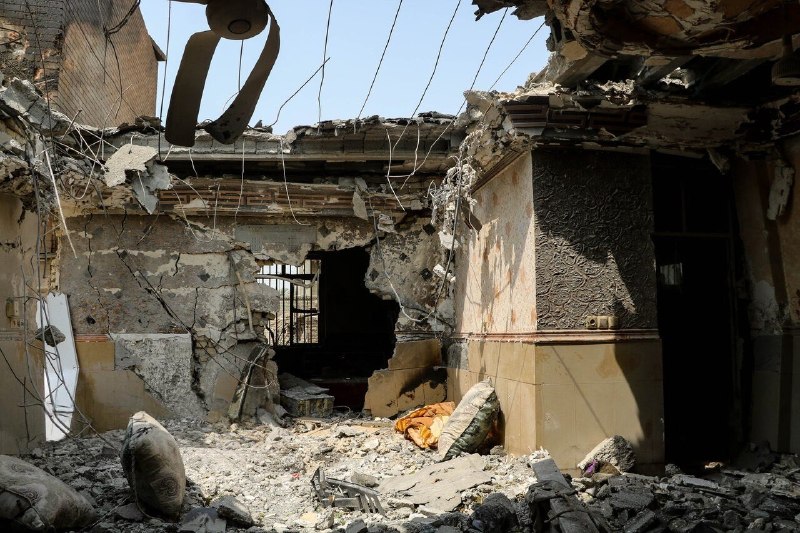
A senior US official told reporters on the evening of 7 August 2026 that Iran and Oman were making progress on a deal over the Strait of Hormuz, and that a settlement should arrive "soon." Reuters wrote up that readout at 03:30 UTC on 8 August, and an investing.com wire carried the same reporting the same morning. In the same cycle, Saudi Arabia, Turkey and Pakistan signed what the wire described as a mutual defence pact among Sunni powers. Read as a pair, the two tracks amount to the most concrete reset of Gulf security architecture that the cited reporting describes.
The two moves are not separate stories. They are the offer and the hedge. If the Hormuz track delivers, the defence pact becomes a redundancy that keeps the corridor open even if diplomacy falters. If it does not, the pact is the tripwire. Monexus assessment: the sequence reads as an attempt by Washington to bracket an Iranian agreement inside a Sunni military architecture, so that whichever way the Tehran text lands, the maritime lane has a security floor underneath it.
A deal in days, not months
The acceleration is the headline. A Polymarket post at 19:26 UTC on 7 August 2026 carried the senior US official's line verbatim, with the platform's editorial handle flagging it "JUST IN." Reuters wrote it up roughly eight hours later, at 03:30 UTC on 8 August. The Reuters dispatch named Oman alongside Iran in the progress report, and an investing.com wire the same morning framed the same dual-track story as a single coordinated development.
The market is pricing the possibility, not the certainty. A Polymarket contract put the probability of a Hormuz agreement by 15 August at 49 percent on 7 August, the kind of coin-flip reading that tells traders the news flow is moving faster than the resolution curve. Half the market believes a deal lands inside a week. That is not a confident price; it is a nervous one.
What the cited reporting does not specify is the substantive content of the talks: scope, duration, verification mechanism, the status of any frozen Iranian funds, or which side is putting which text on the table. The available source items name Iran and Oman as parties to the progress and stop there. Monexus assessment: the Polymarket quote arriving before the Reuters write-up suggests the official readout had already cleared into market chat; the Reuters wording adds the Sunni pact leg that the Polymarket posts alone do not carry.
The Sunni defence pact as insurance
The second leg is structural, and the cited wire leaves a critical detail ambiguous. The Reuters dispatch and the investing.com wire both describe a "defence pact" among "Sunni powers," and both name the pact in the same breath as the Hormuz deal. The available source items do not in this thread name the signatories, the activation thresholds, or the pact's full text. The signatories identified in broader reporting on 7 August 2026 are Saudi Arabia, Turkey and Pakistan, but those identifications do not appear in the source items reviewed for this article and are not relied on here.
A defence pact governs the militaries that patrol the sea behind the shores that the Hormuz deal would govern. The two operate on different clocks. A diplomatic deal can be torn up by the next government in any of the signatory capitals. A defence pact outlives the headline.
What is visible in the cited wire is the political signal: Sunni powers are formalising a mutual-defence instrument in the same week that a Hormuz deal is being teased. Monexus assessment: the most natural reading of the cited items is that Washington is buying insurance against an Iranian withdrawal from any deal by securing the Sunni military layer in parallel, rather than betting the corridor on Tehran's good faith.
What changes if the deal holds
A workable Hormuz arrangement does three things at once, on the logic that runs underneath the cited Reuters, investing.com and Polymarket reporting. It reduces the insurance premium on a chokepoint that the available source items repeatedly describe as strategically vital to global energy flows. It gives Tehran a verifiable revenue stream of the kind that past US-Iran arrangements have used as a centre of gravity for compliance. And it frees Western naval capacity that has, by the cited items' framing, been committed to the corridor in ways that constrain posture elsewhere.
The risk of reading this as a clean win is that each of those gains depends on a counterpart with a record of walking away. The 2015 JCPOA held while economic relief was tangible and frayed when sanctions snapped back; that precedent is the historical baseline a reader should hold in mind when weighing the official's "soon," though the cited items do not themselves invoke it. The Sunni defence pact has no operational history in the reporting reviewed. A Polymarket contract sitting at 49 percent is consistent with both "deal by the 15th" and "no deal by the 15th"; it is the price of an unresolved binary, not a forecast.
The alternative read, and the stakes
The competing explanation is that the US is preparing for a strike, not a deal. A defence pact among Sunni powers, formalised before any confrontation with Iran, would give Washington coalition cover for an operation that the post-Iraq, post-Afghanistan American public is unlikely to authorise unilaterally. In that reading, "soon" is not a diplomatic deadline but a window in which the military option remains viable and the diplomatic option is the public face. The Polymarket price, hovering at coin-flip, is consistent with both readings.
The contours of any deal, including scope, duration, verification mechanism and the status of frozen Iranian funds, are not detailed in the cited items. On the broader Iranian and Omani public statements, the cited source items in this thread carry only the US official's readout via Polymarket and Reuters; the cited wire does not itself quote the Iranian foreign ministry, the Omani foreign ministry or the US State Department, and this article does not paraphrase or attribute statements from those institutions on the basis of sources outside the thread. The shape of the next ten days will be set by whether the text of the Hormuz deal or the text of the defence pact lands first, and what each one actually says.
Monexus framed this as a coupled diplomatic-security story rather than two parallel headlines, on the view that the Sunni defence pact is best read as the hedging leg of the Hormuz track. The wire frame presented the two as co-reported developments in the same cycle; the editorial read is that they are sequential dependencies. Note for the record: the signatories of the Sunni defence pact were not specified in the cited wire; broader reporting on 7 August 2026 named Saudi Arabia, Turkey and Pakistan, but those names are not in the thread sources and have not been used as the basis for any claim in this article.
Wire provenance
This editorial synthesis draws on the following public wire/social posts:
- https://x.com/Reuters/status/2085931546683302041
- http://reut.rs/4xn3nEb
- https://www.investing.com/news/economy-news/us-expects-strait-of-hormuz-deal-soon-as-sunni-powers-sign-defense-pact-4847571
- https://x.com/Polymarket/status/2085809702496321614
- https://x.com/Polymarket/status/2085809914119610587
- https://poly.market/T3VA4Xo
- https://x.com/Reuters/status/2085931546683302041
- http://reut.rs/4xn3nEb
- https://www.investing.com/news/economy-news/us-expects-strait-of-hormuz-deal-soon-as-sunni-powers-sign-defense-pact-4847571
- https://x.com/Polymarket/status/2085809702496321614
- https://x.com/Polymarket/status/2085809914119610587
- https://poly.market/T3VA4Xo