A fork Bitcoin didn't ask for is mining blocks nobody will follow
BIP-110 inherited Bitcoin's full mining difficulty, produced two blocks, and went hours without a third. The chain is alive on the wire. The market is not following.
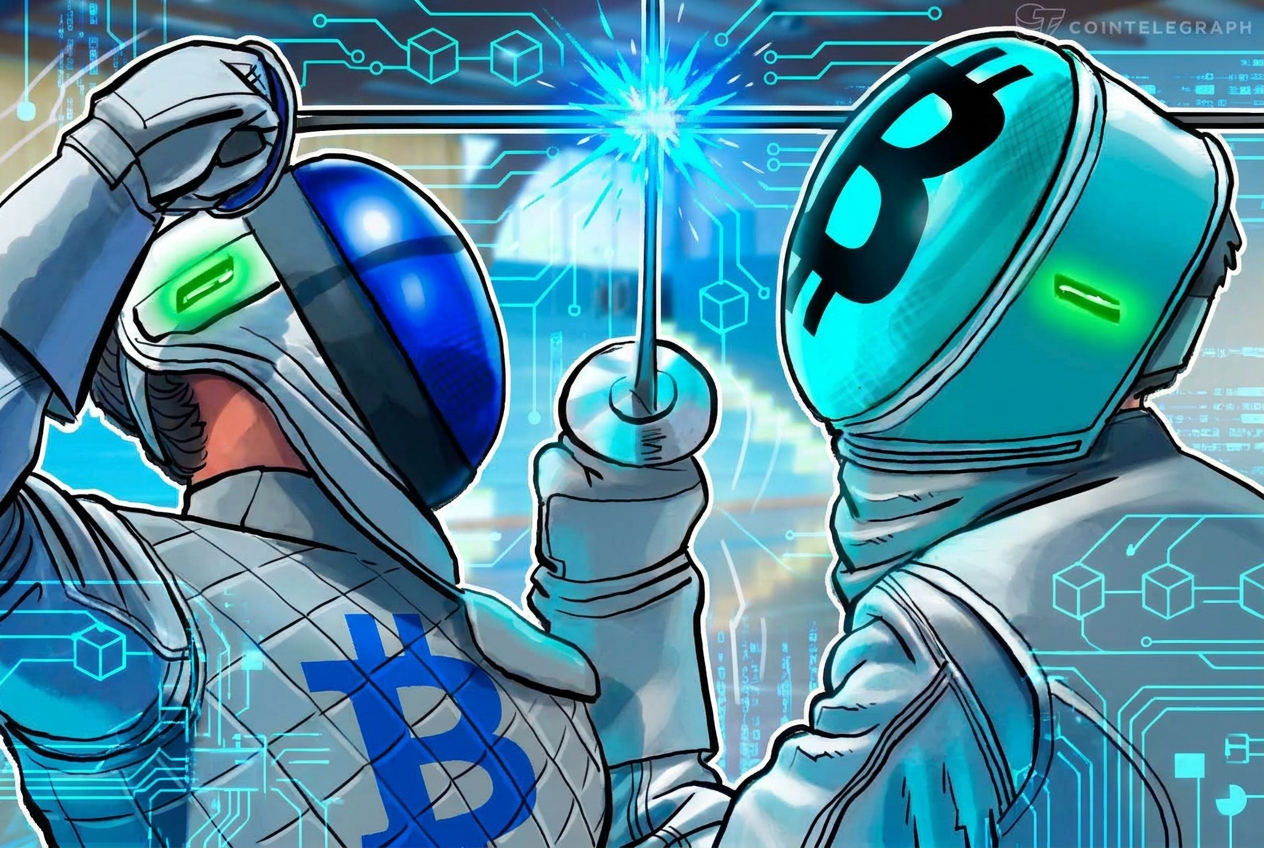
At 21:17 UTC on 8 August 2026, a Bitcoin improvement proposal that fewer than three per cent of miners had publicly signalled for crossed into mandatory signalling. By the morning of 9 August, the breakaway chain it produced had mined exactly two blocks and gone hours without a third, inheriting Bitcoin's full mining difficulty with only a sliver of hashpower behind it [Cointelegraph, 9 August 2026; CoinDesk, 9 August 2026].
The technical verdict, on the evidence available, is that BIP-110 produced a live but marginal chain. It is the protocol equivalent of a building with the lights on and nobody at the desk. Whether that gap closes, widens, or turns into a hard fork is now the only story that matters for anyone who holds bitcoin, runs a wallet, or watches what "self-custody" means when the chain underneath it forks without warning.
The slow stall
The mechanics explain the silence. BIP-110's design is user-activated: enforcing nodes can shepherd the change even when miners decline to cooperate. The trade-off is that the fork inherits Bitcoin's existing difficulty adjustment, which is calibrated for the full network, not for whatever fraction of hashpower chooses to follow it. Two blocks were mined in the first hours. The third arrived hours later [CoinDesk, 9 August 2026].
A network producing blocks hours apart is not a network processing transactions. It is a ledger writing in slow motion. The proposal has attracted vocal opposition from influential commentators and from the miners whose hashpower BIP-110's design effectively treats as optional [CoinDesk, 8 August 2026]. The combination of scarce signalling and a difficulty mismatch means the breakaway chain is technically live but economically marginal. Users sending transactions on it are sending them into a queue that the real Bitcoin network will settle faster and more cheaply [Cointelegraph, 8 August 2026].
The replay trap
The most under-reported risk this week has nothing to do with mining. It has to do with what happens if a holder sells coins on the minority chain. A developer cited by CoinDesk warned that buyers could replay signed fork-coin sales on Bitcoin itself, meaning an apparent profit on the BIP-110 chain could turn into a real loss of real bitcoin [CoinDesk, 8 August 2026]. The defensive posture, per the same report, is to do nothing: leave coins where they are, wait for the chains to separate cleanly, and only then decide which side of the split, if any, has a market.
This is the part of fork-week the headlines skip. The fork itself is a protocol debate. The replay risk is a custody problem. For anyone who buys bitcoin on a regulated exchange and leaves it there, the venue absorbs it. For anyone who holds their own keys, the chain underneath them is changing shape whether they consented or not.
Self-custody under strain
That point lands harder because the same week produced a separate shock. Moneyweb reported that a software vulnerability allowed hackers to steal bitcoin from affected hardware wallets [Moneyweb, 9 August 2026]. Hardware wallets are sold as the answer to exchange counterparty risk. A vulnerability in the tool that signs transactions reintroduces exactly the failure mode self-custody is meant to eliminate.
Read together, the two stories describe a narrowing corridor. Centralised venues expose holders to platform risk. Decentralised wallets expose them to software and supply-chain risk. Forking chains expose them to replay and confusion. Each layer of independence purchased in the Bitcoin value proposition comes with a new category of failure that the previous architecture did not have. The phrase "not your keys, not your coins" has been gospel for a decade. The corollary, now visible, is that your keys are only as safe as the firmware that signs with them and the chain that confirms the signature.
Monexus analysis: what the numbers actually say
Bitcoin traded below $65,000 on 9 August, slipping as the fork story competed with fresh ETF inflows for the market's attention [Investing.com, 9 August 2026]. A separate Investing.com piece the day before noted Bitcoin "rising toward $65,000" as fresh security risks hit infrastructure [Investing.com, 8 August 2026]. The price action is small, and the volatility, as one CoinDesk daybook noted on 7 August, has nearly disappeared [CoinDesk, 7 August 2026].
The market's non-reaction is itself the data point. A chain producing two blocks in 24 hours, a proposal carried by a single-digit percentage of miners, and a developer warning of replay losses would, in any previous cycle, have moved the tape. The muted response suggests one of three things, and the available source material does not let this publication distinguish between them: the market has priced in fork risk as background noise; liquidity providers have already hedged the split; or the audience most exposed to the fork is not the audience setting spot prices. Each reading has different consequences for what comes next.
What can be said with confidence is the asymmetry. The cost of BIP-110 to miners who decline to signal is near zero. The cost to a self-custody holder who transacts on the wrong chain during the split is their principal. That asymmetry is the structural feature of every Bitcoin fork since 2017, and it has not gone away.
What to watch by 12 August
Three signals will tell readers whether the fork is dying or dormant. First, block production cadence on the BIP-110 chain: if the gap between blocks stretches from hours to half a day, the difficulty mismatch is doing its work and the chain is, for practical purposes, paused. Second, miner public statements: any movement of single-digit hashpower onto the proposal would change the calculation, and the available source items do not record any such movement as of 9 August. Third, exchange posture: venues that announce replay protection or that delist BIP-110 tokens will give the cleanest read on whether the market treats this fork as an asset or a curiosity [CoinDesk, 9 August 2026].
The fork may yet refuse to die. BIP-110's user-activated design means the activation clock runs on node enforcement, not on miner sentiment, and a CoinDesk feature argued the proposal continues toward its activation date "and (most likely) beyond" even with negligible miner support [CoinDesk, 7 August 2026]. Persistence is not the same as success. A chain that activates without hashpower is a chain that produces blocks no one builds on.
The reasonable read, on the evidence available, is that BIP-110 has produced a live testnet and a real warning shot. The proposal is technically alive on the wire. The network is not following. The holders who matter most to the outcome are the ones who will spend the next 72 hours deciding whether to do anything at all, and the cautious answer, for now, is no.
Desk note: Wire coverage framed this as a fork story. Monexus framed it as a custody story, because the replay risk and the hardware-wallet vulnerability, taken together, narrow the corridor between "hold your own keys" and "trust someone else."
Wire provenance
This editorial synthesis draws on the following public wire/social posts:
- https://cointelegraph.com/news/bitcoin-bip-110-branch-stalls-miner-support
- https://www.coindesk.com/tech/2026/08/09/controversial-bitcoin-fork-bip-110-mines-two-blocks-then-stops
- https://cointelegraph.com/news/bitcoin-bip-110-mandatory-signaling
- https://www.coindesk.com/tech/2026/08/07/frame-bitcoin-s-bip-110-enters-mandatory-signaling-with-less-than-3-miner-support
- https://www.coindesk.com/tech/2026/08/08/bitcoin-holders-risk-losing-real-btc-if-they-sell-coins-from-bip-110-fork-says-developer
- https://www.coindesk.com/tech/2026/08/06/why-bitcoin-s-bip-110-refuses-to-die-despite-near-zero-miner-support
- https://www.moneyweb.co.za/moneyweb-crypto/bitcoin/hack-of-supposedly-safe-bitcoin-tool-tries-faith-of-the-devoted/
- https://www.investing.com/news/cryptocurrency-news/bitcoin-slips-below-65000-as-etf-inflows-offset-fork-concerns-4847718
- https://www.coindesk.com/daybook-us/2026/08/07/bitcoin-s-volatility-has-nearly-disappeared-the-risk-hasn-t
- https://www.investing.com/news/cryptocurrency-news/bitcoin-rises-toward-65000-as-fresh-security-risks-hit-infrastructure-4847628
- https://cointelegraph.com/news/bitcoin-bip-110-branch-stalls-miner-support
- https://www.coindesk.com/tech/2026/08/09/controversial-bitcoin-fork-bip-110-mines-two-blocks-then-stops
- https://cointelegraph.com/news/bitcoin-bip-110-mandatory-signaling
- https://www.coindesk.com/tech/2026/08/07/frame-bitcoin-s-bip-110-enters-mandatory-signaling-with-less-than-3-miner-support
- https://www.coindesk.com/tech/2026/08/08/bitcoin-holders-risk-losing-real-btc-if-they-sell-coins-from-bip-110-fork-says-developer
- https://www.coindesk.com/tech/2026/08/06/why-bitcoin-s-bip-110-refuses-to-die-despite-near-zero-miner-support
- https://www.moneyweb.co.za/moneyweb-crypto/bitcoin/hack-of-supposedly-safe-bitcoin-tool-tries-faith-of-the-devoted/
- https://www.investing.com/news/cryptocurrency-news/bitcoin-slips-below-65000-as-etf-inflows-offset-fork-concerns-4847718
- https://www.coindesk.com/daybook-us/2026/08/07/bitcoin-s-volatility-has-nearly-disappeared-the-risk-hasn-t
- https://www.investing.com/news/cryptocurrency-news/bitcoin-rises-toward-65000-as-fresh-security-risks-hit-infrastructure-4847628