Trump tells Tehran to pay for the damage: the compensation demand and what it signals
In remarks carried across Telegram and X on 10 August 2026, Donald Trump inverted the regional narrative: the United States, not Iran, would be the party demanding compensation for damage in Lebanon, Syria, Yemen and Gaza. The five-month framing is doing most of the political work.
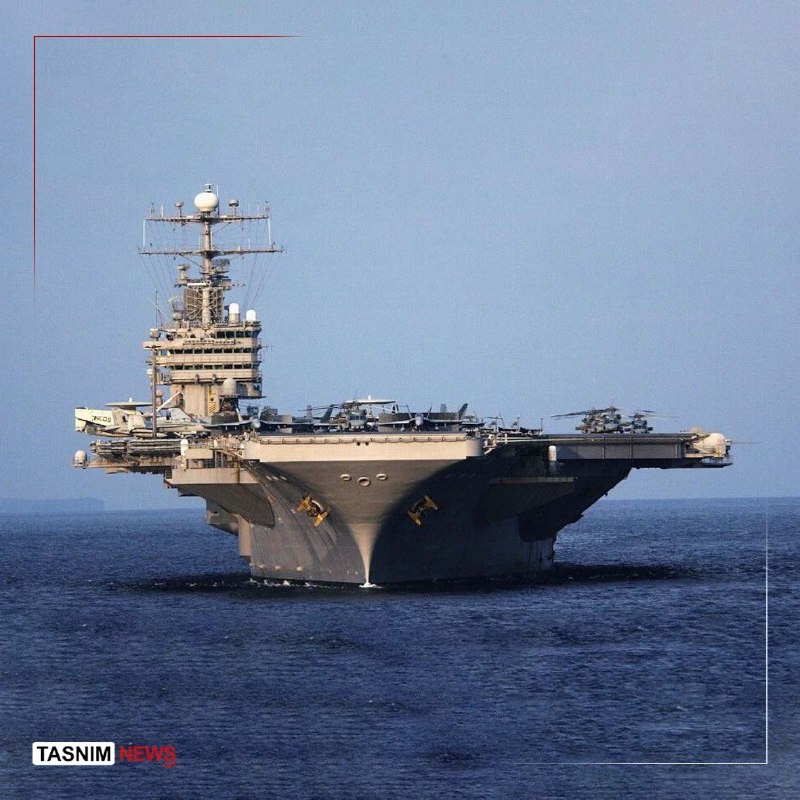
On the afternoon of 10 August 2026, a set of nearly identical remarks by Donald Trump spread across Telegram channels and the X timeline within the space of an hour. Telegram's @englishabuali posted the line at 18:10 UTC; @rnintel and @bricsnews followed minutes later; Unusual Whales and Sprinter Press pushed video clips of the same statement into the social feed between 16:34 and 18:42 UTC. The content, in each case, was not a policy announcement in the conventional sense. It was an inversion.
The president said he had noticed representatives of the Islamic Republic of Iran asking for compensation for damage done to them during what he described as the last five-month military conflict. His response, carried verbatim across the channels, was that Washington considers Iran responsible for the "damages and death" recorded in Lebanon, Syria, Yemen and Gaza. The framing flips a regional conversation that, until now, has run almost exclusively in the other direction.
What Trump actually said
The substantive line, identical across the Telegram posts and the two X posts in the cluster, runs roughly as follows: representatives of the Islamic Republic of Iran are asking for compensation for the damage done to them during the last five-month military conflict, a conflict that Trump characterises as having started because Tehran "WILL NOT" do something, the rest of which is truncated in the available clips. His counter-demand is that Iran be held responsible for damages and death in Lebanon, Syria, Yemen and Gaza.
That single paragraph contains two political moves. The first is temporal: Trump anchors the conflict to a five-month window. The second is geographic: he names four Arab states, all of them arenas in which Iran-aligned armed formations have been present in some form, and assigns causation in a single breath. The available clips do not specify which round of fighting Trump means, or what Tehran refused to do. Telegram mirrors of the remark, by their nature, compress a longer statement into a soundbite; the full transcript was not in the source items reviewed for this article.
The compensation frame and its limits
Compensation claims between states are not new, and they are not, on their face, extraordinary. The United States and Iran have an unsettled ledger dating back to the 1980s, reopened politically at almost every downturn since. What is unusual here is the direction of travel: the demand is being made by Washington on behalf of four Arab theatres against a third state, rather than by victims of US or Iranian action against the United States or Iran.
Two readings are plausible. The first is that Trump is staking out a maximalist public position to strengthen the American hand in any future negotiation over the five-month conflict, on the assumption that Tehran is preparing its own claims and the administration wants to pre-empt them in the court of regional opinion. The second is that the demand is a negotiating posture aimed at third parties: Gulf states, Egypt, Jordan, and the wider Arab League, several of which carry their own grievances against Tehran and would be receptive to a US-led framing that casts Iran as the principal regional author of damage.
Both readings point in the same operational direction. A public demand of this kind narrows the space in which a quiet deal can be concluded. The Telegram and X items reviewed here do not specify whether the named Arab governments have issued a statement on the US demand; this article has not independently established what Beirut, Damascus, Sanaa, or the Palestinian Authority have said in response, because no source for such a response was available in the cluster reviewed.
Monexus assessment: what the framing is doing
Monexus analysis: the five-month anchor is the load-bearing detail. By compressing the recent fighting into a single window that begins, in the framing, with Iranian refusal, the statement shifts the burden of regional damage from the US and its partners to Tehran. It also implicitly rewrites the Arab casualty story: damage in Lebanon, Syria, Yemen and Gaza is treated as Iranian-originated harm rather than, in the conventional Western-wire framing, the cumulative effect of multiple armed actors including Israeli operations in Gaza and Lebanon, Saudi-led operations historically in Yemen, and the post-2011 fragmentation of the Syrian state.
That framing has political utility. It consolidates a regional audience behind a single antagonist and gives the White House a domestic-political hook for any further sanctions action, secondary-tariff package, or naval posture it chooses to take. It also has an obvious cost: it puts distance between Washington and several Arab governments whose own legal and diplomatic positions on causation are more layered than the Trump formulation allows. The Telegram and X items reviewed here do not specify whether any of the Arab states named in the statement have endorsed the US position or objected to it on the record.
A counter-reading deserves space. The dominant Western-wire narrative of the same five-month window places Israeli and US military action against Iran-linked formations at the centre of events; on that telling, the demand that Tehran compensate Arab states sits awkwardly alongside the record of US and Israeli strikes in those same theatres. The Trump formulation resolves the tension by reattributing causation upstream, away from kinetic events and toward Iranian support for armed non-state actors. It is a coherent political argument. It is also, in places, a contestable one, and Arab governments with their own equities in the legal record will notice.
Stakes and what to watch
The near-term question is whether the demand hardens into a formal diplomatic instrument. A demand of this kind, made by a sitting US president across four sovereign Arab theatres, can be left as rhetoric, converted into a UN General Assembly referral, folded into a sanctions resolution, or quietly dropped. Each path carries different consequences for the four governments named, for Tehran, and for the Gulf states whose alignment is being solicited.
Two specific markers will tell. Any White House readout that cites the demand in the context of a specific negotiation track, and any Iranian Foreign Ministry briefing that responds in kind, will fix whether this is the opening bid of a new round or the closing line of an old one. The available Telegram and X items, taken together, show the demand spreading fast and reading uniformly, but they do not yet show the demand being picked up by any of the four Arab foreign ministries, by the European Union, or by the UN Secretariat in the source set reviewed.
What the sources do not specify is the precise trigger for the five-month window Trump invokes. They do not establish which round of escalation he means, whether the reference is to a single continuous campaign or to a sequence of related operations across the named theatres, or what specifically Tehran "will not" do. Each of those omissions is itself a piece of information: the gap between the breadth of the claim and the narrowness of the public record is where the next phase of the story will be written.
This article was written without a wire-service companion in the source items reviewed; the Telegram and X posts in the cluster carry the same line in slightly different cuts, but no Reuters, AP, BBC, or Al Jazeera report was available to triangulate against as of publication. The framing above leans on the wording common to all five items and flags, in place, where that wording stops.
Wire provenance
This editorial synthesis draws on the following public wire/social posts:
- https://x.com/SprinterPress/status/2086885870355742769
- https://t.me/englishabuali/77534
- https://t.me/bricsnews/17602
- https://t.me/rnintel/65491
- https://x.com/unusual_whales/status/2086853719698862331