The bitcoin tug-of-war over BIP-110 shows the protocol can still surprise its loudest voices
Three days into BIP-110's mandatory signaling, miner support sits below 3 percent. Yet on a separate rail, public companies are quietly using their bitcoin as collateral for acquisition capital, with Two Prime framing the moment as the asset's institutional lending era.
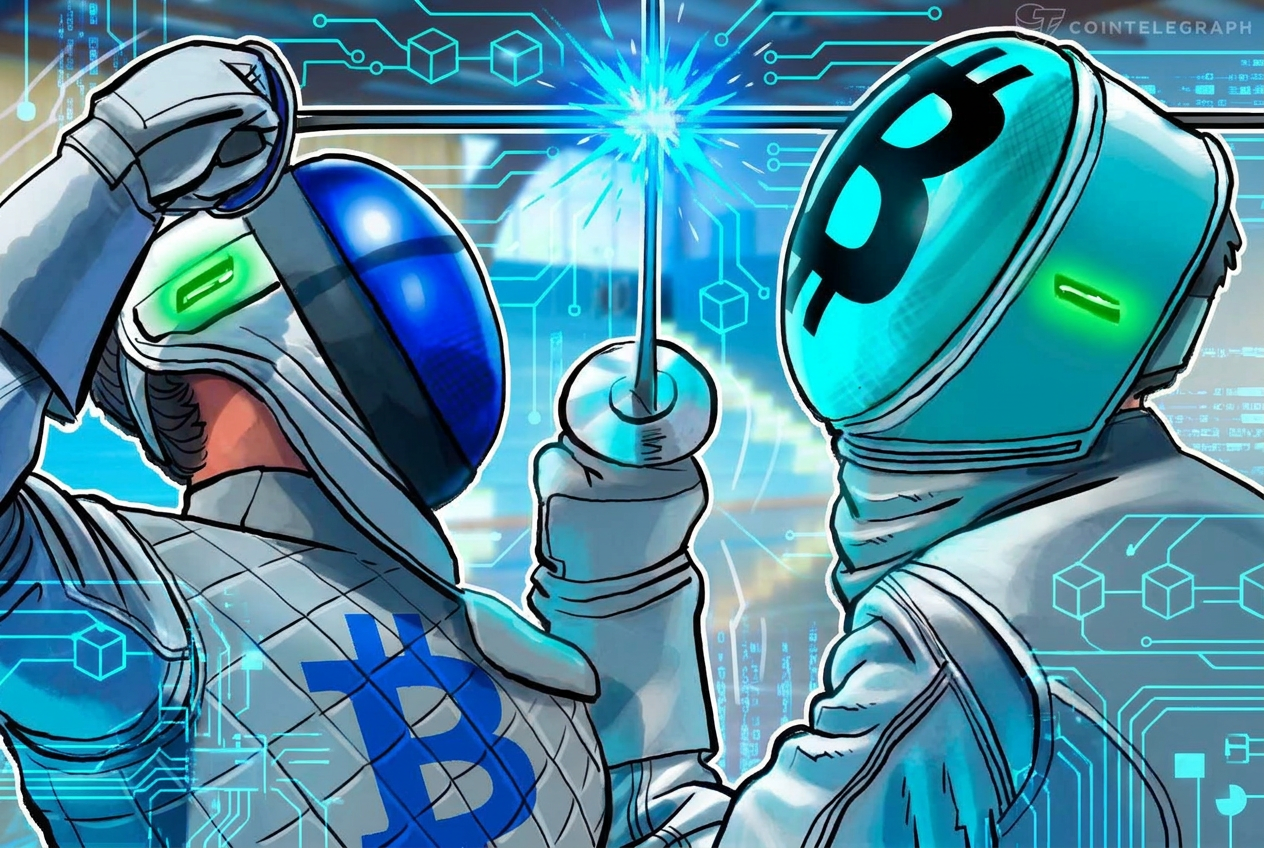
Three days after BIP-110 entered its mandatory signaling window, the proposal had captured less than 3 percent of hashpower support, according to a Cointelegraph dispatch dated 2026-08-08. By 2026-08-09, the enforcing branch had produced only two blocks and remained stuck at the bitcoin network's full mining difficulty, the same outlet reported the following morning. The numbers describe a fork that, on mining evidence alone, is going nowhere.
That is the surface story. The more revealing story, surfaced a day later by Coindesk, is what is happening on the rail nobody wants to regulate: bitcoin collateralised corporate borrowing. Two Prime, the Chicago-based prime brokerage, is now pitching bitcoin-backed loans to public companies that would rather leverage their holdings than sell them, framing the moment as the asset's institutional lending era.
A fork with the floor missing
BIP-110's mandatory signaling phase began at bitcoin block 961,632, per Coindesk's 2026-08-07 reporting. The proposal's premise is contested: it is designed to enforce limits on arbitrary data in blocks, a tightening move that splits broadly along philosophical lines. Miners tend to dislike rules that narrow their block-building freedom; full nodes tend to welcome them. By the signal window's third day, the miner side had produced almost nothing. Cointelegraph's 2026-08-08 piece put hashpower support below the 3 percent line, and the following morning's coverage noted the gap was widening, not closing. Two blocks had been mined on the enforcing branch; the difficulty target remained at the regular-network level.
The economic reading is straightforward. A soft fork that cannot attract miners is, in practice, a chain of full nodes running stricter validation rules on a network still producing canonical blocks elsewhere. That has technical value as a signal, and as a precedent for future protocol debates; it does not, on present evidence, change consensus.
The lending rail nobody is debating
In a separate venue, Two Prime published a commentary on 2026-08-11 arguing that the next phase of bitcoin adoption will be borrowing against holdings rather than disposing of them. The thesis is borrowed straight from corporate treasury practice: companies that want to fund an acquisition or a capital programme without realising a taxable gain now have an institutional counterparty willing to lend against the asset.
Two specific mechanics drive the pitch. Public companies carry bitcoin at cost basis accumulated over many years, and a sale would crystallise a tax bill that, on the recent price action, is punitive. A loan against the same coins raises cash without triggering the realisation event, leaving the treasury intact. Two Prime also notes that several issuers have used the proceeds to fund acquisitions and capital spending rather than operating budgets, which means the loans sit closer to a corporate finance instrument than to consumer-margin-style crypto leverage. Monexus read: this is balance-sheet engineering for treasurers who already own the asset, not a new yield product for retail.
What the loudest voices are missing
The contrast between the two stories tells you something about where bitcoin's centre of gravity has moved. The protocol debate drew the loudest voices: opponents writing long threads, commentators issuing warnings about the precedent of enforced data limits, miners declining to signal. The lending story drew almost none of that energy, despite moving real money.
Why the asymmetry? Three reasons, each defensible. First, miners have direct economic stakes in protocol rules that affect what they can include in blocks, and so they read BIP-110 carefully; corporate treasurers do not have a seat at that table and treat their treasury as a balance-sheet line, not a governance question. Second, soft forks are a public negotiation, while lending terms are private contracts, so the latter rarely produces quotable fights. Third, and most consequential, the people who care about protocol politics and the people who care about corporate treasury mechanics are largely different constituencies. The loudest voices in the protocol room are not the same loudest voices in the boardroom, and the protocols of attention reflect that.
The institutional era, narrowly defined
It is worth tightening what Two Prime is actually claiming. The company is not arguing that bitcoin has become a unit of account, or that it has displaced any incumbent treasury asset, or that the loans themselves are without risk. The narrower claim is that a public-company treasurer who needs to fund an acquisition without selling their bitcoin now has a credible institutional counterparty willing to write the loan, in size, on a structured basis.
That is a real claim, and it tracks the broader pattern visible across regulated venues: ETFs accumulating inflows even on days when the spot price slipped below $65,000 (Investing.com, 2026-08-09), and corporate buyers treating the asset as collateral rather than a speculative position. It is also a narrower claim than the usual "institutional adoption" framing, which tends to mix ETFs, custody, derivatives and lending into a single undifferentiated bucket.
Stakes over the next quarter
Three trajectories are worth watching. On the protocol side, the most natural read is that BIP-110 will continue to limp along as a node-side signal without becoming consensus; the cited coverage describes "limited miner signaling and discussion of a hard-fork fallback," which means even some supporters are preparing for a longer road. On the price side, sub-$65,000 bitcoin has not triggered ETF outflows in the cited reporting, which is a small piece of evidence that the demand cohort has matured past pure spot sensitivity. On the corporate-treasury side, the lend-against-it model is the one to watch because it converts a passive holding into an active financing tool, and an active tool attracts more capital than a passive one over time.
The fork may end up in the protocol-history pile. The lending rail will not.
Monexus covered the protocol mechanics and the institutional lending pitch from the published wire; the assessments above are the desk's read of how those two threads intersect.
Wire provenance
This editorial synthesis draws on the following public wire/social posts:
- https://www.coindesk.com/tech/2026/08/07/frame-bitcoin-s-bip-110-enters-mandatory-signaling-with-less-than-3-miner-support
- https://cointelegraph.com/news/bitcoin-bip-110-mandatory-signaling
- https://cointelegraph.com/news/bitcoin-bip-110-branch-stalls-miner-support
- https://www.investing.com/news/cryptocurrency-news/bitcoin-slips-below-65000-as-etf-inflows-offset-fork-concerns-4847718
- https://www.coindesk.com/daybook-us/2026/08/10/bitcoin-s-bip-110-episode-is-free-market-capitalism-in-purest-form
- https://www.coindesk.com/markets/2026/08/11/bitcoin-backed-lending-is-entering-its-institutional-era-two-prime
- https://www.coindesk.com/tech/2026/08/07/frame-bitcoin-s-bip-110-enters-mandatory-signaling-with-less-than-3-miner-support
- https://cointelegraph.com/news/bitcoin-bip-110-mandatory-signaling
- https://cointelegraph.com/news/bitcoin-bip-110-branch-stalls-miner-support
- https://www.investing.com/news/cryptocurrency-news/bitcoin-slips-below-65000-as-etf-inflows-offset-fork-concerns-4847718
- https://www.coindesk.com/daybook-us/2026/08/10/bitcoin-s-bip-110-episode-is-free-market-capitalism-in-purest-form
- https://www.coindesk.com/markets/2026/08/11/bitcoin-backed-lending-is-entering-its-institutional-era-two-prime