JPMorgan brief and reported Hormuz strikes frame Iran's position as nav-fee debate, not established policy
On 14 August 2026, Iran-aligned Telegram channels reported strikes on commercial vessels in the Strait of Hormuz while The Cradle Media relayed a JPMorgan note arguing Tehran and Muscat could lawfully charge transit fees. The available sources do not establish a fee regime, an official Iranian announcement or independently verified strike details.
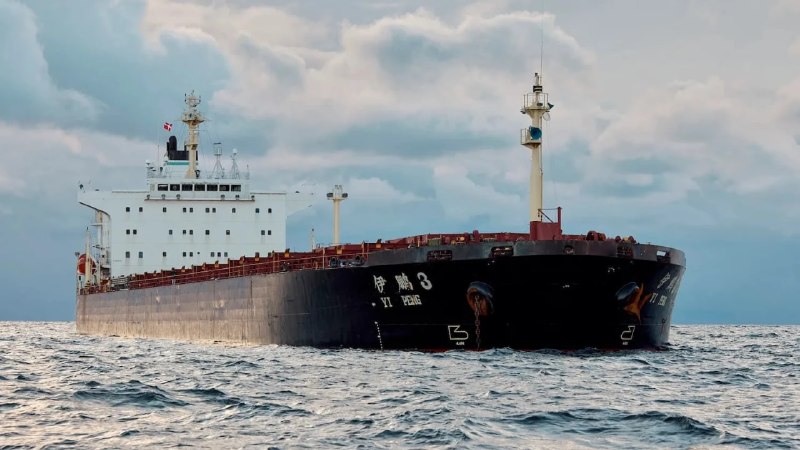
At roughly 13:28 UTC on 14 August 2026, a Telegram channel focused on regional military news posted that Iran had struck two tankers in the Strait of Hormuz with underwater drones. About half an hour earlier, a separate Iran-watch channel reported that Iran had struck a vessel in the same waterway. The reports did not identify the vessels, their flags, cargoes, owners or the consequences for those aboard. The available source items do not specify whether the two posts concerned the same incident, or whether independent naval, commercial or insurance authorities confirmed them.
By 13:53 UTC the same day, The Cradle Media relayed a JPMorgan legal note arguing that Iran and Oman were "legally justified" to charge navigation fees for vessels passing through narrow waters in their maritime territory. The relay compared the proposal with service fees charged by Denmark, Sweden and Turkiye in analogous straits. The thread does not include a direct JPMorgan publication; the analysis exists in the cited source items only as The Cradle Media's summary of a JPMorgan note.
What the four source items together describe is a sequence, not a policy. A proposed legal justification, two unverified strike reports and a Middle East Eye dispatch on US sanctions form a single day of contested claims about one of the world's most consequential shipping corridors. The rest of this article lays out what each strand establishes, what it does not, and where the cumulative evidence stops.
A relay about a legal argument, not an Iranian announcement
The JPMorgan item, as relayed by The Cradle Media, is an argument about the legal basis for charging for passage through narrow waters. It does not establish that Tehran or Muscat have already introduced a common fee system, collected money from shipowners, or reached a formal agreement. The source item presents the analysis as a justification for a possible regime, not as the regime itself.
That distinction matters because the rest of the day's reporting depends on it. A proposed charge is not the same as an established toll. A government could announce a fee, invite payment and then face a dispute over whether vessels are legally obliged to pay. Shipowners, insurers and their customers would then have to decide whether the cost of compliance was lower than the risk of disruption. The available source items do not specify the proposed amount, the collection mechanism, the legal instrument, or any deadline for payment.
The comparison with Denmark, Sweden and Turkiye gives the argument a practical frame. In The Cradle Media's summary, narrow straits or maritime territory do not automatically make a charge lawful, but existing service-fee regimes show that governments can seek payment for navigation through constrained waters. The source item does not provide the legal text of those regimes or establish that their conditions match those of the Strait of Hormuz. Nor does it name the JPMorgan desk, division or author of the note.
Monexus assessment: the significance lies less in the legal conclusion than in the bureaucratic vocabulary now being attached to Iran's position. The Cradle's relay frames Tehran's posture as something that could be administered, priced and defended through a recognised mechanism, not only through force or its threat. That is an interpretive reading of the source sequence, not a finding that Iran, Oman or JPMorgan have confirmed any operational step.
Two strike reports, one shared strategic setting
The two Telegram posts were published by channels whose biographies focus on regional and maritime events. The first, from an account posting under the name Megatron, said Iran had struck two tankers in the strait with underwater drones. The second, from Middle East Spectator, said Iran had struck a vessel in the strait, without providing additional operational detail. The available source items do not specify whether the two reports concerned the same incident, whether independent authorities confirmed them, or what damage resulted.
The cautious conclusion is narrow. The reports place alleged Iranian attacks on commercial shipping inside the same strategic setting as the discussion of navigation fees. If verified by a first-party source, they would show that Tehran is reportedly prepared to use military pressure while a third-party legal argument about a fee regime circulates in public. If not verified, the reports still reveal how the confrontation is being framed by channels that monitor the corridor: the issue is presented not only as whether ships can pass, but who is entitled to set the terms.
The alternative explanation is that the incidents and the legal analysis are separate events. A JPMorgan note could have been circulated independently of any operational decision. A vessel strike could also have been reported before the details of a fee proposal were known. The source items do not establish timing, command responsibility or a direct link between the two. The responsible reading is therefore to treat the relationship as a plausible analytical connection, not a demonstrated chain of causation.
Washington's reported sanctions threat, and what it does not say
At roughly 14:29 UTC on 14 August 2026, Middle East Eye reported that Iran had "taken another step" towards formalising its control of the Strait of Hormuz while the United States threatened "unprecedented sanctions". The report's framing presents the sanctions threat as a response to Iran's moves around the waterway. The supplied source item does not specify the legal form of the threatened sanctions, the measures contemplated or the enforcement mechanism.
That omission matters because the effectiveness of a threat depends on its addressees. A sanction that cannot affect shipping decisions, insurance arrangements or the behaviour of governments using the strait may remain a political signal rather than an operational instrument. The available source items do not say which US authorities would impose the measures, which sectors would be targeted, or how Washington would distinguish payment for a navigation service from other financial transactions involving Iran.
The legal and military tracks are also different. A fee claim, if one were issued, would invite governments and companies to debate navigation rights, service charges and commercial liability. Reports of an attack on a commercial vessel raise questions of maritime security, civilian protection and accountability. Treating the two as one policy can sharpen the analysis, but it can also obscure what is established by the sources and what is merely inferred.
What would close the evidence gap
The sources agree on the existence of a JPMorgan note, as relayed by The Cradle Media; on two Telegram reports of tanker incidents; and on Middle East Eye's account of an Iranian move and a US sanctions threat. They do not establish the legal status, operational scope or consequences of an Iran-Oman fee regime. They do not establish independent confirmation of the reported tanker attacks, the identities of any vessels, or the chain of command behind any strike.
The next decisive evidence would be a first-party JPMorgan publication of the note (or an on-the-record summary by a named JPMorgan analyst); an official Iranian or Omani statement on a navigation charge; an incident report from a named shipping company, insurer, flag state or naval authority; or a US Treasury, State Department or White House notice identifying the sanctions envisaged. Until at least one of those appears, the 14 August sequence is best described as a contested framing of an ongoing dispute, not a confirmed policy shift.
For now, the Hormuz confrontation is a struggle over the rules of passage conducted through incompatible forms of power: a third-party legal argument, commercial pressure, two unverified strike reports and an unenumerated US sanctions threat. The question is no longer only whether the strait remains open. It is who can attach a price, a risk and a legal meaning to movement through it, and on whose authority.
This article preserves the gap between a relayed JPMorgan legal note and any Iranian or Omani policy action, and between two unverified Telegram strike reports and any first-party confirmation. Monexus flags the absence of a direct JPMorgan publication in the cited source items and treats the relationship between the note and the strike reports as analytical, not demonstrated.
Wire provenance
This editorial synthesis draws on the following public wire/social posts:
- https://middleeasteye.pulse.ly/irxg3aavdl
- https://x.com/MiddleEastEye/status/2088271878280425501
- https://t.me/thecradlemedia/66174
- https://t.me/megatron_ron/16461
- https://t.me/Middle_East_Spectator/35899