Tehran rejects Trump Hormuz claim, signals naval exclusion against US vessels
Iran's army chief tells Trump the Strait of Hormuz 'is for Iran, not America' and warns that US forces are 'no longer allowed to enter' the Persian Gulf, Sea of Oman or the strait itself, in remarks carried by Iranian state media.
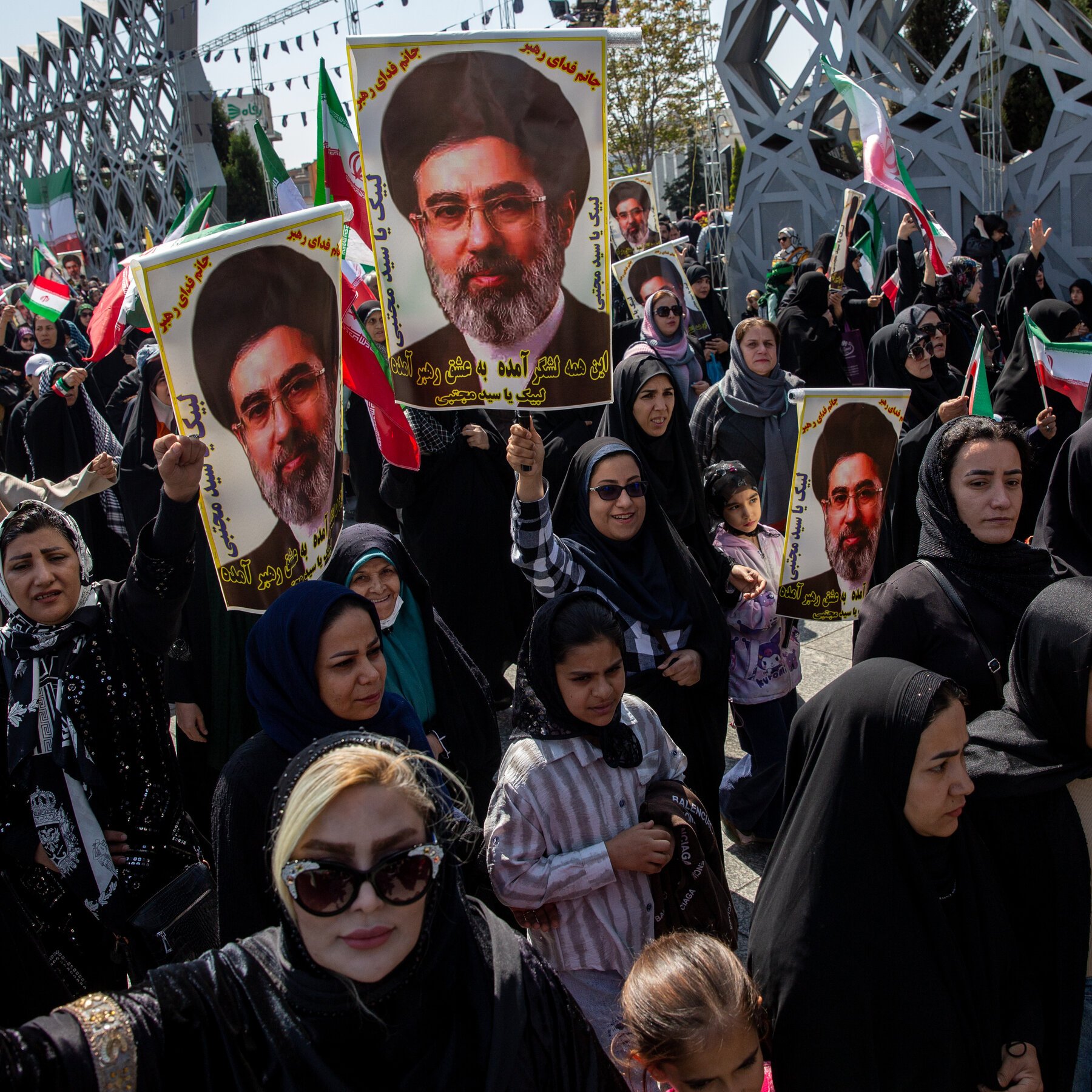
At 12:23 UTC on 16 August 2026, Iran's Army Commander-in-Chief Major General Hatami addressed a US president by name and told him he was wrong. The Strait of Hormuz, Hatami said in remarks carried on English-language Telegram channels by Tasnim News, an Iranian state-affiliated wire, is for Iran, not America, and Iran will preserve it with all its might, according to releases posted between 12:17 and 12:28 UTC. The line was echoed by English-language PressTV on its Telegram channel at 13:06 UTC.
The escalation is rhetorical on its face, but the language is operational. Hatami's claim that "the Americans have been removed, and are no longer allowed to enter the Persian Gulf, the Sea of Oman, or the Strait of Hormuz," carried on the Telegram channel of the OSINT aggregator Open Source Intel at 12:59 UTC, reads as the kind of statement that, if backed by naval action, would amount to a standing exclusion regime against US-flagged vessels in three connected waterways. Tehran is signalling, not yet firing.
The claim that triggered it
The dispute began with remarks attributed to US President Donald Trump about the Strait of Hormuz. The Iranian and Iranian-aligned Telegram channels do not include the original transcript or venue of Trump's comments, and the available source items do not specify where, when or to whom he spoke. According to Hatami, paraphrased by Tasnim at 12:23 UTC, Trump had said he wanted to declare the Strait of Hormuz part of America before later claiming, after seeing reactions, that he had been joking. PressTV's 13:06 UTC Telegram post quoted Hatami using the phrase "the criminal president of the United States," while Tasnim's 12:17 and 12:23 UTC posts used the variant "the criminal president of America." Both phrases frame the US statement inside Iran's own rhetorical idiom rather than as a neutral wire report.
That framing matters. Readers should treat the underlying US statement as an Iranian paraphrase of what Hatami said Trump said, not as a verified White House transcript, until an independent recording surfaces. The Iranian outlets are the only voice in this thread, and they have chosen to relay the more inflammatory framing. The later "I was joking" qualifier is also Iranian-paraphrased; the available source items do not include a direct Trump quote on that point either.
A general who talks like a navy
The most consequential sentence Hatami delivered, according to the 12:59 UTC OSINT release, was the operational one: "The Americans have been removed, and are no longer allowed to enter the Persian Gulf, the Sea of Oman, or the Strait of Hormuz." That is not the language of a diplomat. It is the language a maritime commander uses before issuing an exclusion order.
Hatami is described in the cited Tasnim posts as "Commander-in-Chief of the Army," a title consistent with his long-reported role as head of Iran's regular armed forces. The statements on 16 August are being carried by Tasnim and PressTV, both Iranian state outlets. The cited source items do not include any parallel-service statement from Iran's Islamic Revolutionary Guard Corps, so this article does not show whether the IRGC has echoed, qualified or contradicted the position. Whether the threat reflects a coordinated Iranian posture or a narrower statement from one service is open on the present evidence.
Tasnim's 12:28 UTC post also cast Hormuz as "one of the prerequisites for ending the war," a phrase that, in the same paragraph, sits alongside the vow to defend the waterway "with all our might." Monexus assessment: read together, the language positions Hormuz as a bargaining chip rather than a permanent loss, with the exclusion rhetoric framing the waterway as leverage in a broader negotiation.
How this lands
The episode lands on top of a long-running contest between Tehran and Washington over control and access around the strait, a contest in which both sides have, at various points, used naval movements, seizures and sanctions as instruments short of declared war. What Hatami is signalling on 16 August is that the regular Iranian army, the service carrying his title, intends to convert that pattern of confrontation into a standing denial regime for US vessels.
Monexus assessment: the most natural read of Hatami's words is that Tehran is raising the diplomatic cost of any US naval move in the gulf, not that an Iranian formation is about to physically expel a US carrier group from the Arabian Sea. The threat is calibrated for headlines, not for a shooting war. Whether that calibration holds will depend on whether the IRGC's outlets and operational channels carry matching language in the days ahead, and on whether any US freedom-of-navigation operation is announced.
What remains uncertain
Three watches are now running. First, the IRGC's public posture. The cited Telegram posts contain no IRGC statement on Hatami's exclusion language, and the available source items do not specify whether one has been issued elsewhere. Second, US Central Command and the US Navy. The cited Telegram posts contain no CENTCOM or Fifth Fleet response to Hatami's statement; this article has not independently established whether such a response has been issued elsewhere. Third, the underlying Trump remark itself. No source in this thread carries the original US statement in Trump's own words. Until an independent recording or transcript appears, every characterisation of what Trump said rests on Iranian paraphrase.
The deeper pattern is familiar. The Iran file is the one bilateral relationship in which both sides treat rhetoric as policy, and the Strait of Hormuz is the channel through which that rhetoric most reliably travels into global energy markets. What Hatami delivered on 16 August is the rhetorical escalation layer of that contest, with the operational layer still to come or not to come. If it does, the next headline will not be a Telegram post. It will be a hull and a flag.
This article draws entirely on Iranian state and Iranian-aligned Telegram channels. Where the same claim is repeated across two or three of them, the underlying US statement is still an Iranian paraphrase, not a verified White House record. Monexus framed the threat as calibrated rhetoric and flagged, as a scoping note, that the cited source items do not include an IRGC or CENTCOM counter-statement, rather than inferring either party's silence.
Wire provenance
This editorial synthesis draws on the following public wire/social posts:
- https://t.me/presstv/203004
- https://t.me/osintlive/564570
- https://t.me/osintlive/564568
- https://t.me/tasnimnews_en/31270
- https://t.me/tasnimnews_en/31269
- https://t.me/tasnimnews_en/31264