Kushner meets Hamas in Egypt as the Gaza framework enters a second phase
Jared Kushner met senior Hamas figures in Egypt on 16 August 2026 as a US
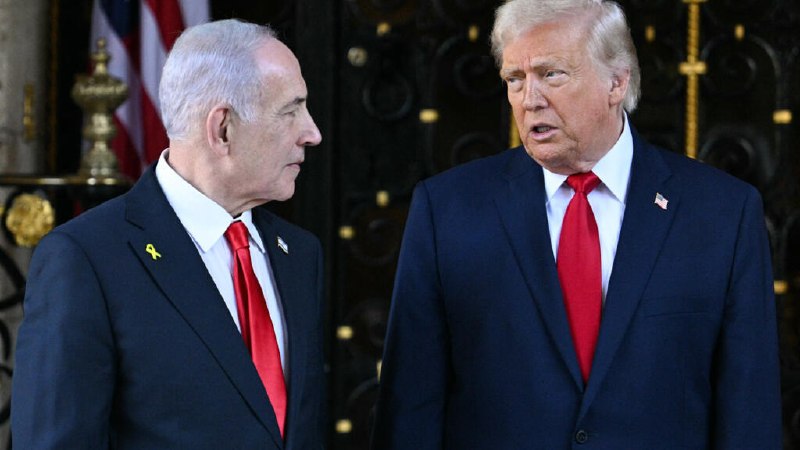
Jared Kushner, described in coverage as Trump's envoy and son-in-law, met senior Hamas figures in Cairo on 16 August 2026. A regional mediation track pressed for movement on a second-phase Gaza framework, while Arab states separately condemned Israel's reported rejection of the plan as US and regional mediators pursued ceasefire and implementation talks in Egypt. NPR's same-day reporting said the envoy was due to meet Netanyahu next, and Haaretz separately reported that Kushner had landed in Israel, placing the Israeli stop on the itinerary after Cairo rather than as a participant in the Egyptian encounter.
The meeting is significant because it places a US envoy directly in negotiations with a movement whose future political and military role is itself part of the dispute. The available reporting supports a narrow conclusion: a US envoy sat with senior Hamas figures in Egypt within a mediated process, and a plan described as rejected by Israel is the working text around which mediators are convening. It does not establish the sequence, timetable or enforcement terms of those arrangements. That gap is not incidental. It is where the diplomatic language of a second phase meets the unresolved politics of who governs Gaza and on what terms.
What the Cairo meeting establishes
Al Jazeera reported that Kushner met Hamas leaders in Egypt to push Trump's Gaza plan, citing diplomatic sources, and that the Trump envoy has pushed for disarmament to end any future Hamas role in running Gaza. The Open Source Intel Telegram channel, relaying an Axios report dated 16 August 2026, said Hamas leaders, in a meeting with Trump adviser Jared Kushner in Egypt on Sunday, reaffirmed their commitment to disarm and demilitarize Gaza. The original Axios report is not itself part of the available thread evidence, and the demilitarisation framing in the rest of the thread attributes the demand to the US side rather than describing a Hamas-side reaffirmation. NPR's same-day reporting characterised the encounter as a rare meeting between a US envoy and Hamas leadership, framed as a new diplomatic effort to move the stalled Gaza ceasefire forward, with the envoy due to meet Netanyahu next. Middle East Eye's live coverage separately framed the plan as one rejected by Israel. A BBC World Telegram relay, posted at 20:38 UTC on 16 August 2026, framed the Cairo encounter as taking place "a week after Israel rejected Donald Trump's peace plan for Gaza," anchoring the timing against an Israeli rejection the relay does not date more precisely.
The Axios-sourced disarmament claim is a relay and is partly in tension with the rest of the thread. Open Source Intel's Telegram post cites Axios; the original Axios report is not itself part of the available thread evidence, and Al Jazeera's same-day report attributes the demand to end any future Hamas governing role to the US side via diplomatic sources. On that basis, the most defensible formulation is that the demilitarisation framing in the Axios relay is reported through a secondary channel rather than independently verified by Monexus from the underlying reporting, and that the wider thread places the demand with the US side. The same caveat applies to the Israeli rejection: it appears inside coverage of the envoy's mission and inside the BBC World relay's timeline, and is not paired in the available items with a first-party Israeli statement. The BBC World relay's "a week after" formulation is, similarly, a paraphrase inside a Telegram post and not an independently corroborated date stamp for the Israeli rejection itself.
The careful account, then, is a layered one. A public meeting took place in Cairo on 16 August 2026. A US envoy is pressing Trump's plan. The US side is reported to have demanded disarmament and an end to any future Hamas governing role. A disarmament pledge has been reported through a relay of an Axios scoop that the wider thread does not corroborate. A separate outlet frames the plan as rejected by Israel, with the BBC World relay placing that rejection roughly a week before the Cairo meeting. The available source items do not specify a weapons-hand-over schedule, a verification mechanism, the parties responsible for monitoring implementation, or the precise terms under which any future governing role would be settled. The distinction matters: a meeting that yields public readouts is not the same as proof that its most difficult provisions have been agreed or can be carried out.
Monexus analysis: The most defensible reading of the public record is that Washington is trying to convert a political framework into a negotiating track involving Hamas directly, while using reported public readouts to narrow the scope of disagreement. The alternative reading is that the announcement is primarily a signalling exercise. Hamas has been publicly associated with a disarmament roadmap through a single relay, and Israel has been publicly associated with rejection through coverage of the envoy's mission and the BBC World relay's timeline, but the absence of published implementation details and of first-party Israeli confirmation leaves unclear whether the central disputes over arms and governance have actually narrowed. On the evidence available, the signalling explanation cannot be ruled out.
Egypt sits at the centre of the process
NPR's reporting placed the Kushner-Hamas meeting in Egypt and described it as a new diplomatic effort to make progress in the stalled Gaza ceasefire. The Al Jazeera report likewise situated the encounter in Egypt, with the mediation track organised around a Trump-era framework. Together those items place Egypt inside the diplomatic architecture rather than treating Cairo as a neutral venue alone.
That role gives the process regional weight. Egypt is the host of the encounter between a US envoy and Hamas leadership, and the venue at which a ceasefire track is being pursued. The available material does not specify Egypt's negotiating instructions, the identity of every guarantor delegation, or what enforcement powers, if any, guarantors would exercise. It would therefore be inaccurate to say that guarantors have already been assigned a policing role over any roadmap timeline.
Monexus assessment: The process depends less on the number of parties in the room than on whether Cairo can bridge the gap between public readouts and executable commitments. A framework can be announced by the parties present without becoming operational if the central questions of timing, verification and political authority remain unspecified. Egypt's hosting is a procedural fact. Its capacity to produce those missing terms is a separate question that the available reporting does not answer.
Israel's reported rejection remains the political fault line
Deutsche Welle reported that the UAE, Saudi Arabia and other states condemned Israel's rejection of the Trump Gaza plan. The same DW report described the regional talks in Egypt as involving ceasefire and implementation discussions. Middle East Eye's coverage framed the Gaza plan as rejected by Israel. The osintlive Telegram relay of the Axios report placed the Kushner-Hamas meeting in Cairo one day before the envoy's reported meeting with Netanyahu, framing the Israeli stop as the next item on the itinerary rather than as a participant in the Cairo encounter. Haaretz's headline reporting has Kushner landing in Israel after Cairo for talks with Netanyahu, a step NPR's same-day report also anticipated. The BBC World relay, posted at 20:38 UTC on 16 August 2026, repeats the framing that Israel rejected the peace plan roughly a week before the Cairo encounter.
The available reporting supports a current diplomatic confrontation over Israel's reported rejection. The careful formulation is that the condemnation was reported alongside coverage of talks in Egypt, and that Israel's reported rejection appears inside coverage of the envoy's mission and the BBC relay rather than as a separately confirmed official Israeli position. The available items do not specify the precise date on which the Arab states issued their statement, nor do they provide the full list of governments that joined it. The available items also do not specify whether an Israeli delegation attended the Cairo meeting itself. They do show, through NPR and Haaretz, that the envoy's next confirmed stop after Cairo was Israel, for the meeting with Netanyahu.
The Israeli position should not be reduced to a footnote. Any arrangement concerning Gaza's security and governance must address Israel's security concerns, while the Palestinian civilian harm and humanitarian consequences of the conflict remain central to the legitimacy and durability of any ceasefire framework. The supplied sources do not set out a single agreed balance between those considerations. They show instead that the diplomatic process is advancing through a proposal that Israel has been reported to reject and that Arab governments are publicly criticising, and that the US envoy is reported as heading into that confrontation rather than around it.
A second phase without a public implementation map
The central uncertainty is not whether a meeting took place. It did, in Cairo, on 16 August 2026. The uncertainty is what the readouts mean in practice. Al Jazeera's report identifies the substantive demand attributed to the US side via diplomatic sources: disarmament and an end to any future Hamas governing role. The Axios relay adds a reported Hamas-side reaffirmation of a disarmament and demilitarisation commitment that the wider thread does not corroborate. NPR frames the encounter as a rare meeting and a new diplomatic effort ahead of talks with Netanyahu, with Haaretz separately reporting that Kushner had landed in Israel for that meeting. The BBC World relay explicitly anchors the timing against an Israeli rejection that it places roughly a week earlier. None of those items publish the operational terms of any second phase.
That contrast produces a disciplined account of the negotiations. The US envoy is reported as pressing a plan that, according to the available thread, includes a US-side demand for disarmament and for an end to any future Hamas governing role. A disarmament pledge has been reported, through a relay of an Axios scoop, as a Hamas-side reaffirmation, but the wider thread places the demand with the US side. Israel is reported, through coverage of the envoy's mission and the BBC World relay, to have rejected the plan. The distance between those positions is not evidence that talks have failed, but it is evidence that the announcement should not be treated as a completed settlement.
The available source items also do not establish the position of the Israeli government on the second-phase roadmap beyond the reported rejection carried in the regional and international outlets. They do not specify the status of ceasefire implementation, the duration of any phase, the number of weapons to be addressed, or the body that would verify compliance. Those omissions limit any claim that a durable transfer of authority is imminent. They also mean the disarmament pledge now circulating should be read as reported, and in tension with how the wider thread attributes the demand, rather than as a verified text of an agreed instrument.
The stakes are consequently concrete. A workable framework would have to reconcile three pressures: the US-side demand for disarmament and an end to any future Hamas governing role, the reported Hamas-side reaffirmation that only the Axios relay carries, and the reported Israeli rejection of the plan. If those positions cannot be reconciled, a public roadmap risks becoming a statement of intent rather than a ceasefire architecture.
The next signal will be operational language, and the next confirmed stop on the envoy's itinerary is Israel, where the Netanyahu meeting awaited after the landing reported by Haaretz and NPR. The question is not whether another meeting is announced, but whether the parties publish a timetable and a method for verifying the disputed security provisions. Until then, the second phase exists politically because readouts have been issued and diplomatically because mediators convened around it. Whether it exists as an enforceable settlement remains open.
Desk note: Monexus keeps the disarmament reaffirmation visibly hedged as a single relay in tension with the wider thread, keeps the Israeli rejection as reported rather than confirmed, and treats the BBC World Telegram relay as a timeline anchor rather than as a primary record of the Israeli rejection.
Wire provenance
This editorial synthesis draws on the following public wire/social posts:
- https://t.me/BBCWorldoffl/78348
- https://www.aljazeera.com/news/2026/8/16/kushner-meets-hamas-in-egypt-to-push-trumps-gaza-plan?traffic_source=rss
- https://t.me/osintlive/564643
- https://www.npr.org/2026/08/16/g-s1-138948/kushner-gaza-hamas-netanyahu-egypt-talks
- https://www.middleeasteye.net/live/live-us-and-iran-confirm-peace-accord-signing-set-friday-geneva
- https://x.com/MiddleEastEye/status/2089044476501037177
- https://www.dw.com/en/uae-saudi-arabia-others-condemn-israel-s-rejection-of-trump-gaza-plan/a-78389399?maca=en-rss-en-all-1573-rdf
- https://t.me/BBCWorldoffl/78348
- https://www.aljazeera.com/news/2026/8/16/kushner-meets-hamas-in-egypt-to-push-trumps-gaza-plan?traffic_source=rss
- https://t.me/osintlive/564643
- https://www.npr.org/2026/08/16/g-s1-138948/kushner-gaza-hamas-netanyahu-egypt-talks
- https://www.middleeasteye.net/live/live-us-and-iran-confirm-peace-accord-signing-set-friday-geneva
- https://x.com/MiddleEastEye/status/2089044476501037177
- https://www.dw.com/en/uae-saudi-arabia-others-condemn-israel-s-rejection-of-trump-gaza-plan/a-78389399?maca=en-rss-en-all-1573-rdf