Pope Leo XIV renews appeal to end West Bank violence
On 16 August 2026, Pope Leo XIV renewed his appeal for an end to violence against Palestinians in the West Bank. A separate Telegram relay also linked the appeal to a two-state solution.
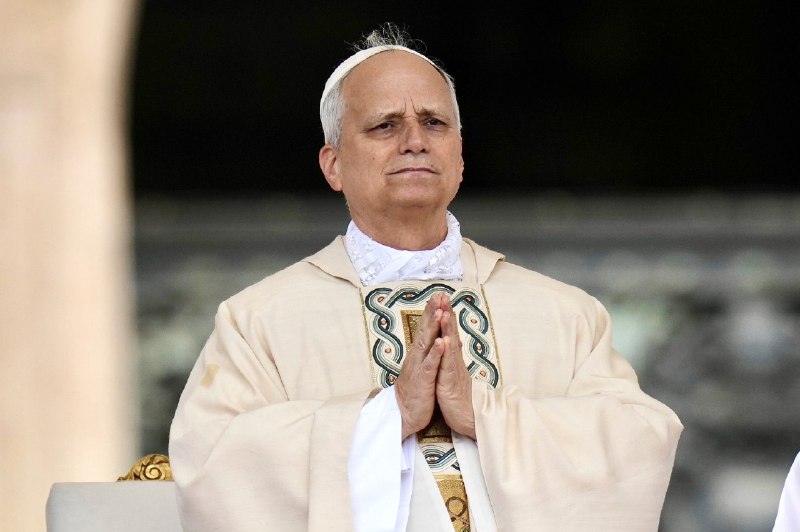
At 16:45 UTC on 16 August 2026, Reuters posted a headline saying Pope Leo XIV had called for an end to violence against Palestinians in the West Bank. The post did not reproduce the Pope's remarks or provide a transcript. It established the central fact reported in the source material, while leaving the wider context to other relays.
The intervention is notable less for the existence of a papal appeal than for the way the supplied reports place a humanitarian demand beside a political horizon. Reuters reported the call to end West Bank violence, BRICS News relayed the phrase "repeated violence," and PressTV said the Pope had renewed his appeal. A separate post from Megatron attributed to him both an appeal to the international community and support for a two-state solution. The sources agree on the appeal against violence; only the Megatron item, as presented in the thread context, supplies the two-state formulation and the specific reference to the international community.
A narrow appeal, reported narrowly
The Reuters item is the strongest lead source in the available material because it identifies the Pope, the location in political terms and the demand at the centre of the story: an end to West Bank violence against Palestinians. The post's headline and link do not, by themselves, establish the setting, the full wording or the diplomatic context of the intervention.
BRICS News provided a second version of the central message at 16:35 UTC, using the description "repeated violence" against Palestinians. PressTV, at 15:53 UTC, said the Pope had renewed his call for an end to violence against Palestinian communities in the West Bank. These reports are consistent with Reuters, but they remain short relays. Monexus assessment: the repetition across the supplied posts strengthens confidence that the appeal was renewed, while their brevity limits what can responsibly be said about its precise language and immediate diplomatic purpose.
That distinction matters. A headline can establish that a call was made, but it cannot carry the force of a full record. The available material does not specify whether the Pope delivered the words in a written statement, a prepared address or another format. It also does not provide the complete passage surrounding the appeal. The safe conclusion is narrower than the rhetoric around the story: the supplied sources document a renewed appeal against violence, not the full diplomatic argument in which it was situated.
The political horizon in the relay
The two-state element appears in the Megatron post, published at 15:39 UTC on 16 August 2026. The post said Pope Leo had called on the international community to stop Israeli violence against Palestinians and had also called for a two-state solution. No other supplied source reproduces that formulation in its headline or summary.
That makes the political claim less secure than the appeal against violence. It is not contradicted by the Reuters headline, which does not mention a two-state framework, but it is not independently corroborated within the available set. Monexus analysis: the difference is one of evidentiary weight, not an invitation to erase the political claim. The responsible reading distinguishes what the Megatron relay attributes to the Pope from what the wider source group establishes.
The issue is not semantic hair-splitting. When public debate is already polarised, attaching a settlement formula to a humanitarian appeal can change how the intervention is received. A call to stop violence is directly legible. A call for a two-state solution is also a proposal about political arrangement, and therefore carries implications beyond the immediate protection of civilians. The supplied sources do not specify how the Pope connected the two points, nor whether the two-state reference appeared in the same complete passage as the appeal.
What the sources establish, and what they do not
The source record is sufficient to support a limited set of statements. Reuters reported that Pope Leo XIV called for an end to West Bank violence against Palestinians. BRICS News described the violence as "repeated." PressTV described the papal appeal as renewed. Megatron attributed to the Pope a call addressed to the international community and a two-state solution.
The source record is insufficient to establish a broader account of Vatican policy, a change in Western diplomacy or a specific Israeli response to this appeal. No supplied item identifies a new operational measure, diplomatic communique or government decision. It would therefore be an overreach to describe the intervention as producing a policy shift. Monexus assessment: the evidence supports a statement about papal messaging, not a claim about the material balance of power in the West Bank.
There is also a question of framing. The Megatron post uses the phrase "Israeli violence" in its summary, while the Reuters and BRICS News headlines use broader descriptions of violence against Palestinians. The available items do not supply enough detail to adjudicate the competing descriptions or to establish the circumstances of any particular incident. The disagreement is not necessarily about whether an appeal occurred. It is about how the source relays characterise the violence and the responsibility attached to it.
The stakes behind a renewed appeal
For Palestinians in the West Bank, the significance of the appeal lies in the demand that violence end. The source material does not provide casualty figures, incident totals or an account of implementation, so it cannot measure the appeal's effect on the ground. Its immediate value, within the record available here, is expressive: a prominent religious voice is publicly renewing a demand for an end to violence.
For Israelis concerned about security, the appropriate counterpoint is that any account of West Bank violence must also take seriously threats to Israeli life and the security questions surrounding armed groups. The supplied material does not document a specific Israeli response to the Pope's appeal, and it does not provide a first-party statement from the Israeli government, the IDF or another Israeli institution. Monexus analysis does not infer agreement or disagreement from that absence. The evidence before publication supports only the proposition that Israeli security concerns remain part of the political setting in which the appeal is being reported.
The two-state question raises the diplomatic temperature. If the Megatron account is accurate, the Pope was not only asking for an end to violence but also invoking a political framework. If the Reuters headline is the limit of the confirmed record, the stronger conclusion is simply that the Pope called for an end to violence against Palestinians. Readers should watch for a fuller Vatican record or a direct statement clarifying the formulation. Until then, the most defensible position is to keep the humanitarian appeal firm and the political attribution cautious.
Wire provenance
This editorial synthesis draws on the following public wire/social posts:
- https://reut.rs/3SgynqG
- https://x.com/Reuters/status/2089030702125732008
- https://t.me/bricsnews/17707
- https://t.me/presstv/203021
- https://t.me/megatron_ron/16485