Coinbase's Armstrong stakes the case for 'AiFi,' as US savings thin and Ethereum eyes Hegotá
Brian Armstrong frames crypto as the settlement layer for autonomous agents. Hours earlier, Bloomberg reported US household savings approaching a record low, and Ethereum developers narrowed 66 proposals for the Hegotá upgrade.
On 17 August 2026, Coinbase CEO Brian Armstrong made a public bet that the next phase of crypto will not look like the last one. Agents, he argued in comments relayed by Cointelegraph's news desk, need programmable, global, low-fee money to operate, declaring "crypto is the currency of AiFi (agentic finance)" (Cointelegraph, 17 August 2026, 02:27 UTC). The phrasing is new, but the impulse is familiar: every cycle of this industry recasts the same settlement layer as the indispensable backbone of some just-arrived future.
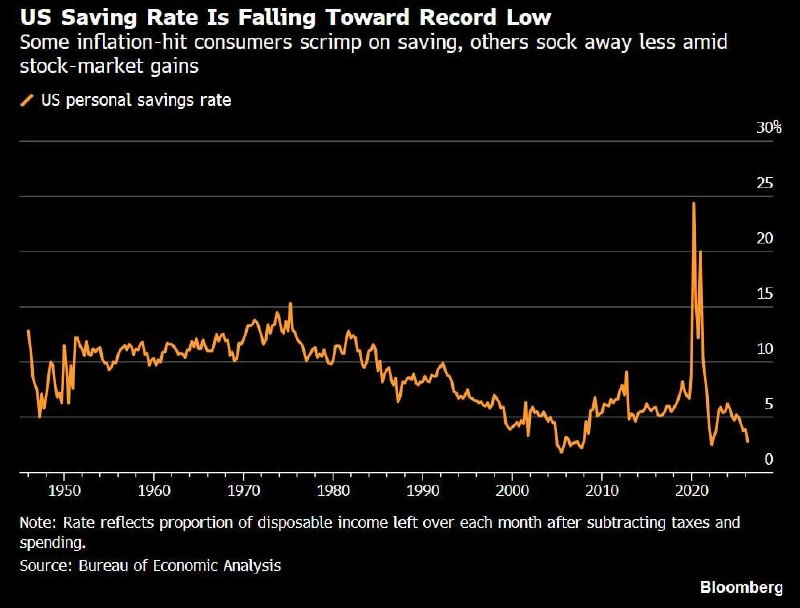
The pitch lands against an uncomfortable backdrop. Hours earlier, Bloomberg reported via a Cointelegraph relay that US household savings are "nearing a record low" (Cointelegraph relay of Bloomberg, 16 August 2026, 19:34 UTC). The juxtaposition is not accidental, and it shapes the argument. If the underlying economy is thinner than the headline prints suggest, the demand for permissionless rails rises even when the retail bid is quiet. And on the protocol side, Ethereum developers are narrowing 66 proposals for the "Hegotá" upgrade, an effort explicitly framed as making the network "more private and censorship-resistant" (Cointelegraph, 16 August 2026, 18:33 UTC). Read together, the three threads sketch a familiar triangle: a corporate sponsor naming the future, a macro backdrop that loosens the wallet, and a base-layer upgrade aimed at hardening the floor.
The corporate case for AiFi
Armstrong's framing is essentially an infrastructure pitch dressed in agentic-AI clothing. Autonomous software needs a payment rail that does not depend on a counterparty's underwriting decision, a card network's approval, or a jurisdiction's tolerance. In his telling, that rail is crypto, and the addressable workload is the universe of agent-to-agent transactions that the platform economy is busy creating (Cointelegraph, 17 August 2026, 02:27 UTC).\n The strategic logic is well-trodden. Coinbase gets to position itself as the on-ramp, custody provider, and execution venue for what its CEO is betting will be a new transaction class. "AiFi" is a marketing word for an old strategy: find the next high-velocity workload and make sure your exchange sits between the user and the chain. The counter-narrative, worth naming plainly, is that agent commerce may not materialise at the scale the pitch implies, and that stablecoins and card-issued agent APIs are credible substitutes. The dominant framing holds because the underlying logic, programmable settlement at low marginal cost, is real even if the "AiFi" label overreaches.
The macro floor is thinner than it looks
Bloomberg's reading of US household savings is the second piece of the triangle, and the one that gives Armstrong's pitch its weight. When the household balance sheet is squeezed, the argument for non-sovereign stores of value and for low-cost payment rails becomes easier to make, regardless of the cycle's direction. Cointelegraph's relay summarises Bloomberg as describing US savings "nearing a record low" without specifying the precise figure or the saving rate in the original report (Cointelegraph relay of Bloomberg, 16 August 2026, 19:34 UTC). Monexus analysis: this article cites the relay as published; the underlying Bloomberg dataset, retrieval date, and exact saving-rate or absolute level are not specified in the available source items. A reader wanting the precise figure should go to the primary Bloomberg release rather than to the relay.
What can be said from the source material is the direction, not the magnitude. A thinner savings buffer raises the relative attractiveness of any bearer instrument, and it raises the operational stakes of any rail that can move dollars at a low fixed cost. That is the macro pre-condition under which "AiFi" becomes more than a marketing bracket.
Hegotá and the hardening of the base layer
While the corporate case is being made and the macro backdrop is being read, Ethereum developers are doing the slower, less photogenic work of choosing what the network itself will become. The "Hegotá" upgrade process is a curation exercise: 66 proposals under consideration, narrowed toward the ones that meaningfully improve privacy and censorship resistance (Cointelegraph, 16 August 2026, 18:33 UTC). The relevant pattern is cumulative. Each Ethereum upgrade of the last several years has traded some throughput or some developer ergonomics for some combination of rollup friendliness, data efficiency, and protocol-level confidentiality.
The structural frame, in plain editorial prose: a public chain in a fragmented regulatory environment tends to harden itself against the parts of the environment it cannot control. Privacy and censorship resistance are responses to external pressure, not aesthetics. Whether Hegotá delivers on the narrowed proposal set is a question for the developers themselves; what is already clear from the source material is that the direction of travel is toward a network whose defaults assume an adversarial perimeter.
Stakes and what to watch
The short-term stakes are familiar. Coinbase's case for AiFi depends on agents actually transacting at meaningful volume, on chains, in stablecoins, with Coinbase somewhere in the path. The macro case depends on savings remaining thin enough to keep the demand for non-sovereign rails elevated. The protocol case depends on Hegotá delivering the narrowed proposal set without breaking the developer experience the rest of the ecosystem depends on. None of these three conditions is settled.
What to watch in the next 30 to 90 days: a primary-source Bloomberg release on the saving rate that lets readers verify the figure rather than the relay; further detail on which Hegotá proposals survive the narrowing into an actual upgrade scope; and any Coinbase product announcement that operationalises the AiFi framing rather than only describing it. If the agentic-commerce workload materialises, this article will read as the early footprint; if it doesn't, the AiFi label will be filed alongside the previous cycle's naming conventions, and the underlying settlement layer will keep doing what it has been doing all along.
Monexus framed this as a convergence story across three angles (a corporate thesis, a macro reading, and a protocol upgrade) rather than as three separate items, because the source material only makes sense in combination; the wire it relays from is Cointelegraph, with Bloomberg named as the underlying source on the savings item.
Wire provenance
This editorial synthesis draws on the following public wire/social posts:
- https://t.me/Cointelegraph/71654
- https://t.me/cointelegraph/71654
- https://t.me/Cointelegraph/71646
- https://t.me/cointelegraph/71646
- https://t.me/Cointelegraph/71645
- https://t.me/cointelegraph/71645