DR Congo's Ebola outbreak becomes the country's deadliest on record
DR Congo's current Ebola outbreak has killed 2,325 people as of 17 August 2026, surpassing the country's 2018-2020 epidemic, with the UN warning of a fatality roughly every 30 minutes.
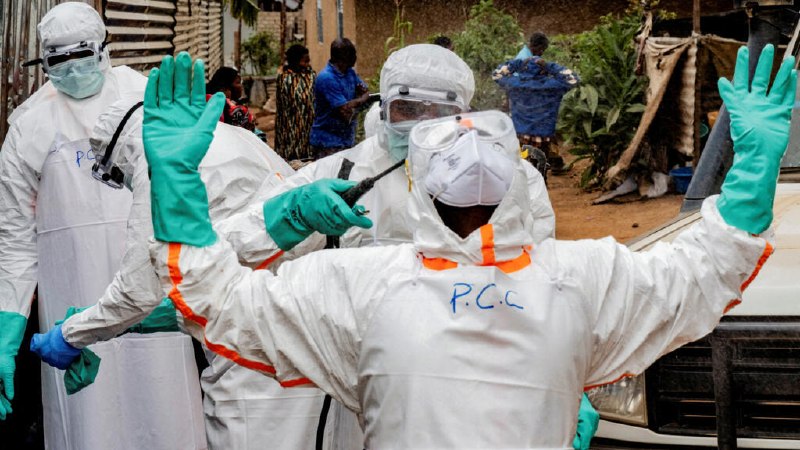
Government figures published on 17 August 2026 put the cumulative Ebola death toll in the Democratic Republic of Congo at 2,325, surpassing the previous worst epidemic in the country's history and confirming the 2026 outbreak as the deadliest on Congolese record. The United Nations has separately cited a fatality cadence of roughly one death every 30 minutes inside the country, a rate the wire items describe without further arithmetic breakdown.
That marker matters less for the headlines it generates than for what it says about the operating environment of the response. The supplied source items situate the current toll against a single explicit reference point: the 2018-2020 outbreak in the Democratic Republic of Congo, which the France 24 French service describes as the prior benchmark that the 2026 toll has now exceeded. Beyond that comparator, the available wire evidence does not specify how the 2026 outbreak's geography, case count, or operational response compares with the earlier epidemic.
A toll the country has not seen before
The 2,325 figure was reported by Deutsche Welle on 17 August 2026 and attributed by the broadcaster to DRC government figures. Earlier the same morning, France 24's English wire put the cumulative death count at 2,235, and France 24's French wire described the toll as having "just exceeded that of the previous outbreak (2018-2020)" without giving a precise figure. The two English-language wires therefore show a same-day spread of 90 deaths between France 24's 08:59 UTC reading and DW's 10:06 UTC reading, consistent with the UN's "every 30 minutes" framing, though the supplied source items do not explicitly reconcile the gap.
Monexus analysis: the headline is not a single number but a moving target inside a 24-hour reporting window. Any single citation should be read as a snapshot from a particular hour, not as a definitive total. The wire evidence supports calling the outbreak the deadliest in DRC's recorded history; it does not support naming one wire figure as the canonical toll.
What the wire items actually say
Beyond the death count, the supplied source items contain two pieces of context that frame the response. First, the UN fatality cadence: one person dying every 30 minutes, cited by DW and consistent with the gap between the morning tallies. Second, a line from France 24's French service indicating that the World Health Organization aims to reverse the trend of new cases within three months, suggesting that the WHO is treating the trajectory as a planning horizon rather than as an open-ended emergency.
The wire evidence is silent on the operational mechanics of the response: it does not specify current funding levels, the number of active treatment centres, the share of cases isolated in hospital versus in the community, or the precise location of the worst-affected health zones. It does not name individual officials or quote a single attributed statement. Monexus assessment: any description of how the response is or is not working must rest on the structural record of DRC's Ebola history as covered in other reporting, not on what the supplied wires report about 2026.
The structural frame, in plain terms
The throughline across DRC's recorded Ebola outbreaks, as covered by long-form international reporting on the country's epidemic history, is not the pathogen. It is the political economy of the territory the pathogen moves through. Eastern Congo has long been described as a zone of overlapping conflicts over land, minerals and customary authority, and health infrastructure sits inside that landscape: clinics occupied, looted or rendered unreachable; vaccinators travelling with armed escorts or not at all; rumours about the motives of outsiders moving faster than the disease itself. The international health agencies that respond operate inside an envelope they cannot unilaterally widen.
The supplied source items do not state that any prior epidemic was "contained" or "corralled" by any particular intervention; they record only that the 2018-2020 outbreak ended at a death toll lower than the current one. Reading the prior outbreak as a successful containment template overstates what the wire evidence supports.
What to watch next
Three data points will tell whether the curve is bending. First, the next Ministry of Health bulletin, which is the consistent source for cumulative deaths in the wire record. Second, the WHO Africa region situation reports, which tend to break out case counts separately from deaths and surface whether transmission is concentrated or dispersed. Third, the WHO's own three-month horizon for reversing the trend of new cases, cited by France 24's French service; that window will be the cleanest test of whether the 2026 response is on a different trajectory from 2018-2020 or repeating its pattern.
The political stakes are concrete. The DRC government faces a test of its ability to coordinate with provincial health authorities and international partners. Communities in the affected zones face the most immediate test of all, which is whether the next case to appear in their village can be isolated fast enough to break the chain. The available source items do not specify how many of the dead died in hospital versus in the community, or how the 2026 outbreak's geography compares with the 2018-2020 theatre, a gap that will shape what is said about this outbreak in the years to come.
Desk note: Monexus framed this against the 2018-2020 record rather than as an isolated outbreak, and treated the wire tolls as same-day snapshots rather than as a single canonical figure. The piece does not name individual health workers or attribute quotes beyond what the supplied source items support.
Wire provenance
This editorial synthesis draws on the following public wire/social posts:
- https://www.dw.com/en/drc-ebola-outbreak-becomes-deadliest-in-country-s-history/a-78394992?maca=en-rss-en-all-1573-rdf
- https://f24.my/C6ot.g
- https://t.me/france24_en/18244
- https://f24.my/C6oq.g
- https://t.me/france24_fr/22656