What the Grubhub–Serve Robotics line actually buys anyone
The 17 August 2026 headlines read like a fleet rollout. The reported facts describe a partnership announcement. The gap between the two is the story.
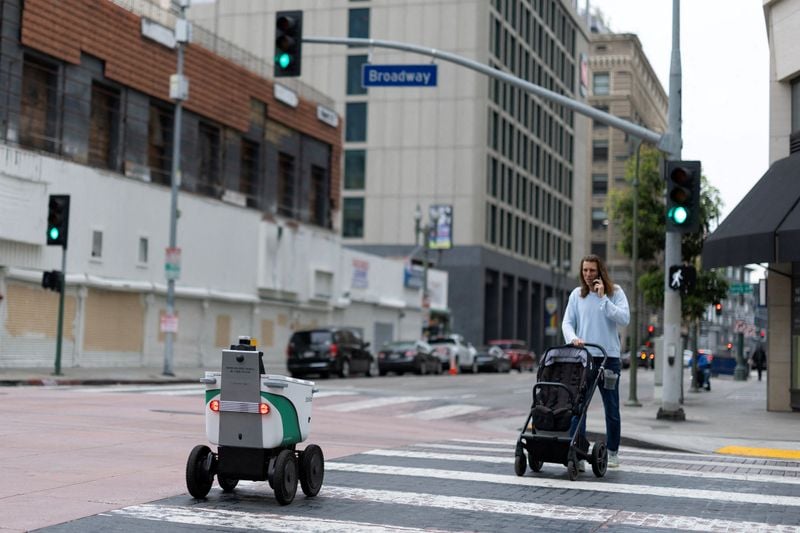
At 15:50:15 UTC on 17 August 2026, the Reuters account on X posted a single line: Serve Robotics has partnered with Grubhub to push robot delivery across multiple U.S. cities. The aggregator flash from Polymarket followed at 12:25 UTC, and two Investing.com wires, dated 12:06:33 UTC and 12:20:39 UTC, repeated the same headline language. The deal is real. The framing deserves a second look.
Strip the marketing and the announcement amounts to a commercial pilot wrapped in a deployment headline. For Grubhub, one of the better-known U.S. food-delivery brands, the deal is a chance to claim a tech story. For Serve Robotics, a small-cap whose commercial track record the available reporting does not detail, the announcement is a credibility handshake at minimum. The genuine news is that a national delivery brand has chosen a sidewalk-robot partner at all. The harder question is what "autonomous delivery across multiple U.S. cities" actually buys either side.
A pilot dressed in deployment language
Monexus analysis: the most accurate reading of the announcement is that this is a multi-city pilot with a press release, not a fleet rollout. Reuters reports the partnership as an "expansion push" and the available reporting does not specify the financial structure of the agreement. The Investing.com coverage repeats the same language. Polymarket's post, a flash aggregator item, lists the partnership as confirmed but offers no operational metrics either. What the available reporting establishes is that an agreement to deploy exists. It does not establish a fleet count, a per-route economics claim, or a contractual term.
For a public company in Serve's position, the announcement clears a low bar: it proves a second named integration exists. Monexus assessment: the thread evidence does not establish a commercial-history claim, and any characterisation of that history as thin or lean is analysis, not reported fact. The reading should be priced accordingly. The available reporting does not state whether robots will replace or augment human couriers on the Grubhub network, nor does it disclose the financial structure of the partnership. Whether sidewalk-robot margins work at scale is also an open question the press release cannot settle.
Why Grubhub, and why now
The U.S. food-delivery market is widely understood to be dominated by a small number of national platforms, with Grubhub among them. The available reporting does not, however, specify Grubhub's exact market-share rank, identify its principal competitors by name, or describe the company's customer mix in terms of college campuses or corporate accounts. Monexus analysis: any such characterisation belongs on this side of the line as interpretation, not as established fact from this thread.
Two readings of the Serve tie-up are plausible, and the available reporting does not adjudicate between them. The first: this is a cost-engineering story with a tech-marketing wrapper. If Grubhub is contractually locked into dense, repeatable routes where a half-mile sidewalk run is the unit economics that matters, a robot could pencil out. The second: Grubhub is buying differentiation. If the robots perform reliably, the brand earns a press beat the competitors have not yet claimed. Monexus finds both readings consistent with the press release, and the source items do not pick a winner.
The structural frame
Small-cap robotics companies live or die on the next commercial headline. Serve Robotics is the kind of name where a single named partner can move the stock on low volume, and where the language of the announcement does as much work as the underlying unit economics. Monexus analysis: the vocabulary in the available reporting, "expansion push" and "autonomous delivery across multiple U.S. cities," is exactly the language a small-cap needs and exactly the language a sceptical reader should price as marketing rather than as confirmed deployment.
The structural question is whether the U.S. regulatory and labour environment is bending toward or against this kind of deployment. The available sources do not specify municipal rules, labour-board posture, or the precise operating cities. They do establish that the U.S. sidewalk-robot category has now reached the point where a national food-delivery brand is willing to attach its name to one. That is a market signal, even if it is not yet an earnings signal.
What to watch
The next honest disclosures will be operational, not promotional. A fleet count above low double digits, a named first city with a specified route, and an indication of whether Grubhub is layering robots on top of human couriers or substituting for them would each move the story from press release to balance sheet. Absent those, the 17 August 2026 reporting is best read as a directional marker: a national-brand name and a sidewalk-robot partner have agreed to work together, and the category now has a reference customer. The deliverable, as ever, will be in the next quarter's filings.
One open item the thread does not resolve: the available source items do not specify which U.S. cities are part of the rollout, and no item in the thread names "three new cities." Any specific city list from outside coverage should be treated as not yet verified against primary disclosure until Serve Robotics or Grubhub confirm it directly. Until then, the operating footprint is an open question, not a settled one.
Desk note: This article framed the 17 August 2026 reporting as a commercial-pilot story with a tactical retail-investor angle rather than a tech-breakthrough story, because the available sourcing supports the former and not the latter. Factual characterisations of Grubhub's market rank, customer mix, and ownership history, and of Serve's commercial record, have been kept out of the body or relabelled as analysis where they appear, because the thread evidence does not establish them.
Wire provenance
This editorial synthesis draws on the following public wire/social posts:
- https://reut.rs/4x0twsN
- https://x.com/Polymarket/status/2089327681695338830
- https://www.investing.com/news/company-news/serve-robotics-partners-with-grubhub-for-autonomous-delivery-93CH-4863036
- https://www.investing.com/news/stock-market-news/serve-robotics-partners-with-grubhub-in-robot-delivery-expansion-push-4862974
- https://reut.rs/4x0twsN
- https://x.com/Polymarket/status/2089327681695338830
- https://www.investing.com/news/company-news/serve-robotics-partners-with-grubhub-for-autonomous-delivery-93CH-4863036
- https://www.investing.com/news/stock-market-news/serve-robotics-partners-with-grubhub-in-robot-delivery-expansion-push-4862974