SportsLine is pitching 10,000 simulations. The marketing leans on two prior calls.
A slate of CBS Sports articles in mid-August 2026 markets SportsLine's 10,000-run projections to fantasy drafters, credentialing the engine on its prior identification of Daniel Jones and De'Von Achane. Monexus finds that the underlying factual claims rest on the publisher's own promotional copy.
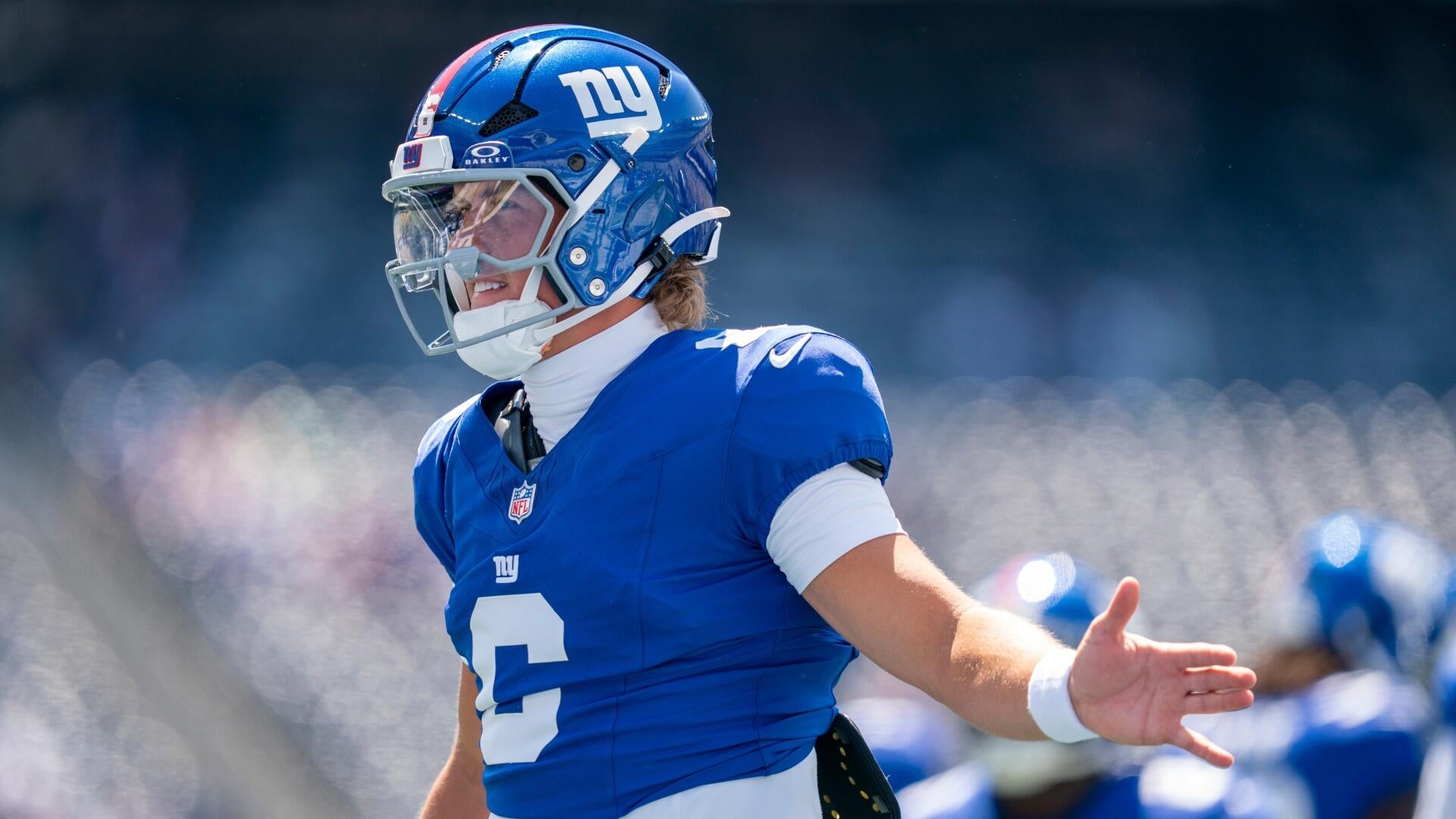
Between 14:54 UTC on 16 August 2026 and 13:31 UTC on 17 August 2026, CBS Sports published a cluster of fantasy-football articles under one banner: SportsLine simulated the upcoming NFL season 10,000 times to help form your early 2026 fantasy football draft strategy. The same engine is being sold into three buckets (sleepers, breakouts and busts), and the same two prior calls keep surfacing as the marketing credential.
What the public can verify is the publishing behaviour, not the underlying track record. CBS Sports is the only source cited here, and CBS Sports is the publisher marketing the engine. Treating that one channel as evidence for the model's prior predictive accuracy would amount to repeating the seller's pitch back to the reader. The honest framing is that the projection is being marketed; whether the marketing reflects independent past performance is something the public record, as represented in the available source items, does not establish.
What the marketing says
The headlines across the cluster are near-identical. Six pieces run under variations of the same formula: a 10,000-iteration projection of the upcoming NFL season, packaged as sleepers, breakouts or busts, and credentialed through one of two retro-narratives.
Four articles (at 14:54 UTC, 18:50 UTC and 22:14 UTC on 16 August; 13:31 UTC on 17 August) lean on the claim that the model "called Daniel Jones' big year." Two further pieces (at 15:12 UTC and 19:05 UTC on 16 August) lean instead on the claim that the model "nailed De'Von Achane's outstanding year." Each headline is a back-test reference, signalling past accuracy as the differentiator.
The structural feature of this publishing pattern is repetition. The same back-test points cycle through the cluster, and the same simulation count is featured in every article. From the public record available here, no independent publication is named as corroborating the prior predictive claims; the CBS Sports articles quote the CBS Sports engine.
Monexus analysis: where the evidence stops
The available source items confirm three things and no more. They confirm that a 10,000-run simulation is being advertised. They confirm the engine is being sold under sleeper, breakout and bust framings. They confirm that the marketing names two prior calls as the brand credential. Beyond those three points, the analysis has to switch register.
Our assessment: when a single publisher supplies both the projection and the claim that the projection previously worked, the natural reading is that the product is being credentialed by its own marketing. That is not an indictment of the engine. It is a description of the evidentiary base. A reader who wants to evaluate the model on its prior track record would need outside data the source items here do not provide.
The defensive read is also defensible. A back-test that produced a market-correct call in a prior season is, at minimum, a reference point; a model that integrates many inputs at scale has a defensible logic. Neither claim can be verified or refuted using the six articles available here. The honest move is to label the gap, not paper over it.
The information the engine is selling
The published output across the cluster takes three forms that overlap. Sleepers are late-round players whose median projection exceeds their average draft position. Breakouts are younger players whose usage curves are forecast to lift. Busts are higher-drafted players whose simulation tails weight toward disappointment. The framing on each CBS Sports piece tracks those definitions.
Implication for the reader: which list lands on a given browser is a function of search-engine routing and headline copy, with the same underlying simulation feeding each of the three slices. That is the structure visible in the cluster, and it is consistent with a publisher monetising a single model across multiple search entries. Our assessment: drafters reading one list should treat the others as variations on the same underlying run, not as independent signals.
What to watch
The next data point is Week 1 of the 2026 NFL season, when projected breakouts face live opposition and projected busts either vindicate or fail the engine. Until then, the model's published track record is whatever CBS Sports says it is, repeated across a cluster of articles. Drafters making picks off the lists are pricing in the marketing along with the math.
A reasonable contrary read: the cluster could also be read as standard preseason content production, with one engine reused across many headline variants to capture search traffic. The premise that the marketing is doing work the data does not deserves scrutiny; the premise that one engine can be credibly retargeted across many headlines is, separately, also worth noting. The two readings do not cancel each other out.
Desk note: Monexus framed this as a structural look at how a single projection engine is being marketed across a coordinated article cluster, not as a fantasy-football guide. The wire copy from CBS Sports promotes the lists; the open question is what outside evidence, if any, supports the back-test claims the marketing rests on. The available source items supply the marketing, not the corroboration.
Wire provenance
This editorial synthesis draws on the following public wire/social posts:
- https://www.cbssports.com/fantasy/football/news/fantasy-football-rankings-2026-sleepers-breakouts-busts-by-model-that-predicted-daniel-jones-big-year/
- https://www.cbssports.com/fantasy/football/news/fantasy-football-rankings-2026-sleepers-breakouts-busts-from-nfl-model-that-called-daniel-jones-big-year/
- https://www.cbssports.com/fantasy/football/news/fantasy-football-rankings-2026-sleepers-from-computer-that-nailed-devon-achanes-outstanding-year/
- https://www.cbssports.com/fantasy/football/news/fantasy-football-rankings-2026-sleepers-breakouts-busts-per-nfl-model-that-called-daniel-jones-big-year/
- https://www.cbssports.com/fantasy/football/news/fantasy-football-rankings-2026-sleepers-from-computer-that-nailed-devon-achanes-remarkable-year/
- https://www.cbssports.com/fantasy/football/news/fantasy-football-rankings-2026-sleepers-breakouts-busts-per-model-that-called-daniel-jones-big-year/
- https://www.cbssports.com/fantasy/football/news/fantasy-football-rankings-2026-sleepers-breakouts-busts-by-model-that-predicted-daniel-jones-big-year/
- https://www.cbssports.com/fantasy/football/news/fantasy-football-rankings-2026-sleepers-breakouts-busts-from-nfl-model-that-called-daniel-jones-big-year/
- https://www.cbssports.com/fantasy/football/news/fantasy-football-rankings-2026-sleepers-from-computer-that-nailed-devon-achanes-outstanding-year/
- https://www.cbssports.com/fantasy/football/news/fantasy-football-rankings-2026-sleepers-breakouts-busts-per-nfl-model-that-called-daniel-jones-big-year/
- https://www.cbssports.com/fantasy/football/news/fantasy-football-rankings-2026-sleepers-from-computer-that-nailed-devon-achanes-remarkable-year/
- https://www.cbssports.com/fantasy/football/news/fantasy-football-rankings-2026-sleepers-breakouts-busts-per-model-that-called-daniel-jones-big-year/