Trump pulls US-South Korea drills, says Seoul refused Iran 'disarm' help
President Trump says he is 'substantially' cutting joint exercises with Seoul to protect his relationship with Kim Jong Un, hours after disclosing that South Korea declined to join US efforts to 'disarm' Iran.
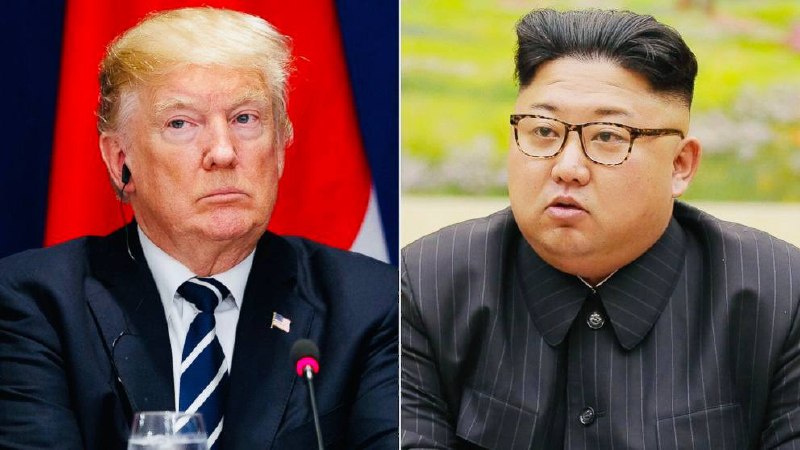
At 22:01 UTC on 16 August 2026, the Telegram channel Insider Paper carried a one-line flash: President Donald Trump had said the United States would "substantially reduce" joint military exercises with South Korea, citing his "very good relationship" with North Korean leader Kim Jong Un. Within minutes, the OSINTtechnical and OSINTdefender accounts had posted the same line in fuller form, with OSINTdefender naming Secretary of War Pete Hegseth as the recipient of the order. By 23:33 UTC, the Telegram aggregator Megatron Ron was framing the move, in the channel's reading, as a concession designed "to avoid angering North Korea."
The drill cut did not arrive on its own. According to Al Alam Arabic at 21:36 UTC, Trump publicly disclosed the same day that he had asked the South Korean president whether Seoul wanted to join a US effort to "disarm Iran," and that the answer was no. The OSINTtechnical post at 21:33 UTC, three minutes earlier, already linked the drill announcement to what it characterised as South Korea's refusal to join the Iran effort. Middle East Eye's live blog captured the refusal framing at 23:09 UTC under the headline "South Korea says 'no thanks.'"
The order, as carried by the wires
The core statement, as posted by OSINTdefender, runs: Trump told reporters that he had instructed Pete Hegseth to "substantially reduce any future joint military exercises between the United States and" South Korea. The framing was explicit: "Given my very good relationship with Kim Jong-un, the leader of North Korea…" The Ukrainian military-news channel operativno ZSU carried a near-identical text minutes later, translating the remarks into Russian for its audience but preserving the same quote.
Monexus analysis: the drill announcement is unusually direct in tying a military-operational decision to a personal relationship with a third country's leader. Past rounds of exercise curtailment in earlier periods were framed as cost-saving or as confidence-building tied to a named negotiation track. Here the cited text names no negotiation, no cost figure, and no reciprocal North Korean step; it names the relationship itself as the reason.
The South Korean side does not, in the available source items, confirm or reject the announcement; neither do the Pentagon, US Forces Korea, or the North Korean state media apparatus. The cited posts do not specify whether Seoul was consulted in advance, whether exercises already scheduled have been formally suspended, or which categories of drill fall under the cut. This article has not independently established whether the order has been transmitted in writing through normal command channels or whether it changes the standing combined command arrangement. Readers should expect the first authoritative readouts to come from Seoul and the Pentagon, not from Telegram.
The Iran ask, and what Seoul refused
The second strand of the day's news sits behind the first. According to Al Alam Arabic, Trump said on 16 August that he had asked the South Korean president whether Seoul wanted to join US efforts to "disarm Iran," and that the response was no. Middle East Eye's live blog corroborated the refusal framing at 23:09 UTC. The available items do not specify the venue of Trump's remarks; Al Alam Arabic, Middle East Eye, and the Telegram wires all report the exchange without locating it to the Oval Office, a press gaggle, or another setting.
Monexus assessment: a refusal of this kind, if accurately reported, is more pointed than a routine policy divergence. South Korea is a US treaty ally whose forces are closely integrated with US command structures; it has signed on to US-led sanctions architectures against Iran in past administrations; and any request to participate in a "disarm Iran" effort, even one framed loosely, is a request to enter a kinetic or near-kinetic policy track. A flat "no" from Seoul is a substantive policy signal, not a courtesy brush-off.
The counter-frame, carried by Iranian state outlet Tasnim News at 23:03 UTC, reads the two announcements together as punishment: Trump, in Tasnim's rendering, is retaliating against South Korea for declining to join a war on Iran. Tasnim labelled Trump "the head of the terrorist government of the United States," and characterised the Iran-disarmament framing as illegal. That framing should be read as Tehran's counter-narrative, not as a stand-alone factual basis; the underlying facts, the drill cut and the Iran refusal, are carried independently by OSINTtechnical, OSINTdefender, Insider Paper, Al Alam Arabic, and Middle East Eye.
Why the pair landed together
The cited evidence does not let Monexus establish a clean chronological order between Trump's two verbal statements. The OSINTtechnical post at 21:33 UTC already linked the drill move to what it described as South Korea's refusal to join the Iran effort; the Al Alam Arabic post relaying Trump's disclosure of the Iran ask arrived at 21:36 UTC, three minutes later. The two announcements reached the wire ecosystem on the same evening, and the linkage between them was asserted by channel commentary before either item had circulated widely. Treating one as cause and the other as consequence therefore overshoots the evidence; treating them as a paired disclosure lands closer to what the thread supports.
Two readings sit inside that paired disclosure. The first, the dominant one in the cited Western-facing wires, is transactional: a visible concession to Pyongyang designed to keep a diplomatic channel with Kim Jong Un open, landing at a moment when US force posture on the peninsula is under quiet reassessment. The second, favoured by Tasnim and consistent with Iran's foreign-policy line, treats the Korea pullback as the cost of the Iran refusal, and the Iran framing as the substantive ask that allies are being tested on. Both readings can coexist; the cited sources do not let Monexus adjudicate between them with certainty.
The structural frame is that US alliance management in northeast Asia and US escalation management on Iran have collided in a single news cycle. The drill cut is the operational item; the Iran disclosure is the political backdrop. Allied responses in Seoul, Tokyo, and Washington over the coming days will determine which reading hardens into the working narrative.
What to watch next
Three items will sharpen this story within the next 72 hours. First, an on-the-record statement from the South Korean presidential office, the Ministry of National Defence in Seoul, or the Pentagon confirming or contesting the drill announcement; the cited posts do not contain one, and the first such readout will materially move the story. Second, a US Forces Korea or allied-command statement specifying whether the cut applies to combined training events, large-scale field exercises, or routine interoperability drills. Third, a North Korean state-media response from KCNA or Rodong Sinmun; silence there would be unusual given the personal framing Trump gave the decision.
For readers tracking the wider file: the source items contain no material on Iranian reciprocal steps, UN Security Council activity, or movement at the nuclear-file negotiating track. The Iran angle here, as reported in the cited posts, is operational and political, not technical. Monexus finds that the day produced a single operational decision with two political backdrops, and that the politics will outrun the operations in coverage volume for the rest of the week.
This article tracks two announcements that landed within minutes of each other on 16 August 2026. Monexus framed the drill cut as an order in search of a reciprocal step, and the Iran disclosure as the political context the order travelled in, rather than as a stand-alone escalation. The thread evidence does not establish which of Trump's two statements came first in his own delivery, so the article treats them as a paired disclosure rather than a sequenced cause-and-effect. Iranian state media's counter-narrative was given explicit weight as a counter-claim, not adopted as the working frame.
Wire provenance
This editorial synthesis draws on the following public wire/social posts:
- https://t.me/insiderpaper/43939
- https://t.me/osintlive/564651
- https://t.me/osintlive/564654
- https://t.me/operativnoZSU/218507
- https://t.me/alalamarabic/495247
- https://www.middleeasteye.net/live-blog/live-blog-update/trump-south-korea-says-no-thanks-his-request-help-denuclearise-iran?topic=War%2520on%2520Iran&nid=442386&fid=557547
- https://t.me/tasnimnews_en/31355
- https://t.me/megatron_ron/16493
- https://t.me/insiderpaper/43939
- https://t.me/osintlive/564651
- https://t.me/osintlive/564654
- https://t.me/operativnoZSU/218507
- https://t.me/alalamarabic/495247
- https://www.middleeasteye.net/live-blog/live-blog-update/trump-south-korea-says-no-thanks-his-request-help-denuclearise-iran?topic=War%2520on%2520Iran&nid=442386&fid=557547
- https://t.me/tasnimnews_en/31355
- https://t.me/megatron_ron/16493