Trump ties Korean drill cut to Kim and to Seoul's stand on Iran
On 16 August 2026, President Donald Trump said the United States would substantially reduce joint military exercises with South Korea, citing his relationship with Kim Jong Un and South Korea's refusal to join the US effort on Iran.
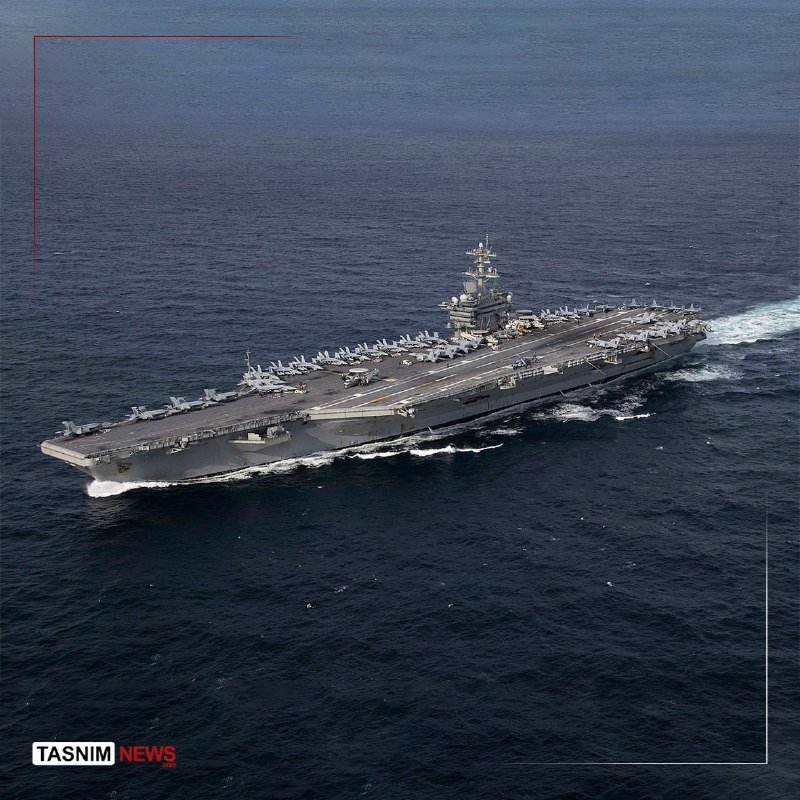
Donald Trump said on 16 August 2026 that the United States would substantially reduce joint military exercises with South Korea. In remarks carried by BBC News at 21:27 UTC, the US president linked the decision to his relationship with North Korean leader Kim Jong Un and to South Korea's recent refusal to back the US effort in Iran. CGTN's official account on X, posting at 00:06 UTC on 17 August, framed the Iran element as the United States' push for the "denuclearization of Iran." Two wires, one decision, two slightly different characterisations of what Seoul declined.
The available reporting does not specify which exercises will be reduced, by how many, or on what timetable. It does establish that Trump publicly presented the change as a deliberate policy choice rather than a routine adjustment. That distinction matters because joint exercises function simultaneously as operational preparation and as political signal. A reduction can lower the visibility of US-South Korean coordination even when the underlying alliance architecture stays intact.
Monexus analysis: the strongest reading of the announcement is transactional. Trump appears to be using the exercise calendar as leverage across two separate problems, rewarding his stated personal channel with Kim while registering dissatisfaction with Seoul's posture on Iran. The evidence does not establish that Washington is withdrawing from South Korea or abandoning deterrence. It shows a president willing to alter the public language, and possibly the practice, of allied military cooperation for political reasons.
What Trump announced
Trump said the United States would scale back military drills with South Korea. CGTN's official account, reporting the remarks at 00:06 UTC on 17 August, said he cited a "very good relationship" with Kim Jong Un and South Korea's refusal to join the US push for the "denuclearization of Iran." OSINTtechnical, on Telegram at 21:33 UTC on 16 August, described the move as a substantial reduction. BRICS News, posting at 21:13 UTC the same day, relayed the same announcement in a shorter item.
The accounts agree on the direction of the policy. They do not name the affected exercises, quantify the reduction, or explain whether the change covers command-post training, field manoeuvres, or other activity. The phrase "substantially reduce" therefore describes a stated intention, not a fully documented new exercise calendar.
That uncertainty limits the immediate military conclusion. The reporting supports the claim that Trump announced a reduction and supplied two reasons for it. It does not support claims about which capabilities would be lost, how quickly the change would take effect, or whether the United States had already issued implementing instructions to its military.
The Kim channel takes centre stage
One part of Trump's explanation concerns North Korea. The president referred to his relationship with Kim Jong Un and, according to the Middle East Spectator item posted at 21:18 UTC on 16 August, described North Korea as "unthreatening and respectful." CGTN's account used the phrase "very good relationship" with Kim.
The reporting does not establish that North Korea made a new concession, agreed to a specific measure, or offered a new diplomatic opening. It records Trump's stated justification for the drill decision. In that setting, the personal channel functions as political cover: the president is arguing that his own diplomacy has changed the security environment enough to justify a visible adjustment in allied exercises.
There is an alternative reading. The Kim rationale may be the more publicly acceptable face of a dispute with South Korea over Iran, while the Iran explanation may reveal the immediate pressure behind the decision. The source material does not resolve which motive carried greater weight. What it does show is that Trump placed both explanations in the same public announcement, making it harder to treat the move as a purely North Korea policy.
Iran becomes an alliance test
BBC News said the decision followed South Korea's recent refusal to aid the US effort in Iran, calling it a "war effort." CGTN's account of the same remarks framed the Iran component as the push for the "denuclearization of Iran." The discrepancy matters because it determines whether the disagreement with Seoul is about kinetic military participation or about backing a non-proliferation campaign.
The source items do not specify what form of aid South Korea declined, whether the refusal was communicated privately or publicly, or how Washington defined the requested contribution. Nor do they say whether Seoul opposed the campaign, lacked capacity to join, or declined for another reason. The narrow factual point is that Trump connected the drill reduction to South Korea's refusal to assist the US effort on Iran, and that the available wires disagree on whether that effort is best described as war or as denuclearisation.
Monexus analysis: this turns the exercise calendar into a visible instrument of alliance management. Washington is signalling that support for US operations elsewhere can affect the intensity of military cooperation on the Korean peninsula. Seoul, in turn, is being asked to weigh the value of bilateral exercises against its own decision not to participate in the Iran effort as Trump has defined it. The source material does not contain a specified Seoul response.
A narrower but consequential signal
The announcement's language is broad, but its political significance is clearer than its operational detail. A reduction in joint exercises could be reversible, phased, or limited to particular activities. The reporting does not say which. It is therefore safest to describe the result as a declared change in posture, not a completed restructuring of the US-South Korea alliance.
The immediate winner, if the announcement is implemented as described, may be Trump's preferred method of personal diplomacy with Kim. The immediate pressure falls on South Korea, which is being asked to account for the relationship between its regional security cooperation with Washington and its refusal to support the US effort on Iran. The cost to the United States would depend on whether reduced exercises weaken readiness or merely change the public presentation of deterrence. The available sources do not quantify either effect.
The forward watchpoint is implementation. A detailed exercise order, an official South Korean response, or a North Korean statement would clarify whether the announcement produces a durable policy shift or remains a presidential signal. Until then, the consequential fact is not the end of the alliance. It is Trump's decision to put allied military activity inside the same bargaining frame as North Korea and Iran, and to do so publicly enough that both Seoul and Pyongyang can read the price tag attached.
Wire provenance
This editorial synthesis draws on the following public wire/social posts:
- https://x.com/CGTNOfficial/status/2089141826842493277
- https://www.bbc.co.uk/news/articles/cx2lll7zvn0o?at_medium=RSS&at_campaign=rss
- https://t.me/osintlive/564654
- https://t.me/Middle_East_Spectator/35943
- https://t.me/bricsnews/17708