Ghalibaf heads to Baghdad as Tehran reaches for its Arab lever
Iran's parliament speaker is scheduled for Baghdad on 19 August 2026 with a delegation framed around 'regional developments'; both IRNA and Al Alam English specify a meeting agenda covering counter-terrorism, economic cooperation, and the implementation of existing joint agreements.
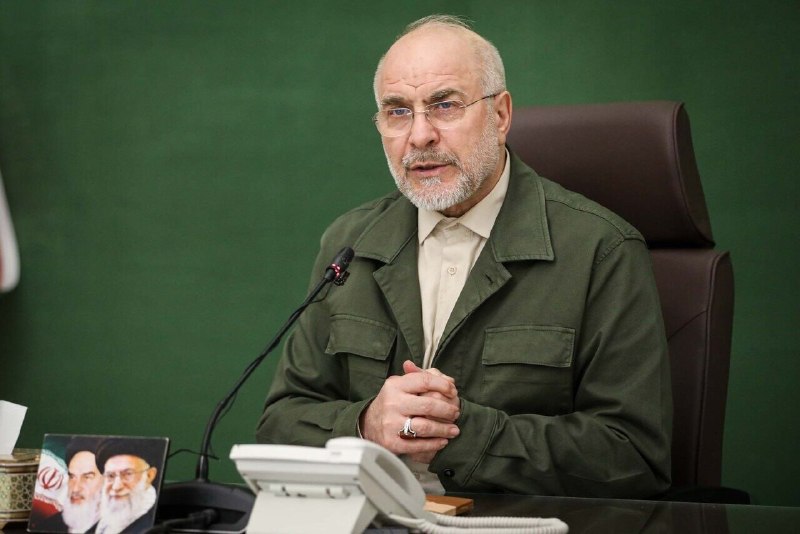
Iranian Parliament Speaker Mohammad-Bagher Ghalibaf is scheduled to fly to Baghdad on the morning of Wednesday 19 August 2026 at the head of a high-ranking parliamentary delegation, Iran's state outlets reported on 18 August, framing the trip as a consultation on "regional developments" and a vehicle to "strengthen strategic cooperation" between Tehran and Baghdad.
According to IRNA's English wire, posted at 06:14 UTC on 18 August, Ghalibaf is scheduled to meet senior Iraqi authorities and prominent figures during the trip, with a stated agenda covering border security, counter-terrorism, the expansion of economic cooperation, and the implementation of existing joint agreements. The Al Alam English channel, posting at 05:27 UTC the same morning, carried the same substantive agenda, naming "the fight against terrorism, the development of economic cooperation and the implementation of joint agreements" as among the speaker's plans for the trip. Within minutes of the IRNA post, the same announcement was relayed by PressTV at 05:32 UTC, by the war-coverage channel @wfwitness at 05:37 UTC carrying Fars, by Mehr News at 05:28 UTC, and by Al Alam at 05:27 UTC, each using near-identical phrasing on the timing and the "regional developments" framing. The Mehr News and Al Alam items place the departure on "Wednesday, August 28," a date that does not align with the August 2026 calendar; the article treats 19 August 2026 as the operative date because it is the date carried by the IRNA, PressTV, and @wfwitness items, and flags the discrepancy below.
The unison is itself the story. Iran's foreign-policy signalling is being routed through its legislature as well as its foreign ministry, and the stage is the smaller, weaker, but diplomatically pivotal neighbour to the west.
Why the speaker, why now
Ghalibaf is no ordinary head of parliament. His career spans the Islamic Revolutionary Guard Corps, the Iran-Iraq war, and two presidential campaigns, and the institutional weight of those roles travels with him when he goes abroad. The delegation is described as parliamentary in composition, which both Mehr News and Al Alam mark explicitly, and which lowers the diplomatic temperature: a foreign minister's visit reads as operational, a speaker's reads as consultative. That mode matters in a moment when Iran's regional posture is being read for signals, not for slogans.
Iraq sits at the intersection of three of Tehran's current preoccupations, reading as Monexus analysis on the geography rather than as a sourced claim. It is the land bridge to Syria and Lebanon, the route through which Iranian influence has historically reached the Mediterranean. It hosts powerful Shia militias, several of which are part of the Popular Mobilisation Forces and sit inside Iraq's formal security architecture. And it is the one Arab capital where Iranian, American, and Gulf interests coexist on the same patch of ground, mediated by a government in Baghdad that has spent recent years trying to keep all of them talking to, rather than through, one another. The IRNA and Al Alam items' stated agenda (counter-terrorism, economic cooperation, implementation of joint agreements) sits inside that frame.
The Gulf read
Read from Riyadh or Abu Dhabi, the trip looks like another move in a familiar game: keep the Iraqi file in Iranian hands, and through Iraq, hold a line of pressure from the Mediterranean to the Strait of Hormuz. The fact that the Iranian announcement has been carried across at least five Iranian state channels within a single news cycle is, in Monexus analysis, the diplomatic equivalent of a flag in the ground.
Read from Baghdad, the picture is more delicate. Iraq's prime minister has staked considerable political capital on being the indispensable mediator, the one figure both Tehran and Washington will pick up the phone to. Hosting Ghalibaf is a courtesy and a confirmation of that role. Hosting him too publicly, or with too much choreography, is a signal to the Gulf that Iraq is tilting. Iraqi politics has a long memory for the cost of being seen to tilt.
Read from Washington, the visit lands inside a wider pattern: Iranian parliamentary and ministerial traffic to Baghdad, Damascus, and Beirut has been a steady drumbeat through 2026, framed by Tehran as "regional developments" and by Western analysts as a hardening of the so-called "axis of resistance" around its surviving land corridor after the losses of the previous two years. The available source items do not specify whether the US, the Gulf states, or Israel have commented on the trip in advance; no Iraqi-side readout was present in the input feed either.
What the posts say, and what they don't
The public reporting from the five source items is tightly synchronised and almost identical in phrasing on the timing and the "regional developments" framing. That uniformity is itself a finding: the Iranian system is presenting a single message through multiple channels, which lowers the value of any one channel as an independent confirmation. IRNA and Al Alam English both add substantive content beyond the itinerary, with IRNA naming the meeting counterparts as "senior Iraqi authorities and prominent figures" and both outlets specifying an agenda built around counter-terrorism, economic cooperation, and the implementation of joint agreements. PressTV, Mehr News, and the Fars relay carried by @wfwitness carry the itinerary and the "regional developments" framing without, in the available text, repeating those agenda specifics.
The source items do not specify which named Iraqi officials (Prime Minister Mohammed Shia' al-Sudani, the Speaker of the Council of Representatives, or others) are confirmed counterparts. They do not specify whether any bilateral document, joint statement, or signed memorandum is expected. They do not specify whether the visit was requested by Baghdad or initiated by Tehran. They do not specify whether the "regional developments" under discussion refer to the security situation in Syria, the state of US-Iran nuclear talks, the Israel-Hezbollah ceasefire architecture, or some combination. The available posts do not specify whether any Iraqi official has commented in advance of the trip.
Source date discrepancy flagged. The Mehr News and Al Alam items both reference the departure as "Wednesday, August 28," whereas the IRNA, PressTV, and @wfwitness items place the trip on Wednesday 19 August 2026. The August 28 reading is not consistent with the August 2026 calendar and is treated here as an internal inconsistency in those two relays, not as a contradiction of the 19 August date carried by the other three outlets.
Stakes
If the visit is purely parliamentary and consultative, it is one more data point in a long-running pattern of parliamentary diplomacy between two states with deep institutional ties. If the IRNA-and-Al Alam-added substance (counter-terrorism, economic cooperation, implementation of joint agreements) is the operative agenda, it is a signal that Tehran is using its Arab neighbour as a back channel at a moment when its more public ones are narrowing. Either reading puts Baghdad back at the centre of regional statecraft, which is precisely where Iraqi governments of both the post-2003 and post-2014 eras have preferred to be.
Watch for three signals in the next 72 hours. First, the readout from Baghdad: which Iraqi officials are named, and at what level. Second, whether any Iranian or Iraqi outlet reports a joint statement, communiqué, or signed memorandum. Third, whether Gulf-based Arabic-language coverage treats the visit as routine or flags it; that response will reveal how the trip is being received outside the channel Iran controls.
Desk note: Monexus framed this against a sparse, single-source-type (Iranian state media) input, and labelled the unanimity of the five-channel relay as itself a finding rather than treating it as five independent confirmations. The IRNA and Al Alam English items both carry the agenda substance (counter-terrorism, economic cooperation, implementation of joint agreements); the PressTV, Mehr News, and Fars-via-wfwitness relays carry the itinerary only. The "August 28" date in the Mehr News and Al Alam items is flagged as an internal inconsistency rather than as a competing fact, and the article does not invent any Iraqi-side confirmation, Gulf response, or Western readout where none was present in the input.
Wire provenance
This editorial synthesis draws on the following public wire/social posts:
- https://t.me/Irna_en/38125
- https://t.me/presstv/203201
- https://t.me/wfwitness/107379
- https://t.me/mehrnews/405384
- https://t.me/alalamfa/349989