Trump claims naval control of Hormuz as US-Iran deal worries surface
Trump says Washington "controls" the Strait of Hormuz through a naval blockade. The Wall Street Journal reports American officials are uneasy about a separate Iran-Oman track that could entrench Tehran's grip on the same waterway.
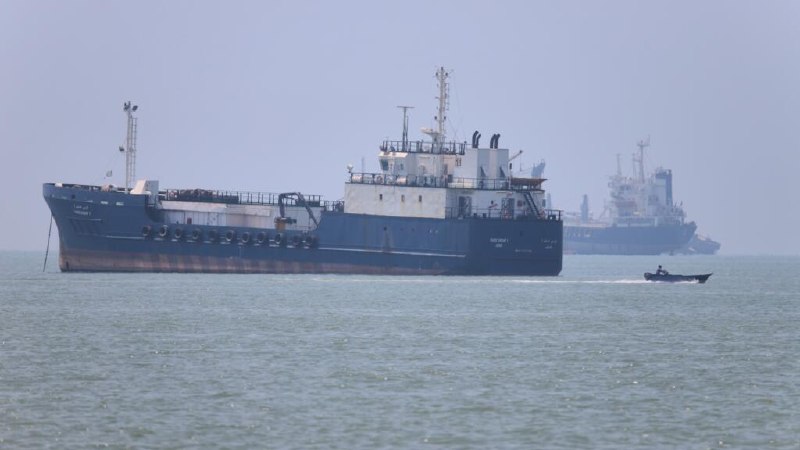
At 03:22 UTC on 18 August 2026, Iranian state-linked outlet Fars News International carried a second Trump quote inside twelve hours: "We are in control of the Strait of Hormuz through a naval blockade, and I like the idea of declaring it as American." The line is not a leak or an offhand remark. It is a verbatim restatement, posted first to Fars at 00:49 UTC the same morning, of an assertion the US president has now broadcast twice in twenty-four hours, in two venues, to audiences in Washington and Tehran simultaneously.
The Strait of Hormuz is not a symbolic waterway. Roughly a fifth of seaborne oil crosses it each year, and any sustained interference moves the global price tape within hours. Trump's claim therefore reads less as a boast than as a positioning document, an attempt to convert an open-ended confrontation with Tehran into a declared US posture that other governments and oil traders have to react to.
What makes the moment unusual is not the claim itself. It is the diplomatic backdrop. The Wall Street Journal, cited across four separate Telegram wires on the morning of 18 August, reports that US officials are worried an agreement between Iran and Oman could entrench Tehran's control of the strait. The two stories are not separate. They are the same story read from two desks.
The blockade claim, restated
Trump's first public airing of the blockade line came in an interview published at 01:16 UTC on 18 August by RN Intel's Telegram channel, which paraphrased the president as saying the US would "bomb the s---" out of Oman if Muscat got in the way of operations against Iran in the strait. The follow-up at 03:22 UTC, again via Fars, restated the core assertion without the threat.
The choice to re-broadcast the blockade claim through a channel that reaches Iranian decision-makers is deliberate. The Iranian foreign-policy establishment consumes Fars. Re-posting the language to Fars, rather than to a US outlet, signals that the message is intended to land in Tehran. The framing of "we control" the waterway is a maximalist version of a US naval presence that has existed, in varying degrees, since the 1980s tanker-war era. Declaring the strait "American" would convert a long-running posture into a sovereign claim. No US administration has previously gone that far in public language.
The Oman track the White House doesn't want
The parallel reporting from the Wall Street Journal, carried by Tasnim (00:55 UTC), Intel Slava (00:53 UTC) and Fars (00:49 UTC), is more awkward for the White House. All three channels relay the same WSJ framing: Washington is concerned that a bilateral arrangement between Iran and Oman could stabilise Tehran's control of the strait. The implication is that Muscat, a traditional mediator, is now in the awkward position of being both a US partner and a negotiating counterparty to Tehran on the very waterway Trump says he controls.
Two interpretations sit inside this. The first is that the WSJ story is a leak designed to harden the US negotiating position before a deal is signed. Public anxiety about an Iran-Oman bargain gives Omani intermediaries a reason to press Tehran for concessions, and gives US hawks in Washington a domestic pretext to demand a harder line. The second is that the anxiety is genuine, that mid-level State Department officials are watching an Oman-track move faster than the headline negotiation and are trying to slow it down. Both readings are compatible with the same cable traffic.
The structural problem is that Oman has been a quiet channel for Tehran for years, including the secret 2013 back-channel that preceded the original JCPOA. If that channel is now active again on strait-level questions, the US has either opted into it or has been bypassed by it. The WSJ framing suggests the latter.
What "controlling" Hormuz actually means
The word "control" does heavy work in Trump's phrasing. In maritime-law terms, no state can legally close an international strait used for transit passage. What the US Navy has done, repeatedly since 1987-88, is escort commercial tankers through the Gulf of Oman and the western approaches to the strait when Iranian fast boats or Revolutionary Guard vessels have approached them. That is escort, not blockade, and it is not the same as the unilateral declaration Trump is now floating.
A declared US blockade of an international strait used by Chinese, Indian, Japanese, South Korean and European shipping would, on the legal record, be difficult to distinguish from a blockade of those economies. Chinese and Indian refiners are the largest single customers of Gulf crude. A blockade announcement would, in practice, be a unilateral US sanctions instrument applied to third-country trade. That is a step no recent administration has taken, and the diplomatic reaction in Beijing, New Delhi and Tokyo would be immediate.
The available source items do not specify whether the US Navy has in fact been ordered to interdict commercial traffic, or whether the president's language is rhetorical scaffolding around an existing posture. The two are not equivalent. The first is an act of war against multiple trading partners. The second is a re-branding.
Stakes, and what to watch next
The contradiction at the centre of 18 August's coverage is straightforward. The White House says it controls Hormuz. The Wall Street Journal says Washington is worried Tehran is consolidating Hormuz. One of these framings has to give. If the blockade claim is operational, the Iran-Oman track closes and the WSJ concern is moot. If the Iran-Oman track advances, the blockade claim has been revealed as a negotiating posture rather than a posture of force.
Three things to watch over the next seventy-two hours. First, whether the Pentagon publicly confirms or hedges the "naval blockade" language. Second, whether Oman's foreign ministry issues a statement on the WSJ report, which would be the first independent confirmation that a bilateral text is in motion. Third, whether Chinese and Indian state oil buyers continue to lift Hormuz-loaded cargoes through the same insurance and shipping lanes as the previous week, or whether there is a quiet rerouting through Saudi East-West pipeline and UAE terminals. The pattern of cargo flows will tell the reader what the rhetoric has not.
The thread as published does not specify the exact text of any Iran-Oman draft agreement, nor does it record an official Iranian response to Trump's restated blockade claim. Those details will decide whether 18 August 2026 is remembered as a turning point in the waterway's politics, or as a particularly loud Monday in a long standoff.
Desk note: Wire services are quoting the WSJ's Hormuz-leak through Russian and Iranian Telegram channels, with the Iranian outlets restating Trump's blockade claim verbatim. Monexus treats the blockade language as the president's stated position, not as a confirmed Navy order, and treats the WSJ anxiety as an unnamed-officials report that the Omani track is moving. The piece flags both readings rather than collapsing them.
Wire provenance
This editorial synthesis draws on the following public wire/social posts:
- https://t.me/FarsNewsInt/259228
- https://t.me/rnintel/65613
- https://t.me/tasnimplus/119274
- https://t.me/intelslava/92750
- https://t.me/FarsNewsInt/259223