Second Ukrainian suspect arrested in Croatia over 2022 Nord Stream blasts
German prosecutors say a second Ukrainian national has been detained in Croatia in connection with the September 2022 Nord Stream pipeline blasts, deepening a long-running investigation that has produced one prior arrest and no convictions to date.
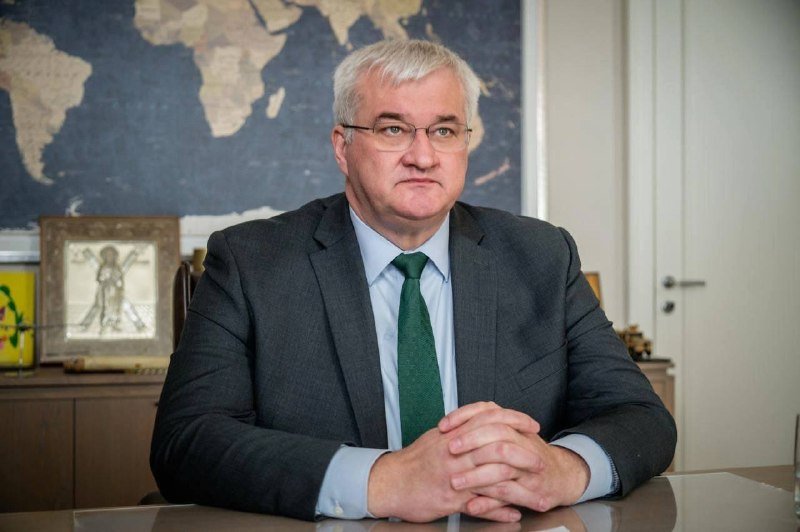
German prosecutors announced on the morning of 19 August 2026 that a second Ukrainian national has been arrested in Croatia in connection with the September 2022 sabotage of the Nord Stream pipelines, according to reporting by Reuters and Deutsche Welle. Telegram channels covering the case have framed the suspect as a scuba diver suspected of having placed explosive devices on the pipelines; that characterisation has not been attributed to prosecutors in the cited wire pieces.
This publication's read: the German investigation, slow and contested, is producing defendants for the first time. The political geometry around it is harder than the legal one. Berlin wants accountability for an act that destroyed critical European energy infrastructure during an active war on the continent. Kyiv has reason to manage the story. Moscow has every reason to keep the file on the front page. Each interested capital has an incentive to shape the narrative, and almost no party benefits from letting the matter resolve cleanly on the merits.
What prosecutors have said, and what they have not
Reuters and Deutsche Welle report the arrest in Croatia and identify the suspect as Ukrainian. The cited wire pieces do not name the individual, do not specify the date of arrest, do not detail the evidentiary basis for the German warrant, and do not confirm whether Croatia has approved, or been asked to approve, any extradition. Telegram channels covering the case, including BRICS News and Insider Paper, have described the suspect as a scuba diver suspected of planting explosives on the pipelines in 2022; that framing is consistent with the German investigation's working theory that small teams in diving equipment attached explosive charges to the pipelines, but the cited wire pieces do not quote prosecutors using those terms.
The available source items establish three narrow facts and leave the rest open. A second arrest has occurred. The suspect is Ukrainian. The case is being driven by German prosecutors. Everything beyond those three points, in the cited reporting, is either Telegram-channel framing or this publication's analysis.
The first suspect, in outline
Reuters describes this as the second arrest in the case, following an earlier detention of another individual. The cited wire pieces do not specify the country of that first arrest, the year in which it occurred, the length of any extradition proceedings, the outcome of those proceedings, or the current status of that first suspect. The relationship between the two suspects, whether they are alleged to have acted together, in sequence, or independently, is also not specified in the available source items.
This publication's assessment: the case has produced one prior arrest whose procedural history the cited reporting leaves largely undefined, and a second arrest in Croatia whose immediate legal path, warrant, and extradition status the cited reporting also leaves undefined. The volume of unanswered procedural questions is itself a finding. A suspect arrested on a German warrant in an EU member state is, in principle, within reach of German courts under the European Arrest Warrant framework. Whether Croatia has signalled it will cooperate on that mechanism is not established in what has been published so far.
The structural frame, in plain language
What we are watching is the slow grinding-through of an investigation into an act whose strategic logic is widely debated and whose legal resolution is, on the evidence available, still preliminary. The September 2022 blasts disabled sections of the Nord Stream system in the Baltic Sea. The act foreclosed, at least for a time, the physical option of large-volume Russian gas deliveries to Germany via that route. Who did it, on whose authority, and with what prior knowledge among allied governments, remains the subject of competing official and journalistic accounts that the cited wire pieces do not resolve.
The legal resolution is hard because the case sits at the intersection of war, sabotage, and energy geopolitics. The suspects identified so far are citizens of a state at war with Russia, which complicates extradition and prosecution. Witnesses are scattered. Physical evidence is at the bottom of the Baltic Sea. The investigation is now in its fourth year without a trial.
Who wins and who loses if the case moves forward
If the German prosecution succeeds in putting defendants on trial in Berlin and securing convictions, the winners are the rule-of-law argument and the precedent that energy-infrastructure sabotage, even during war, carries individual criminal consequences regardless of the strategic appeal of the act. The losers are the political actors in Kyiv and in various European capitals who would prefer the file remain open without named defendants.
If the case stalls, Moscow's narrative strengthens: that the West investigates sabotage selectively, that Ukrainian actors are treated more gently than Russian ones would be, and that the destruction of a Russian commercial asset will not produce accountability. Ukraine loses, in that scenario, by association. Berlin loses, because it has now spent years on an investigation that delivered no trial.
What remains uncertain
The cited wire reporting does not specify the suspect's name, the precise basis for the German warrant, the date of arrest in Croatia, or any extradition timetable. Telegram-channel characterisations of the suspect as a scuba diver have not been confirmed in the wire pieces at the level of a direct quotation from prosecutors. The chronology and outcome of the first arrest in the case are not specified in the available source items. Whether the German investigation has alleged direction by any state actor, or has formally confined itself to individuals, is not stated in the cited wire reporting.
For now, the operative facts are narrow and verifiable: a second arrest, in Croatia, of a Ukrainian national, in connection with the September 2022 blasts. The interpretive scaffolding around those facts will be built by every interested capital before the week is out.
Desk note: Monexus is running this as a tight wire-derived news piece, treating the German prosecutor's announcement as the load-bearing fact and bracketing the larger geopolitical argument to a single analytical paragraph. Telegram framing has been reported but not foregrounded, in line with our channel-attribution policy.
Wire provenance
This editorial synthesis draws on the following public wire/social posts:
- https://reut.rs/468yWWJ
- https://x.com/Reuters/status/2090018499334701559
- https://t.me/bricsnews/17761
- https://t.me/insiderpaper/44006
- https://www.dw.com/en/second-ukrainian-suspect-arrested-over-nord-stream-pipeline-blasts/a-78427413?maca=en-rss-en-all-1573-rdf
- https://www.dw.com/en/nord-stream-second-suspect-arrested-over-pipeline-blasts/a-78427413?maca=en-rss-en-all-1573-rdf
- https://reut.rs/468yWWJ
- https://x.com/Reuters/status/2090018499334701559
- https://t.me/bricsnews/17761
- https://t.me/insiderpaper/44006
- https://www.dw.com/en/second-ukrainian-suspect-arrested-over-nord-stream-pipeline-blasts/a-78427413?maca=en-rss-en-all-1573-rdf
- https://www.dw.com/en/nord-stream-second-suspect-arrested-over-pipeline-blasts/a-78427413?maca=en-rss-en-all-1573-rdf