Ghalibaf's Baghdad trip: Iran markets a 'new regional order' as the delegation takes off
On 19 August 2026, before boarding for Baghdad, Iran's parliament speaker framed it as a step toward 'a new regional order without foreign interference,' language Tasnim and Mehr carried from pre-departure remarks at the site Iranian state media calls Soleimani's place of martyrdom.
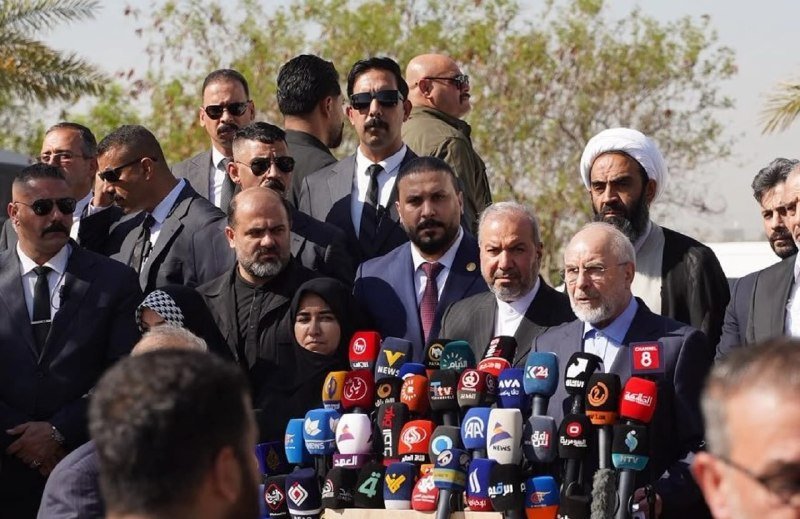
At 05:02 UTC on 19 August 2026, Iranian state outlet Mehr carried a dispatch from Mohammad Bagher Ghalibaf, Speaker of Iran's Majlis, telling reporters that he was about to depart for Baghdad with a parliamentary delegation at the invitation of the Iraqi side. By 06:00 UTC, Tasnim's English bulletin had packaged the same remarks under three headlines: the trip was "prioritised in Iran's diplomacy plans"; the journey was "a step towards strengthening the new regional order without foreign interference"; and Iran and Iraq are "taking great steps for internal security and common prosperity." The framing was assembled before the plane landed.
The framing is the product. Tehran is using a parliamentary delegation to deliver a geopolitical line: that Iran and Iraq can structure their own security and prosperity, and that outside powers who once defined the region's agenda are an obstacle rather than a guarantee. The schedule and the deliverables are less visible than the language carrying them, and that asymmetry is the story.
What Ghalibaf said, and where he said it
Tasnim's English dispatches attribute each of the three formulations to Ghalibaf speaking "at the place of Sardar Soleimani's martyrdom", the Iranian state's preferred phrasing for the Quds Force commander killed in January 2020. Mehr's earlier item, posted before the delegation's flight, reports the same location in the same register. The source items reviewed frame the remarks as delivered at that venue; the dispatch text also describes the trip as one the speaker is about to undertake ("Today, we will travel to Baghdad"), and the available items do not specify the precise coordinates of the site or the cause of Soleimani's death. The framing language is Iranian; the underlying event is carried in those terms.
From that platform, Ghalibaf made three arguments that ran across Tasnim's morning bulletins. First, that the trip had been "prioritised in Iran's diplomacy plans," signalling that parliamentary exchanges with Baghdad now sit alongside, rather than behind, the more visible security track. Second, that Iran and Iraq are "taking great steps for internal security and common prosperity," a formulation that folds counter-terrorism, border management and economic integration into a single package. Third, and most pointedly, that the journey "is a step towards strengthening the new regional order without foreign interference."
The Mehr dispatch added that the delegation is travelling "at the invitation" of the Iraqi parliamentary side, and that Tehran regards the bilateral relationship as "very important and fundamental in the developments of the region." The source items reviewed do not specify the delegation's full composition, the length of the stay, or the named Iraqi counterparts on the schedule. The framing, in other words, is doing the work that a normal readout would do.
What the language is reaching for
"New regional order without foreign interference" is not a phrase with one meaning. Read narrowly, it is a bilateral statement of intent: Iran and Iraq intend to deepen cooperation, and they will not condition that cooperation on outside vetoes. Read more broadly, it is a frame for the wider Middle East, Syria, Lebanon, the Gulf, Yemen, in which Tehran's preferred architecture is articulated as endogenous rather than imported. Read most expansively, it is a positioning statement aimed at the outside powers whose presence in the region Iran has spent two decades criticising. The outlets carrying the remarks do not name those powers; readers familiar with the regional debate will fill in the blank.
The phrase is also useful domestically. A parliament speaker framing a foreign trip as a contribution to a sovereign regional order is reassuring two constituencies at once: the Iraqi Shia political class that has weathered outside pressure over militia activity, and an Iranian audience that has watched Soleimani's successors operate under tighter scrutiny than the Quds Force did in his tenure.
Monexus analysis: the more telling signal is not what is said but what is left out. The source items contain no specific economic agreements, no announced energy or trade figures, no named Iraqi interlocutor. That asymmetry between the size of the framing and the thinness of the deliverables suggests the trip's primary product is the framing itself, a public posture the Iranian leadership can reuse when the next round of regional negotiations arrives.
The counter-read
There is an alternative reading worth taking seriously. The "new regional order" language may not be aimed at outside powers at all. It may be aimed at Baghdad's own domestic balance: a signal to Iraqi partners that Tehran's preferred security partners are the political forces aligned with the post-2003 Shia establishment, and that the parliamentary channel matters because it bypasses a security track shaped by external forces. In that reading, the audience is inside Iraq, not across the Atlantic. The source items reviewed do not specify which reading is operative; the consistency of the framing across Tasnim's morning bulletins is the only evidence available, and that evidence is consistent with both readings.
A second counterpoint comes from the venue itself. Reporting from the location Iranian state media calls Soleimani's place of martyrdom converts a parliamentary visit into a memorial, and the memorial into a political claim. The Iraqi government's response to that framing is not addressed in the dispatches reviewed for this article. The symbolism imposes a cost on Baghdad's relationship with outside powers that is harder to measure than any announced trade deal.
What to watch next
The next forty-eight hours will tell which reading the trip is actually built around. If the deliverables emerge in the form of cross-border energy arrangements, joint counter-terrorism frameworks or formal parliamentary cooperation agreements, the narrow bilateral reading holds and the language is rhetorical scaffolding for a real transaction. If the visit concludes with communiqués heavy on sovereignty and light on specifics, the broader framing is the point: Iran wants a reference document it can cite when the next sanctions debate, the next militia confrontation, or the next regional negotiation lands.
The uncertainty is genuine. The Tasnim and Mehr coverage reviewed for this article does not specify the delegation's full programme, the Iraqi leadership's response, or whether any third-party observers were invited. The available source items also do not address reports in other outlets about the security and militia dimensions of the Iraq file or the framing Ghalibaf's stated agenda takes in those terms; Monexus has not independently corroborated that framing from the items reviewed here. Those gaps are themselves part of the story: a trip whose architecture is more visible than its itinerary.
Monexus drew exclusively from Iranian state outlets Tasnim and Mehr for this article. The delegation's composition, the meeting schedule, the Iraqi response, and the venue's precise coordinates were not specified in the source items reviewed.
Wire provenance
This editorial synthesis draws on the following public wire/social posts:
- https://t.me/tasnimnews_en/31789
- https://t.me/tasnimnews_en/31787
- https://t.me/tasnimnews_en/31790
- https://t.me/JahanTasnim/230660
- https://t.me/mehrnews/405693