Trump pushes for an autumn Kim meeting, and the unusual silence around it
Donald Trump is pressing aides to arrange a face-to-face with Kim Jong Un this autumn, per a Wall Street Journal scoop that reached Asia and Middle East wire relays in the early hours of 19 August 2026, without the usual presidential stagecraft.
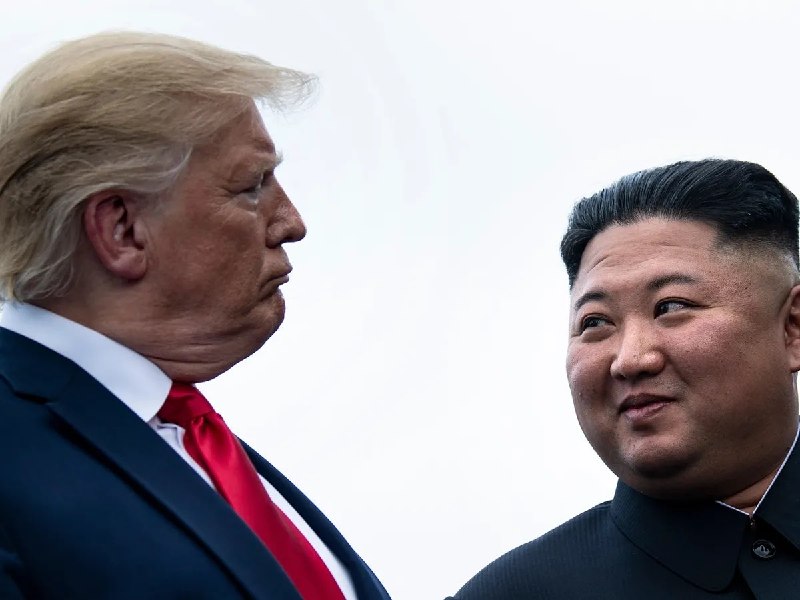
Donald Trump is pushing for a face-to-face meeting with Kim Jong Un as soon as this autumn, the Wall Street Journal reported on the evening of 18 August 2026, with the US president pressing aides to test whether the North Korean leader would accept an in-person encounter during a planned trip to Asia. The dispatch, relayed across Telegram channels covering both the Middle East and the wider Asia-Pacific beat in the hours that followed, describes a renewed diplomatic overture from a White House whose public posture around Pyongyang has shifted several times since the 2018 Singapore summit, the 2019 Hanoi meeting, and the brief inter-Korean working-level contacts of 2018.
The story lands as a relay rather than as a primary read. Four channels picked it up between 23:11 UTC on 18 August and 01:49 UTC on 19 August: the war-monitoring channel Witness, Tasnim News English, the OSINT Live aggregator WarMonitor, and Iran's Mehr News. The framing across the relays is consistent: the meeting would be face-to-face, the timing is autumn, and the venue context is a Trump trip to Asia that the relays tie to the APEC summit in Shenzhen, China in November. The exact venue inside Asia, the counterpart officials doing the sounding-out, and any agenda items under discussion are not specified in the cited dispatches, and the cited relays do not record any public response from Pyongyang.
What the relays actually say
The reporting, as picked up by Witness at 23:11 UTC on 18 August and carried forward through Tasnim English at 00:28 UTC, WarMonitor at 00:56 UTC, and Mehr at 01:49 UTC on 19 August, describes Trump as personally directing efforts to make contact and to gauge whether Kim would accept a meeting inside the planned Asia itinerary. The relays converge on three points: a Trump-directed approach, an autumn target date, and the APEC-in-Shenzhen framing for the wider Asia trip. Beyond that, the cited dispatches do not say what the meeting would be about, who on the US side is doing the outreach, or whether Pyongyang has engaged publicly or through any channel that the relays have observed.
This matters, because the previous round of Trump–Kim diplomacy was conducted under sustained media attention and predictable presidential messaging. The relays as published do not reproduce that pattern. WarMonitor, the OSINT Live channel whose commentary is itself part of the record, put the question plainly: it is strange that Trump is not flaunting the move as he usually does. The cited relays do not contain a White House read-out, a National Security Council statement, or a presidential social-media post tied to this specific approach; this article cannot independently establish whether such communications exist outside the cited relays.
The three readings now in play
The most natural reading of the silence around the WSJ scoop is that this is preparatory diplomacy, not a victory lap. Three readings of the same reporting now compete in public discussion, and a serious piece has to put each on the table.
The first reading, the one WarMonitor floats, is that Trump is building leverage before any meeting happens: floating a summit to keep a channel open, while reserving the option to walk away. Monexus analysis: the absence of presidential messaging in the cited relays is consistent with that reading, though the relays themselves do not state a motive. The second reading is closer to the 2018–19 template: a sitting US president treats personal diplomacy with Kim as a foreign-policy instrument in itself, willing to spend political capital on the bet that face time moves a nuclear file that has not produced a deal in seven years. Monexus analysis: the relays do not address that bet, but the autumn timing and the APEC venue context supplied by the relays are consistent with a meeting that rides alongside a larger US regional itinerary. The third reading is that the push is theatre: a foreign-policy move designed to fill a news cycle in a year dominated by other crises, structured so the announcement itself becomes the deliverable. Monexus analysis: the cited evidence does not let us choose between these, and the WSJ piece as relayed leaves the motive question deliberately open.
What the 2018–19 record establishes
The cited relays reference the prior summits but do not describe their substantive content. The public record on that round of diplomacy includes the 2018 Singapore meeting between Trump and Kim and the 2019 Hanoi meeting; the Hanoi talks ended without an agreed framework. The cited relays speak only to the current push and do not address what the precedent round established on sanctions, on verification, or on sequencing.
For Pyongyang, the diplomatic arithmetic since 2019 has shifted in ways the cited relays do not discuss. Monexus analysis: the structural context commonly attached to North Korea policy this round, including the working relationships both China and Russia retain with the Kim regime, and the public discussion of North Korean materiel flows toward the Russian war effort, is not addressed in any of the cited dispatches, which speak only to the meeting question. For Washington, the open question is what Trump would actually offer. The published accounts of the 2019 Hanoi collapse point to a sequencing gap: the US side wanted denuclearisation steps up front, Pyongyang wanted sanctions relief first. The cited relays do not suggest a new framework.
The honest answer is that none of this is settled on the available evidence, and the cited relays are silent on what the meeting would actually negotiate.
Stakes and what to watch next
The WSJ scoop, as relayed, is a single data point: the US side wants a meeting, and the venue context is the APEC window in Shenzhen in November. The autumn timeline gives the diplomatic service roughly three months to test whether Pyongyang is interested and, if so, on what terms. The two markers worth watching, based strictly on what the relays already establish matters, are: any public acknowledgement from Pyongyang recorded by the same relay ecosystem, and any US read-out that names a venue or agenda inside the APEC window. Neither has appeared in the cited sources as of 01:49 UTC on 19 August 2026. This article cannot independently establish whether either has appeared elsewhere.
Monexus assessment: on the cited evidence, the WSJ scoop, as relayed, is a quiet presidential approach rather than a choreographed announcement. That posture is consistent with a leadership style that has historically treated personal diplomacy with authoritarian counterparts as a foreign-policy instrument in itself. The substantive questions, sanctions, denuclearisation sequencing, the Moscow linkage, are not addressed in the relays and remain open. The story will become legible when one side or the other decides the approach is worth describing publicly.
Monexus framing note: this piece relied on the WSJ scoop as relayed through four distinct Telegram channels between 23:11 UTC on 18 August 2026 and 01:49 UTC on 19 August 2026; the primary WSJ URL was not present in the source thread and is not cited. Material from outside the cited relays, including context on prior summits, on inter-Korea contacts, and on North Korea's external relationships, is labelled as analysis or noted as not addressed by the cited evidence.
Wire provenance
This editorial synthesis draws on the following public wire/social posts:
- https://t.me/wfwitness/107543
- https://t.me/tasnimnews_en/31766
- https://t.me/JahanTasnim/230640
- https://t.me/mehrnews/405681
- https://t.me/osintlive/565187