UAE imposes indefinite trade embargo on Iran after missile allegation; Tehran calls it a false flag
Abu Dhabi announced an indefinite trade embargo on Iran on 19 August 2026 after alleging Tehran fired two missiles at the country. Iran denies responsibility and says the incident was a false flag. The wider Gulf is being pulled into a choice it had been trying to avoid.
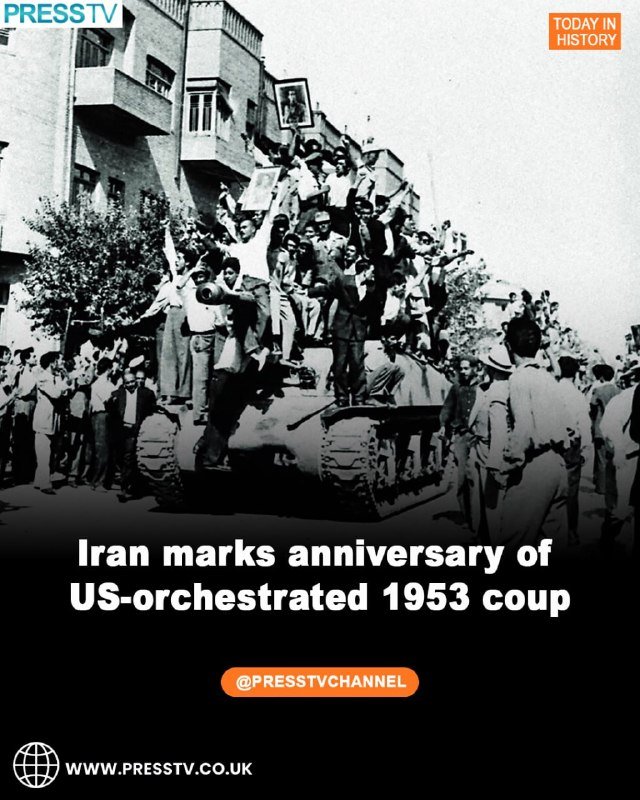
Abu Dhabi announced an indefinite trade embargo on Iran at 03:34 UTC on 19 August 2026, citing what the United Arab Emirates described as an Iranian missile attack on its territory. Hours earlier, South China Morning Post wire reporting put the number of missiles the UAE says Iran fired at two. Iran has rejected the accusation outright: state-linked Press TV carried Tehran's response at 02:28 UTC, framing the incident as a false flag operation and saying Abu Dhabi's behaviour undermines efforts to build trust between regional countries. The break is unusually raw for two countries that have spent recent years quietly exchanging de-escalation signals, and it pulls the wider Gulf into a forced choice it had been trying to avoid.
The embargo is the sharpest publicly reported bilateral rupture between Abu Dhabi and Tehran covered in the available source items, and it lands on a region already at war. The dispute is therefore not just a bilateral row; it is a stress test of the Gulf Cooperation Council's cohesion at the worst possible moment. Whether it hardens into a wider GCC-Iran split or settles into another cold bilateral file will be decided, in large part, by what evidence each side puts on the table in the next 72 hours.
What the UAE is alleging
The UAE's case, as relayed by Al Jazeera on 19 August 2026, is that Iran launched missiles at the country and that this triggering act justifies an indefinite trade embargo. South China Morning Post wire reporting cites the UAE's figure of two missiles fired at the country. Al Jazeera's headline characterises the measure as an embargo imposed "over alleged missile attacks," signalling that, as of publication, the UAE's allegation is not independently verified in the available source items. The framing in those items is allegation, not confirmed strike.
That distinction matters for how the embargo reads. "Indefinite" and "over alleged attacks" together describe a punitive measure taken on the basis of an unverified claim. The available source items do not specify whether the UAE has publicly named the missile type, point of origin, intercept details, or any third-party corroboration; they report the allegation and the policy response, not the underlying evidence chain. Readers should hold the two apart.
What Iran is saying back
Iran's rejection came quickly. Press TV's Telegram channel carried Tehran's response at 02:28 UTC on 19 August, framing the UAE's behaviour as a betrayal of the trust-building work undertaken between regional countries in recent years. The denial is categorical: Iran did not launch missiles at the UAE, and the suggestion that it did is, in Tehran's telling, a false flag. The Press TV framing matters because it is the Iranian state's primary English-language rebuttal channel and is read by diplomats and Gulf state security services as a proxy for the foreign ministry's line; it should be treated as Iranian state framing rather than as independent confirmation.
The contradiction is total on the available record. Either Iran fired two missiles at the UAE, or it did not, and the two governments are not yet talking in the cited items about what evidence either side is willing to put on the table. The Basij chief's separate remarks, carried by Press TV at 00:10 UTC on 19 August, framed the media as a central battlefield of the confrontation and warned that what goes unreported leaves room for distorted narratives. Read together with the foreign ministry denial, the Iranian signalling is that Tehran expects a long information contest, not a short forensic one.
The wider Gulf is being forced to pick a side
The embargo's larger effect is to convert what was a stale bilateral file into a regional one. Two Gulf states cannot simultaneously maintain embargoes against each other and remain inside the same security architecture without a formal mechanism for managing the split. The available source items do not specify how Saudi Arabia, Oman, or Qatar have responded to the embargo; the cited reporting names only the UAE, Iran, and the US legal track. The GCC's silence in the wire items is not, on its own, evidence of alignment with either capital.
The economic spillover is the second front, though the cited items do not enumerate which trade categories the embargo touches first or which logistics routes are most exposed. The Iranian government's parallel move is informational. The Basij chief's media-as-battlefield line, read alongside the foreign ministry's false flag denial, suggests Tehran is preparing for a dispute measured in news cycles rather than days. Whether that signalling survives contact with UAE commercial pressure is the open question.
The other front: indictments in Washington
The UAE-Iran row is unfolding against a separate US legal pressure track that landed just before it. At 00:30 UTC on 19 August, Reuters's X feed carried news that the US Department of Justice unsealed charges against 17 hackers in an Iran-backed campaign. The DOJ action is on a different docket and a different timeline, but the two events together produce a single signal on a Western and Gulf-aligned reading of the Iran file: that the pressure surface is now military (the alleged missiles), cyber (the unsealed charges), and economic (the UAE embargo) at once. They are different tools, pointed at the same target.
Monexus assessment: the dominant framing holds that the embargo is a response to a real attack, that the GCC will over time align with Abu Dhabi, and that Iran will retaliate asymmetrically rather than symmetrically. The minority framing is that the embargo is a unilateral move by a UAE wary of being drawn deeper into a regional war on someone else's terms, that the missile allegation is unverified, and that Abu Dhabi is using the incident to lock in a longer-term decoupling from Tehran before any US-Iran detente revives the trade relationship. The reported evidence, two missiles alleged by the UAE, denial categorical from Iran, no corroboration yet volunteered in the available source items, supports both readings. The decisive variable will be whether the UAE publishes intercept and radar data and whether a third country independently confirms or denies the launch origin.
The next 72 hours are the window. If Iran retaliates against UAE shipping or assets in third countries, the embargo hardens into a broader Gulf-Iran rupture. If Iran stays inert and calls for an international investigation, the embargo begins to look like a precipitative move and Abu Dhabi will be pushed by Oman and Qatar to release its evidence. The available source items do not specify which path Tehran will choose, and this article has not independently established whether the missile debris has been presented to any third-party forensic laboratory.
This article drew on Al Jazeera, South China Morning Post, Reuters, and Iranian state-linked Press TV as reported in the wire items of 19 August 2026. Where a Western wire and an Iranian state channel disagree on first-order facts, both versions appear with explicit sourcing caveats.
Wire provenance
This editorial synthesis draws on the following public wire/social posts:
- https://www.aljazeera.com/news/2026/8/19/uae-imposes-indefinite-trade-embargo-on-iran-over-alleged-missile-attacks?traffic_source=rss
- https://t.me/presstv/203305
- https://www.scmp.com/news/world/middle-east/article/3364490/uae-says-iran-fired-2-missiles-country-war-drags
- https://t.me/SCMPNews/109395
- https://x.com/Reuters/status/2089872538448834683
- https://t.me/presstv/203300
- https://www.aljazeera.com/news/2026/8/19/uae-imposes-indefinite-trade-embargo-on-iran-over-alleged-missile-attacks?traffic_source=rss
- https://t.me/presstv/203305
- https://www.scmp.com/news/world/middle-east/article/3364490/uae-says-iran-fired-2-missiles-country-war-drags
- https://t.me/SCMPNews/109395
- https://x.com/Reuters/status/2089872538448834683
- https://t.me/presstv/203300