Five Western capitals condemn Israel's E1 settlement tender
Paris, Berlin, London, Rome and Ottawa publicly opposed Israel's move to tender construction bids in the E1 area of the occupied West Bank, with France 24 reporting the development as 'illegal.'
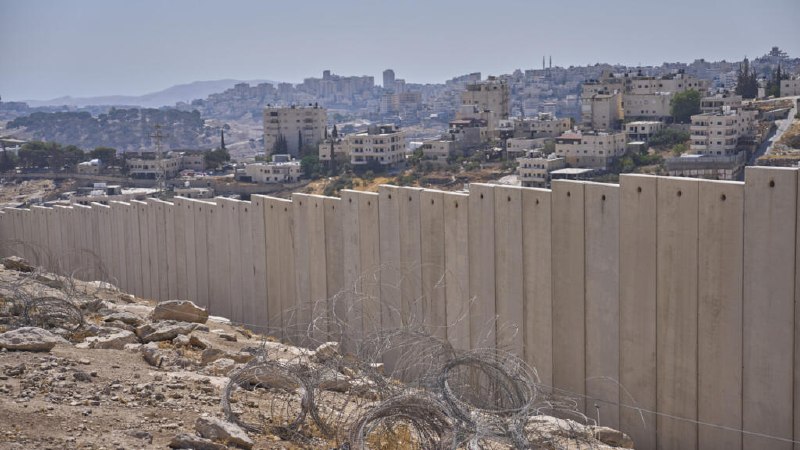
Five Western governments publicly criticised Israel on 20 August 2026 after Jerusalem moved to tender construction bids in the E1 area of the occupied West Bank, with France 24's wire copy labelling the project "illegal" and reporting, per the framing used by the four European foreign ministries, that the development would further cut Palestinian-majority east Jerusalem off from the rest of the West Bank.
The five capitals, the United Kingdom, France, Germany, Italy and Canada, each issued their own statements within the same news cycle, according to the wires that broke the story on Thursday evening. France 24, the BBC and Middle East Eye reported the condemnations between 18:52 UTC and 19:38 UTC, all citing the four European foreign ministries and, in the BBC's case, adding Canada to the list. The pattern is the same complaint that has followed every previous E1 planning notice over the past two decades, except that this time the language has been sharpened and the European quartet has been joined by a G7 partner.
What the wires say about the E1 tender
Reporting from France 24 at 18:52 UTC on 20 August 2026 framed the action as Paris, Berlin, London and Rome slamming Israel's decision to "open bidding for a planned settlement project in the occupied West Bank." The same France 24 wire described the E1 development, which it labelled a "sprawling" project, as one which "like all Israeli settlements" is treated as illegal under international law. Middle East Eye reported at 19:00 UTC that France, Germany, Britain and Italy condemned plans to launch the construction tender for what the project documentation labels "E1" in the occupied West Bank.
The BBC World Telegram feed at 19:38 UTC on 20 August 2026 listed the UK, France, Germany, Italy and Canada as having condemned Israel's plans to expand settlements in a strategically vital part of the West Bank. The available source items do not specify the precise size of the planned construction, the number of housing units, or the published tender timeline.
The wires converge on the international-law characterisation. France 24 reports the development as "illegal." Middle East Eye and the BBC carry the condemnation without that qualifier.
Five capitals, separate statements
The diplomatic geometry reported by the wires is not a single coordinated action but a near-simultaneous set of national statements. France 24 and Middle East Eye each name four governments (France, Germany, the UK and Italy). The BBC adds Canada, for a total of five. The source items do not characterise the timing as coordinated, and do not specify whether the statements were issued jointly or in parallel.
What the wires do flag, and what this article treats as the consequential fact, is that the condemnations landed inside a single news cycle on 20 August 2026, in the same window as other regional diplomatic movement. Middle East Eye's live blog, which broke the four-European condemnations at 19:00 UTC, also carried reporting on the scheduled Friday signing of a US–Iran accord in Geneva, an event the same foreign ministries are managing on adjacent tracks.
Monexus analysis: the proximity matters. When four or five governments publicly criticise a settlement tender inside a 90-minute window on a Thursday evening, and the same governments are simultaneously negotiating a regional de-escalation package for a Friday signing in Geneva, the statements function as part of a wider posture, not as a stand-alone protest. The available sources do not specify whether the statements were drafted in coordination or merely aligned by news flow.
What the wires do not establish
The source items do not specify whether any of the five governments have moved beyond language. They do not record ambassador recalls, trade-preference suspensions, UN resolutions, sanctions announcements, or any other operational measure.
The source items also do not specify which Israeli officials authorised the tender, what internal deliberations preceded it, or how the E1 project relates geographically to Ma'ale Adumim or any other named settlement. The article does not assert those details.
What to watch next
The structural question is whether the condemnations translate into operational follow-through. The wire cycle as supplied carries language but not measures. A second round of national statements without specific action would tell one story; a first round that is the precursor to ambassador recalls, sanctions, or UN-body filings would tell another.
Watch the Friday signing in Geneva. If the US–Iran accord closes as scheduled, the Western position on regional file management is consolidated and the E1 condemnation sits inside that consolidated posture. If the Geneva track slips, the E1 statements risk becoming the only diplomatic action of the week, which would lower their weight rather than raise it.
Desk note: Monexus drew the count of condemning governments from the BBC wire, which lists five (UK, France, Germany, Italy, Canada), and cross-referenced the four-European framing in the France 24 and Middle East Eye wires. The article does not assert a joint communique, because the wires describe separate national statements. Material from outside the supplied wire cycle, including UK sanctions reporting referenced in other outlets, was excluded because it is not in the source set this article draws on.
Wire provenance
This editorial synthesis draws on the following public wire/social posts:
- https://t.me/BBCWorldoffl/78510
- https://t.me/france24_en/18296
- https://www.france24.com/en/middle-east/20260820-france-germany-uk-italy-slam-israel-illegal-e1-west-bank-settler-project
- https://x.com/MiddleEastEye/status/2090514312343281726
- https://www.middleeasteye.net/live/live-us-and-iran-confirm-peace-accord-signing-set-friday-geneva
- https://t.me/BBCWorldoffl/78510
- https://t.me/france24_en/18296
- https://www.france24.com/en/middle-east/20260820-france-germany-uk-italy-slam-israel-illegal-e1-west-bank-settler-project
- https://x.com/MiddleEastEye/status/2090514312343281726
- https://www.middleeasteye.net/live/live-us-and-iran-confirm-peace-accord-signing-set-friday-geneva