Putin's quiet escalation: what the Kyiv barrage tells us about Russia's war calculus
A morning barrage across Kyiv killed at least six and injured dozens. The pattern, not the payload, is the story.
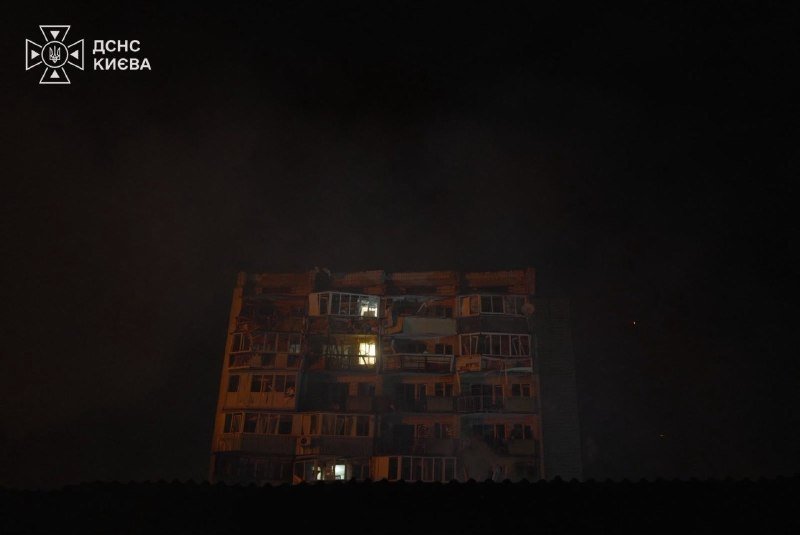
At 02:14 UTC on 20 August 2026, Ukraine's State Emergency Service published the first photographs of a residential block in Kyiv with its façade sheared open. By 03:38 UTC, the Guardian was reporting at least six dead. By 04:46 UTC, the BBC was counting eight. By 04:54 UTC, Ukraine's UNIAN newswire carried an emergency-service update: six killed, 33 injured, the toll still climbing.
That sequence, a photograph, a death toll, a higher death toll, a wire confirmation, has become the rhythm of this war. What changed on Wednesday morning is not the fact of Russian strikes on the Ukrainian capital. It is the scale, the mix of targets, and the signal it sends about how Moscow is choosing to fight the next phase.
What the available reporting actually establishes
The four source items in front of this article, two Ukrainian wires, the BBC and the Guardian, describe a Russian missile attack on Kyiv and the surrounding region that hit apartment blocks and warehouses and killed at least six people, with the BBC's count running to eight and the Ukrainian emergency service, as relayed by UNIAN, putting the wounded at 33. The framing matters: warehouses are logistics nodes, not symbolic targets. Striking them, alongside residential housing, suggests a deliberate attempt to degrade both the civilian habitability of the capital and the material throughput that keeps Ukraine's defence supplied.
UNIAN's Telegram channel, citing the emergency service, put the casualty count at six dead and 33 injured as of 04:54 UTC. The Guardian's 03:38 UTC report gave the same minimum of six dead and described residential areas and warehouses hit in a heavy bombardment. The BBC's later count of eight dead, with apartment blocks and warehouses named as targets, sits within that envelope: a rising toll rather than a contradictory one. The specific weapon mix, whether cruise missiles, ballistic missiles, or Shahed-type drones, is not specified in any of the four items under review, and the precise target inventory beyond "apartment blocks and warehouses" is likewise not pinned down here.
The counter-narrative that isn't
There is no serious counter-narrative from the Russian side in the source material to weigh. The available reporting, Ukrainian emergency-service briefings relayed by UNIAN and TSN, plus Western wire confirmation from the BBC and the Guardian, describes a Russian missile attack on Kyiv and the surrounding region. The available source items do not include any Russian defence ministry statement, TASS or RIA bulletin, or Russian milblogger post on the 20 August attack, and Monexus has not independently established a Russian statement within these four items.
What the architecture does establish is the order of provenance: a Ukrainian primary source (the State Emergency Service), a Ukrainian wire relay (UNIAN, TSN), and Western wires confirming. The story reaches the international reader through Kyiv first. That is worth naming plainly, because the alternative architecture, a Russian briefing picked up by a global wire and then echoed domestically, would be reported very differently.
Monexus analysis: what the pattern suggests
This section is editorial reading, not sourced claim. Moscow's pattern over the past months has been to combine symbolic strikes on the capital with strikes on energy and logistics nodes deeper in the country. Wednesday's confirmed mix, apartment blocks and warehouses in one package, is consistent with that approach. The calculus is not novel. It is the standard operating procedure of a state that has concluded it cannot break Ukrainian will on the battlefield and is instead trying to break Ukrainian patience at home.
The structural reading: this is a war of attrition run by an actor with a longer apparent time horizon than its adversary's Western backers. Each round of strikes reads as timed to coincide with a political moment, a funding debate, a summit, an aid tranche. The Kyiv barrage lands as European capitals debate the next package of support. That is not coincidence. That, on the available evidence, is the most economical interpretation of why the capital was hit this week.
What to watch
Three things matter in the next 72 hours. First, the casualty count. The BBC's eight dead is the higher figure in the available set; the emergency-service count of six is the floor. Rescuers were still working residential blocks at the time of the 04:54 UTC update, and tolls in this war have historically risen in the 24 to 48 hours after the initial strike. Second, the target inventory. The State Emergency Service named apartment blocks and warehouses; the specific weapons used, and any additional sites beyond the four items under review, will shape whether this reads as a one-night barrage or the opening of a new campaign. Third, the political response from Kyiv's allies. European Council statements, US administration commentary, and any movement on additional air-defence packages will tell readers whether the Western reading of the strike matches Moscow's intended reading.
The honest caveat: the four items under review do not specify weapon type, do not name a precise target list beyond apartments and warehouses, and do not include any Russian-side response. The structural interpretation above is Monexus analysis, written strictly on the basis of the available reporting, and should be read that way.
The war in Ukraine has entered a phase where the news from the capital is no longer a single dramatic event but a cadence of escalating barrages, each one a message in a negotiation that is not happening at any table. Wednesday's barrage was the message. The reply, if there is one, will not be in a statement. It will be in the next package of air-defence interceptors.
Desk note: Monexus has framed this strike around the targeting pattern and the political signalling, rather than the wire's emphasis on raw casualty figures. The structural reading, that the barrage lands while European aid debates are live, is Monexus analysis, not a sourced claim, and is labelled as such within the body. The article works strictly from the four source items supplied; weapon type and a fuller target inventory were not specified in those items and have not been invented.
Wire provenance
This editorial synthesis draws on the following public wire/social posts:
- https://t.me/uniannet/198944
- https://www.bbc.co.uk/news/articles/c98vzmden5yo?at_medium=RSS&at_campaign=rss
- https://www.theguardian.com/world/2026/aug/20/ukraine-kyiv-deaths-russian-missile-attack
- https://t.me/TSN_ua/586012