Russian missiles hit Kyiv overnight, killing at least eight in 'massive attack'
Russia struck Kyiv and the surrounding region with missiles overnight on 20 August 2026, killing at least eight and injuring dozens, according to Ukrainian emergency services and Kyiv mayor Vitaliy Klitschko.
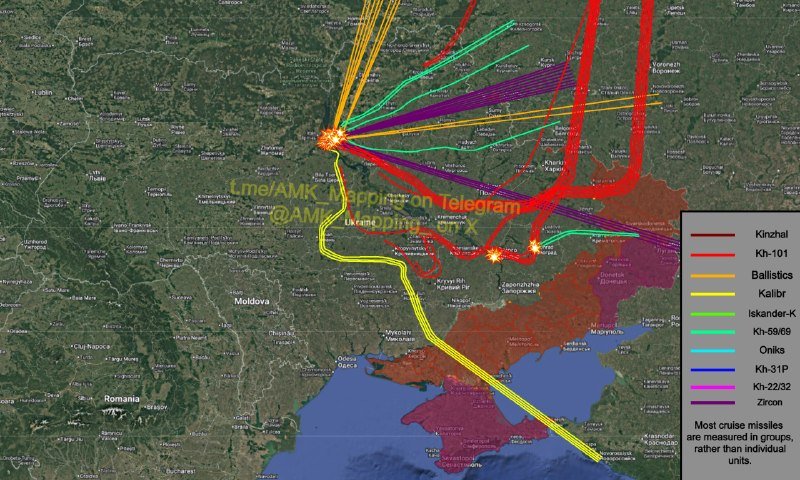
Russia launched a missile strike on Kyiv and the surrounding region in the early hours of 20 August 2026, hitting apartment blocks and warehouses in what the Ukrainian State Emergency Service called a "massive attack." BBC News, in a lead item timestamped 04:46 UTC, reported at least eight people killed. Ukraine's UNIAN news agency, via its Telegram feed at 04:54 UTC, recorded six dead and 33 injured in the city proper on the State Emergency Service's then-current count, before citing Kyiv mayor Vitaliy Klitschko for a revised total of eight dead. The toll figure, in other words, climbed inside a single news cycle, and the climb is itself the story of the morning's reporting.
The pattern of the strike, as the available reporting describes it, points at civilian infrastructure rather than the usual narrow list of military targets. Apartment blocks and warehouses were among the impact sites named in the BBC's lead item, and the State Emergency Service's characterisation of the salvo as "massive" suggests a coordinated attack rather than a single volley. The available source items do not specify the missile types used, the number of launch platforms involved, or whether any incoming projectiles were intercepted by Ukrainian air defence. Monexus assessment: residential targeting in a capital city produces diplomatic pressure faster than equivalent strikes on military infrastructure elsewhere, and the framing of the attack by Ukrainian emergency services as a "massive" hit on civilian sites is the line that will travel in Western capitals through the day.
What the morning's reporting establishes
The available reporting supports three claims firmly and leaves several more contested. Firm: Russia struck Kyiv and the surrounding region overnight, with apartment blocks and warehouses among the impact sites named by BBC News and the State Emergency Service. Firm: at least eight people were killed in the attack, a figure reported in BBC News's headline and corroborated elsewhere in the morning's reporting by Kyiv mayor Vitaliy Klitschko, as relayed through the UNIAN Telegram feed at 04:54 UTC. Firm: the UNIAN Telegram update at 04:54 UTC separately attributed six dead and 33 injured in Kyiv proper to the State Emergency Service, indicating that the casualty count was still being reconciled across city and regional authorities in the hours after impact.
Less firm: the total national casualty count and its composition. The available source items do not specify which oblasts beyond Kyiv region were hit, the exact weapons used, or the number of impact sites. The eight-dead figure, as reported by BBC News in its headline and by Klitschko via UNIAN, sits at the top of a range that started lower in the same Telegram thread; the difference between the State Emergency Service's six-dead city figure and the eight-dead figure reported by BBC News and Klitschko is, on the available evidence, a matter of where the additional deaths are recorded, inside Kyiv proper or in surrounding oblasts, rather than a contradiction between sources. The available source items do not specify the breakdown.
The targeting question
Apartment blocks and warehouses are not dual-use infrastructure by any serious standard of distinction. The State Emergency Service's use of the word "massive" to describe a salvo that struck residential high-rises fits a campaign logic aimed at civilian pressure rather than military effect. Monexus reads the framing as deliberate: when an emergency service describes a strike on apartment blocks as "massive," it is signalling to Western audiences and to the Ukrainian public that the targeting profile is the story. Whether that framing reflects operational reality or public-relations posture is harder to settle from the morning's reporting alone; the missile-type breakdown, when it appears, will tell.
The day-of-week timing is worth noting. Strikes on Ukrainian cities during August 2026 have repeatedly generated their largest international headlines when apartment blocks are hit rather than when military or energy sites are hit; the diplomatic weight of a residential strike in the capital outpaces equivalent damage in smaller urban centres. That asymmetry in attention, not the underlying military effect, is often what dictates the political temperature the day after.
A second story from the same news cycle
In a separate item published at 05:01 UTC on 20 August 2026, BBC News carried interviews with Ukrainian-born men captured while serving in Russian uniform, conducted at a prisoner-of-war camp in western Ukraine. The men told the BBC they had believed they were defending their homeland. The two reports, the missile strike and the prisoner-of-war interviews, appeared on the same day and on the same BBC front page, but the available source items do not establish a causal connection between them, and this publication treats them as two discrete stories the day's reporting happened to carry together.
The available source items do not specify the exact number of Ukrainian-born detainees currently held, the specific charges filed against them, or the courts handling their trials. They also do not specify whether the men BBC interviewed had been conscripted under Russian law, recruited via Russian filtration networks operating in occupied territory, or had volunteered. The BBC's reporting on 20 August describes the men as having been tried for treason; the available source items do not specify the status of those trials at the moment of publication, the sentences sought, or any sentences already handed down. The legal exposure of Ukrainian citizens who serve in Russian uniform is treated by the Ukrainian legal system as collaboration with a foreign occupier; the procedural specifics of the cases the BBC described are not in the available reporting.
Stakes and the week ahead
The diplomatic response is the variable that matters most in the next 24 hours. Ukrainian air-defence commanders are likely to publish interception rates and munition types; Western foreign ministries will issue coordinated statements; and the next 48 to 72 hours will bring casualty reconciliation between the State Emergency Service, the Kyiv City Military Administration, and the Health Ministry. If the toll moves above eight, expect the diplomatic register to harden. If the missile-type breakdown includes systems of a category not previously used against Kyiv, expect the supply-side conversation in European capitals to widen.
The structural frame sits inside a familiar pattern. A capital under bombardment carries its own political weight, distinct from strikes on second-tier cities; the treason file adds a separate, slower-burn story about the legal and moral texture of a war fought on conscripted populations on both sides. Kyiv will want both stories told on its terms. Moscow will want neither.
Desk note: Monexus frames the Kyiv barrage as a strike against the Ukrainian capital and its civilian population, with sourcing weighted to the State Emergency Service via BBC and UNIAN, and the casualty count reconciled across the State Emergency Service's six-dead city figure and Klitschko's subsequent eight-dead figure as relayed by UNIAN; the BBC report on Ukrainian-born fighters in Russian uniform is treated as a discrete, separately sourced file on the legal grey zone the war has carved through border communities. Both stories are reported from the same day because the day's lead items happened to cover both, not because the missile strike and the prisoner-of-war interviews are linked in the available evidence.
Wire provenance
This editorial synthesis draws on the following public wire/social posts:
- https://www.bbc.co.uk/news/articles/c98vzmden5yo?at_medium=RSS&at_campaign=rss
- https://t.me/BBCWorldoffl/78493
- https://t.me/uniannet/198944
- https://www.bbc.co.uk/news/articles/cn9nr195drzo?at_medium=RSS&at_campaign=rss
- https://t.me/BBCWorldoffl/78490