Seoul puts 80–120 warheads on the public record, more than double Trump's 57
South Korea's defence minister said on 20 August 2026 that outside researchers estimate Pyongyang's nuclear stockpile at 80 to 120 warheads, a band Reuters reported at 05:55 UTC that sits well above the 57 figure US President Donald Trump has publicly cited.
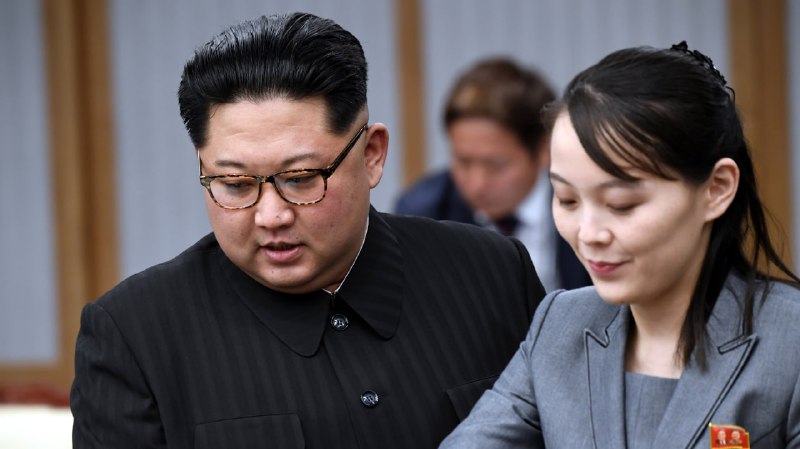
South Korea's defence minister said on 20 August 2026 that external researchers typically estimate North Korea's nuclear arsenal at between 80 and 120 warheads, a range Reuters reported at 05:55 UTC, more than double the 57-warhead figure US President Donald Trump has publicly cited. The Korean-language coverage aggregated on Telegram by Insider Paper (06:43 UTC) and Clash Report (06:22 UTC) carried the same band shortly afterwards, with Fars News International's English-language relay following at 07:31 UTC. Clash Report's summary explicitly noted the gap with the American number.
The political point is the gap, not the precise count. Two governments that share an intelligence picture on Pyongyang now have two public numbers on the most consequential weapons programme on the peninsula, separated by a factor of more than two. Neither side has reconciled the figures in public, and the divergence is doing work in the diplomatic background that no joint statement has yet addressed.
What the minister actually said
The defence minister did not announce a new South Korean count. The 80–120 range, as Reuters summarised it and as the Telegram channels carried it, is what North Korea "is typically estimated to have" by outside researchers. Seoul's own military has not officially confirmed the figure. The distinction is doing the work here: a Korean intelligence-service estimate would imply classified collection across imagery, signals, human sources, and warhead-production tracking. A typical-external-estimate characterisation implies model-based inference, drawing on declared test yields, fissile-material output, and the visible expansion of facilities at Yongbyon and beyond. The minister's contribution was to put that typical range on the public record, not to certify it as Seoul's own.
Read narrowly, the line is a request. Read at full stretch, it is a one-sentence rebuttal of the lower American number, delivered on the record by an ally whose own forces would be first in line if those warheads ever moved.
The American number, and what it does in public
Trump's 57-warhead figure has anchored US political coverage of the North for months. Its function is reassurance: a Pyongyang that is dangerous but bounded, a problem that fits on a fact sheet and inside a maximum-pressure campaign. Clash Report's summary explicitly noted the gap with the South Korean range. The two counts are not strictly contradictory; they describe different objects. The US figure travels as a political artefact, sized to support an engagement posture. The 80–120 band travels as a consensus estimate across the research community that studies the programme.
Monexus analysis: proliferation estimates do not behave like weather forecasts. They are produced inside bureaucracies with briefs, and they surface in public when one side wants to reset a negotiating baseline that has drifted. A public 57 tells Pyongyang the United States will bargain from a low starting count, which raises the price of any American concession. A public 80–120 tells Washington it cannot bargain from that floor without out-quoting its own ally.
What Seoul gains from naming the gap
The minister's choice to cite the typical external range is itself a policy move. Putting a higher third-party range on the public record pulls the American public count upward by association. It also shifts the burden: the cited posts do not specify any White House, State Department, or intelligence-community response to the 80–120 range, and this article has not independently established whether such a response has been issued, but the Trump administration now has to explain why the prevailing research consensus sits well above the number it has been using.
There is a contingency reading too. If Washington moves toward a deal that treats Pyongyang as a manageable nuclear state, Seoul's own latent nuclear debate will intensify. Invoking the higher third-party range publicly makes it harder, not easier, to argue that the North's arsenal can be capped by diplomacy alone. The minister's remarks do two jobs at once.
Where this leaves the conversation
The immediate question is whether Washington will update its public count. The cited posts do not specify any White House, State Department, or intelligence-community reaction to the 80–120 range in the hours since the Seoul briefing, and this article has not independently established whether such a response has been issued. A correction, a non-denial, or silence: each is a different signal to Seoul, to Pyongyang, and to Tokyo, which carries its own estimate regime through the Defence Ministry's annual white paper. Watch the next US readout on North Korea for whether 57 survives, drifts upward, or quietly gives way to a wider band.
The structural read is straightforward. A proliferation range is a kind of arms-control infrastructure. Once two allies stop agreeing on the size of the pile, the negotiation built on top of that pile loses its foundation. Seoul's choice to publicly cite the higher third-party range is a quiet warning that the foundation has cracked, and that whatever is built next will have to rest on numbers honest enough to survive allied scrutiny.
The cited posts do not specify a US official response to the 80–120 range; this article has not independently established whether one has been issued. That gap is noted, not filled in.
Wire provenance
This editorial synthesis draws on the following public wire/social posts:
- https://reut.rs/4xVCIim
- https://x.com/Reuters/status/2090316660804616392
- https://t.me/FarsNewsInt/259399
- https://t.me/insiderpaper/44033
- https://t.me/ClashReport/93044