Seoul's 80-to-120 warhead estimate exposes a gap in the public nuclear debate
South Korea's defence minister cited an estimate of 80 to 120 North Korean nuclear warheads. The available reporting also contrasts that range with a 57 figure relayed in connection with Donald Trump, making uncertainty over the public baseline part of the story.
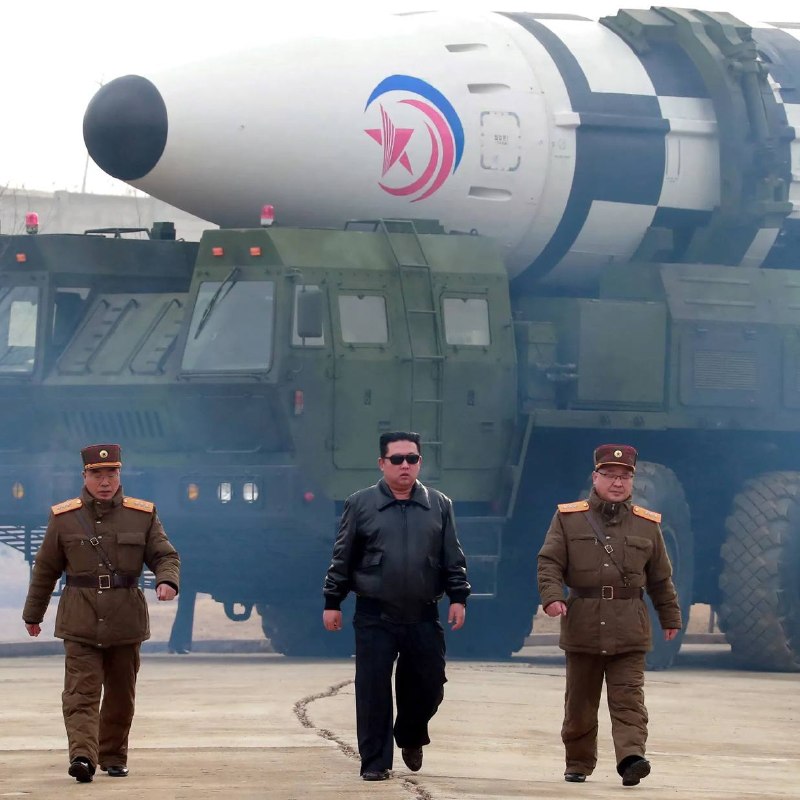
On 20 August 2026, South Korea's defence minister put the publicly reported estimate of North Korea's nuclear stockpile at 80 to 120 warheads. Reuters relayed the range, while Telegram channels also carried the minister's statement and a report that Seoul's estimate came from private research rather than an official military confirmation. The available evidence therefore supports a substantial gap between the figures being placed in the public domain, even though the sourcing of the estimate remains qualified.
The honest reading is not that Seoul has produced a definitive inventory. It has not, according to the cited accounts. Rather, a senior official has elevated an 80-to-120 estimate into a public discussion already shaped by a 57 figure associated with President Donald Trump. That makes the disagreement about transparency and evidentiary confidence as much as it is about the size of North Korea's arsenal.
A number with a caveat
The 80-to-120 range matters because it is not a single estimate detached from context. Reuters reported that South Korea's defence minister cited the range. Clash Report's relay specified that the estimate came from private research and was not officially confirmed by the South Korean military. That qualification prevents the number from being treated as a fresh, independently verified government count in the evidence supplied here.
Monexus analysis: the range is consequential precisely because it sits at the intersection of a clear public attribution and an uncertain evidentiary basis. It gives policymakers a reason to discuss the size of the threat, but it also requires them to distinguish what is known, what is estimated and what has merely entered the public conversation.
The 57 figure requires similar care. Clash Report described the South Korean range as far above Trump's figure of 57. A Witness from the World relay included the fragment, "He has 57 very powerful…", but the supplied material does not establish a date, venue or complete public statement. It would be inaccurate to present the figure as a fully sourced, standalone Trump quotation. The responsible comparison is therefore limited: 57 is the figure identified by the relays as Trump's, while the available evidence does not provide enough detail to verify the circumstances of that remark.
Personal diplomacy meets nuclear arithmetic
The same news cycle included two reported comments attributed to Trump. Nexta's relay said he had ordered a reduction in joint exercises with South Korea so as not to anger Kim Jong Un. A separate relay, from Witness from the World, said Trump declined to say whether he was exchanging letters with the North Korean leader, adding, "I get along with him."
Those reported remarks suggest the public posture Trump is cultivating: a relationship with Kim, paired with fewer military exercises. They do not establish a causal connection between the reported exercise decision and North Korea's stockpile. But they do make the arithmetic impossible to ignore. Diplomacy can pursue a reduction in tensions without requiring public figures to pretend that the underlying arsenal is smaller than the available estimates suggest.
There is a plausible counter-reading. A senior South Korean official may be citing a deliberately broad range to focus attention on a threat that Seoul takes more seriously than Washington does. If so, the political value of the number lies in warning and signalling, not in a complete inventory. The counterpoint does not cancel the estimate. It makes the source qualification central to any responsible account of it.
The gap is about more than one stockpile
The larger pattern is a contest over the baseline against which deterrence and diplomacy are judged. Washington, in the material available here, is associated with personal rapport and a reported reduction in exercises. Seoul, through its defence minister, is associated with a higher estimate of the arsenal. Those positions can coexist. Personal diplomacy is not necessarily evidence of strategic complacency, and a higher estimate is not proof that military pressure has failed.
The danger lies in the space between them. A public leader who describes the threat using a smaller, poorly sourced figure can make a policy of accommodation look safer than the evidence permits. A government that presents a broad estimate as a settled count can create its own credibility problem. The sound course is neither diplomatic triumphalism nor alarmism. It is a clear separation between verified inventory, attributed estimates and political interpretation.
The immediate stakes are concrete for South Korea, the United States and North Korea. Seoul is the ally living closest to the consequences of a misreading. Washington retains the alliance relationship and the reported ability to adjust joint exercises. Pyongyang benefits from any ambiguity that weakens coordination among its neighbours and their principal security partner. Those interests do not prove that a particular escalation is imminent. They do establish who has the most to lose if the public baseline remains contested.
What the evidence can, and cannot, carry
The supplied items agree that the South Korean defence minister cited 80 to 120 warheads. They also preserve the caveat that the estimate came from private research and was not officially confirmed by the military. They disagree, or at least vary, in how confidently they present Trump's 57 figure. Reuters is reported through a shortened link and an X post; the Telegram relays add caveats and context but are not independent primary records in the available material.
That limits the strength of the conclusion. It supports saying that a numerical gap has entered public discussion. It does not support saying that Washington deliberately concealed the arsenal, that Seoul has confirmed a new intelligence finding, or that the reported reduction in exercises was ordered because of a specific intelligence assessment. Nor does the available evidence identify a date or venue for Trump's 57 remark. Those distinctions are not semantic quibbles. They are the boundary between a sourced report and a story that outruns it.
Monexus assessment: the next useful signal would be a dated, attributable South Korean document or first-party statement explaining the 80-to-120 range, alongside a complete, dated record of Trump's 57 figure. Until then, the 80-to-120 estimate deserves attention, not certainty; the 57 figure deserves comparison, not quotation; and the reported exercise reduction should be treated as a policy signal whose relationship to the stockpile remains unproven.
How Monexus framed this: the available relays support a story about a consequential numerical gap, but the sourcing caveats mean the article separates South Korea's attributed estimate from an independently verified inventory and does not turn Trump's relayed 57 figure into an unqualified quotation.
Wire provenance
This editorial synthesis draws on the following public wire/social posts:
- https://reut.rs/4xVCIim
- https://x.com/Reuters/status/2090316660804616392
- https://t.me/ClashReport/93044
- https://t.me/insiderpaper/44033
- https://t.me/nexta_live/122400
- https://t.me/wfwitness/107686