Seoul puts North Korea at 80 to 120 warheads. Trump says 57.
On 20 August 2026, South Korea's defence minister cited a working range of 80 to 120 North Korean warheads, far above the 57 figure Donald Trump gave in the same news cycle. The gap, plus Trump's public criticism of long-planned joint drills with Seoul, lands inside a single morning of reporting.
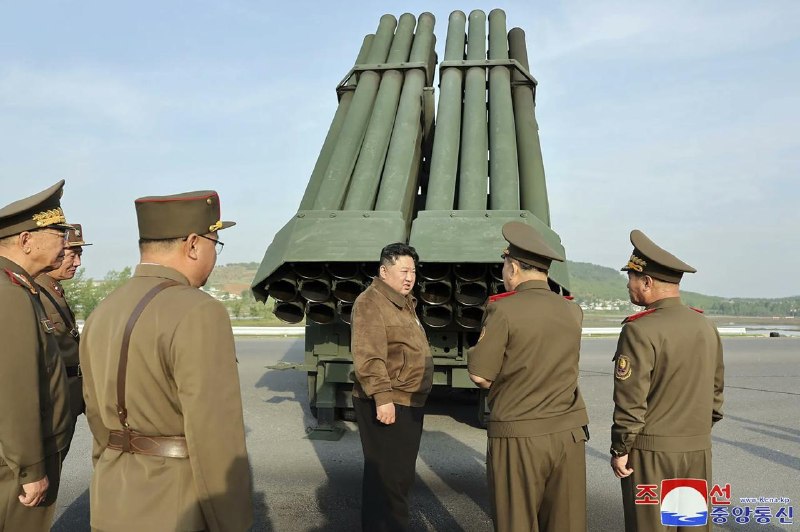
South Korea's defence minister put the country's working estimate of North Korea's nuclear stockpile at 80 to 120 warheads on 20 August 2026, a band that sits well above the 57 figure Donald Trump gave from the same news cycle. Reuters carried the minister's remarks at 05:55 UTC, reporting the range and citing it as significantly higher than Trump's recent assertion. Within roughly half an hour, at 06:22 UTC, the Telegram channel Clash Report added the caveat Seoul itself attached to the figure: the estimate comes from private research and is not an official South Korean military readout. The lower bound is roughly 40 percent above Trump's number. The upper bound is more than double it.
The numbers themselves are the news. The politics around them are what make them destabilising. A US president and his closest ally on the peninsula are now putting incompatible baselines on the most consequential military balance in East Asia, and they are doing so on the same day, in the same news cycle, on the record. Any US attempt to reopen a diplomatic channel with Kim Jong-un now begins from two numbers that do not match, with the South Korean caveat narrowing what either baseline can claim.
One day, three moving parts
The day's reporting packages three discrete moves. First, at 05:55 UTC on 20 August, Reuters reported the South Korean defence minister's 80 to 120 figure. The Reuters excerpt on X attributes the statement to "its defense minister" without naming him; the Clash Report summary at 06:22 UTC identifies the office and the role but the available source items do not provide the minister's surname. Second, at 06:22 UTC, Clash Report carried the same range and recorded the Seoul caveat that the figure derives from private research and is not an official South Korean military readout. Third, the Telegram channel War Futures Witness posted at 04:40 UTC the same day with Trump's own remarks: a figure of 57 North Korean warheads, a refusal to confirm the content of correspondence with Kim Jong-un, and the line that he "gets along" with Kim. Sandwiched between those two, at 05:06 UTC, Nexta Live reported that Trump publicly criticised long-planned joint exercises with South Korea and framed his dissatisfaction in terms of not angering Kim Jong-un.
Treating those items as a single sequence matters. The War Futures Witness post places the 57 number and the "I get along with him" phrasing in the same Trump appearance, not as separate statements days apart. Reuters' 80 to 120 figure lands roughly seventy-five minutes after Trump's 57. The exercise criticism arrives between them. The cumulative picture is that the alliance spent a single morning disagreeing about North Korea in public, in real time, on the record.
What the Seoul caveat actually narrows
The South Korean caveat is doing more work than it looks. A defence minister willing to cite a private-research range in public is signalling two things at once: that an official South Korean estimate has not been made public, and that the unclassified literature already strains the Trump number. Per Clash Report's summary, Seoul attributes the 80 to 120 range to private research rather than to its military's official readout. The qualifier does not weaken the minister's point; it sharpens it, by clarifying that the disagreement is between the US president's public figure and the broader technical work Seoul is willing to cite, not between two competing military estimates.
Reuters' reporting, as carried in the X post at 05:55 UTC, says the minister "said" the figure. The Reuters excerpt does not include a direct quotation, and the available source items do not establish a venue, an audience, or whether the remarks were scripted. Monexus reads the wire as relaying the reported statement, and the South Korean caveat as Seoul's own characterisation of provenance, attributed to the minister by Clash Report at 06:22 UTC.
The exercise criticism, and what the sources actually say
The exercise item needs reading carefully. The Nexta Live post at 05:06 UTC reports that Trump said he was dissatisfied with the long-planned joint maneuvers with Seoul and framed the criticism in terms of not angering Kim Jong-un. The post's headline language frames the move as an order to reduce exercises; the body of the post attributes the dissatisfaction and the framing to Trump as relayed by Nexta. The available thread evidence does not specify on what timetable any change would take effect, which specific drills are in scope, or whether a formal directive has been transmitted to US forces on the peninsula. What the sources do establish is that Trump used a public appearance on 20 August to attack the drills and to link that criticism to his rapport with Kim.
That is a narrower claim than a confirmed, dated order to cut specific exercises. It is, however, the claim the thread evidence supports without overreach. The framing matters because the 20 August appearance sits inside a broader reporting record on US-South Korea drills that this article has not independently established from the cited sources; the available items cover only the 20 August news cycle and do not reference earlier coverage. The exercise question is therefore best read as: a public attack on the drills, framed by the president in terms of Kim, on the same morning the alliance publishes incompatible warhead baselines.
"I get along with him" as the day's framing
In the War Futures Witness post at 04:40 UTC on 20 August, Trump declined to confirm the substance of his correspondence with Kim but treated the fact of getting along with the North Korean leader as itself a piece of news. The phrasing is worth parsing. A claim of personal chemistry is not a substitute for a verified inventory. It is also not a treaty, an inspection regime, or a freeze on fissile-material production. The South Korean range of 80 to 120 warheads describes a state that has continued to produce and weaponise during every period of warmer rhetoric with Washington.
Monexus analysis: the most natural reading of the day's reporting is that the US public posture is moving faster than the threat picture the South Korean minister is willing to put on the record. A gap measured in tens of warheads between a sitting US president and his closest ally's defence minister, surfaced in the same news cycle, is not a clerical discrepancy. It is, at minimum, a sign that the White House is choosing a smaller number for political reasons. Whether that choice yields a negotiation or a normalisation of a larger North Korean arsenal is the question the next months will answer.
What remains uncertain
The available source items do not specify when Trump first cited the 57 figure, whether the South Korean minister's 80 to 120 range has been shared with Washington through formal intelligence channels, or whether Seoul's private-research range is moving up or down relative to earlier estimates. Reuters' excerpt attributes the minister's statement to "its defense minister" without naming him; the Clash Report summary at 06:22 UTC identifies the office but not the surname. The available items also do not specify the venue of Trump's appearance or whether the remarks were scripted, nor do they establish a venue for the South Korean minister's statement. The Nexta item reports Trump's public criticism of the exercises and uses order language in its headline; the body of the post attributes the dissatisfaction and the motivation to Trump as relayed by Nexta, and does not specify a directive, a date for any change, or which drills are in scope. The War Futures Witness post records Trump's remarks in his own voice, but the source is a Telegram relay of a televised appearance rather than a transcript. These are the seams the next round of reporting will need to close.
The shape of the next month
Two clocks are now running. The first is the exercise calendar. Any reduction, if one follows the criticism, is a concrete, dated, reversible action that the Pentagon can shape on its own schedule. The second is the warhead estimate. Production lines at Yongbyon and successor facilities do not pause for press conferences, and the broader literature on North Korean stockpiles has tended to move upward over time, not down. Seoul's 80 to 120 is a private-research range today; the next official South Korean estimate, when it lands, will inherit that range as its floor.
A useful framing for what comes next: the alliance is no longer disagreeing about North Korea behind closed doors. It is disagreeing about North Korea on camera, in the same news cycle, with the caveats on the record. That has consequences for Beijing and Tokyo, both of whom calibrate their own posture partly off the credibility of US-South Korean coordination. The 20 August reporting marks the point at which the divergence became impossible to read as a typo. The question for the administration's Korea team over the coming weeks is whether the public estimate and the private estimate can be brought back into the same neighbourhood before any new exchange with Kim is treated as a deliverable rather than a greeting.
A desk note: wire reporting on the day's Korea posture has tended to print the president's 57 figure and the minister's range as two separate stories running on parallel tracks. Monexus treats them as a single sequence and reads the gap between them, plus the South Korean caveat on provenance, as the story.
Wire provenance
This editorial synthesis draws on the following public wire/social posts:
- https://reut.rs/4xVCIim
- https://x.com/Reuters/status/2090316660804616392
- https://t.me/ClashReport/93044
- https://t.me/nexta_live/122400
- https://t.me/wfwitness/107686