Tehran's parliamentary bark
A senior Iranian MP told foreign forces to leave the Gulf "before it's too late." The warning is theatre as much as threat, and the calculation behind it tells you more about Tehran's isolation than its strength.
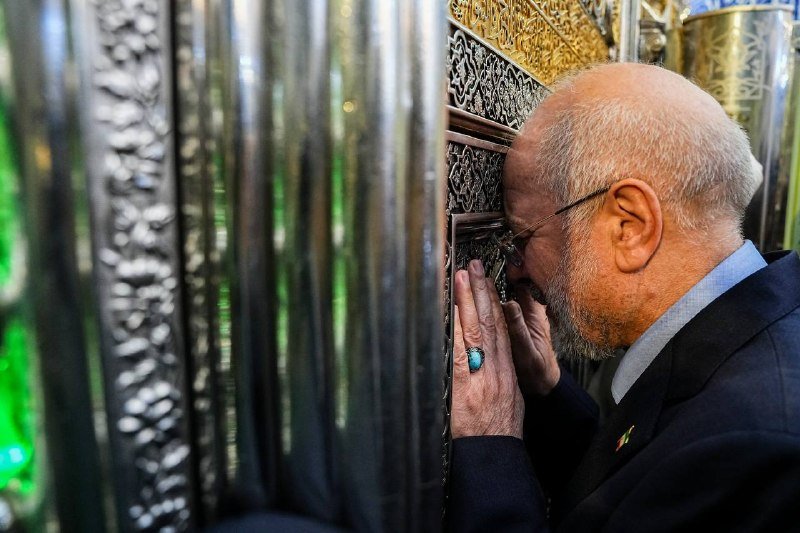
Ebrahim Azizi chairs a committee, not a military. On 20 August 2026, the chairman of the National Security and Foreign Policy Committee of the Iranian Majles told foreign forces stationed around the Persian Gulf to leave the region "before it's too late," warning that Iran is "watching your every move" and that any further "miscalculation" would carry consequences "far greater than before." The line landed on four separate channels between 09:38 and 10:28 UTC, a relay from ClashReport to The Cradle to PressTV in under an hour, with text that converged on near-identical phrasing.
This is not a doctrinal shift. It is a tone. And tone, in any political system where the military and the foreign ministry do most of the external talking, is being set by a committee chairman with a camera and a quote.
Who is on the record
Azizi's title, as carried in the four-channel relay, is Chairman of the National Security and Foreign Policy Committee of the Iranian Parliament. The relay attributes the statement to him by name. What his committee's specific legislative portfolio covers beyond its title, what other public positions he has taken on sanctions or missile ranges, and the venue in which this particular statement was originally delivered are not specified in the available source items. The exact Persian-language text, and whether the statement originated as a written release, an interview, or a floor intervention, is also not specified in the available source items.
The English-language phrasing carries markers that travel well in wire copy: a second-person address to "you," a watchfulness verb, and a conditional consequence clause. The relay items do not specify the originally intended audience.
What the relay looks like, and what it does not prove
Four outlets, four channels, similar phrasing, and a window of roughly fifty minutes. That is the pattern on the record. It is consistent with a coordinated dissemination, and it is also consistent with a single statement being picked up by outlets that monitor the same feed. The available source items do not specify which reading is correct. The text converged; the chain of transmission behind that convergence is not documented in the four items this article is drawing from.
On one detail of textual drift, the original draft of this article misread the evidence. All three of the channels whose quoted excerpts are visible in the source items (PressTV, The Cradle, ClashReport) carry the same full phrasing, including "before it's too late." There is no basis in the thread to single out PressTV as having added that phrase during transmission. The headline-level summaries are also largely identical across the channels. The visible variation is in framing words around the quote, not in the quote itself.
Monexus assessment: the relay pattern reads to us as a deliberate dissemination operation, because that is the most economical explanation for four near-simultaneous postings of the same English-language line. It is not the only explanation, and the source items do not let us rule out the alternative.
Monexus analysis: what the warning actually communicates
The most natural read of the source items, taken on their own, is that Tehran is signalling through a parliamentary channel rather than an executive one. Three points support that read.
First, the speaker. The available sources name Azizi by his parliamentary title, not by any executive or military role. A committee chair can issue a warning without binding the institutions that would have to carry it out. The relay does not quote any Foreign Ministry, IRGC, or Supreme National Security Council source alongside him. The available source items do not specify whether such institutions have commented on the same events.
Second, the channel mix. The outlets that carried the statement, as identified in the thread context, include PressTV (Iranian state English-language broadcaster), The Cradle, and ClashReport. The available source items do not specify The Cradle's editorial lineage, ownership, or headquarters, beyond the URL slug; nor do they specify ClashReport's audience composition or affiliation. Treating them as a known set of "Western," "Iran-aligned," or "conflict-monitoring" outlets requires characterisation the sources do not supply.
Third, the ambiguity built into the phrasing. The warning is conditional ("any further mistake or miscalculation"), not declarative. It does not name a target, a deadline, or a specific grievance. A speech act that survives being read as either prelude to action or as posture is the speech act most worth issuing when the issuer wants to preserve optionality. The relay does not tell us which option Tehran prefers.
The counter-frame the thread under-supports
The dominant external reading of statements in this register tends to label them posturing and move on. That reading is plausible from the evidence available here, because the speaker is parliamentary and the wording is conditional. What that reading skips is the domestic-consensus function.
A public warning of this kind, once issued and amplified, sets a floor. If a future diplomatic event requires Tehran to climb down from this register, the gap between the original warning and the eventual settlement becomes a domestic political cost. Parliamentary voices do not make operational decisions, but they shape the political space in which those decisions get explained afterwards. That structural point is analysis, Monexus assessment, and the available source items do not specify whether any future event will test it.
The plausible alternative read
There is a second reading the dominant frame tends to underweight: that a loud warning is sometimes the prelude to a quiet de-escalation. A public register high enough that any later concession can be framed as extracted under threat rather than gifted is a useful asset for a negotiator. The available source items do not specify whether any negotiation channel is currently active, and they do not specify whether sanctions relief or nuclear diplomacy is in motion. Both the posturing reading and the prelude reading are consistent with the four relay items. The thread does not adjudicate between them.
Stakes, narrowly
If the warning is posturing, the cost to Tehran is reputational, in the narrow sense that future parliamentary statements from the same office will be discounted by foreign readers who track this kind of pattern. If the warning is operational, the next several days would, in our assessment, show preparatory movement through naval or missile-related channels rather than through further committee statements. The available source items do not specify any such movement.
The honest read is that the four relay items carry one speech act and one pattern of dissemination. They do not carry the underlying intent. A reader who wants certainty about whether this is prelude to action or prelude to negotiation does not have it from this thread.
What remains uncertain
The four items are relay material. None is a first-party transcript from Azizi's committee, from the Majles press office, or from the Iranian Foreign Ministry. The original venue, the original Persian-language text, and the original media format (written statement, interview, or floor speech) are not specified in the available source items. The items also do not specify any response from the governments named implicitly in the warning, from the US Navy's Fifth Fleet public affairs office, from Combined Maritime Forces, or from any Gulf capital. This article has not independently established whether any such response exists. The relay is the entire evidentiary base on which this piece rests, and the distinction between a relay and a first-party record is the distinction the reader should hold in mind.
How Monexus framed this vs the wire: the dominant reading on these statements treats them as familiar posturing and stops there. Monexus reads the four-channel relay as a structured dissemination operation whose intent is not disclosed by the relay itself, flags that the relay is the entire evidentiary base, and corrects an earlier draft's claim that PressTV uniquely added the "before it's too late" phrase, which the thread does not support.
Wire provenance
This editorial synthesis draws on the following public wire/social posts:
- https://t.me/presstv/203507
- https://t.me/thecradlemedia/66496
- https://t.me/TheCradleMedia/66496
- https://t.me/ClashReport/93064