Trump announces an 'unprecedented economic operation' against Iran; the cited posts leave the mechanics blank
Within a 44-minute window on 20 August 2026, three Telegram and X relay posts recorded President Trump announcing what one described as an 'unprecedented economic operation' against Iran. The cited posts do not specify the legal mechanism, the targets, or the timeline.
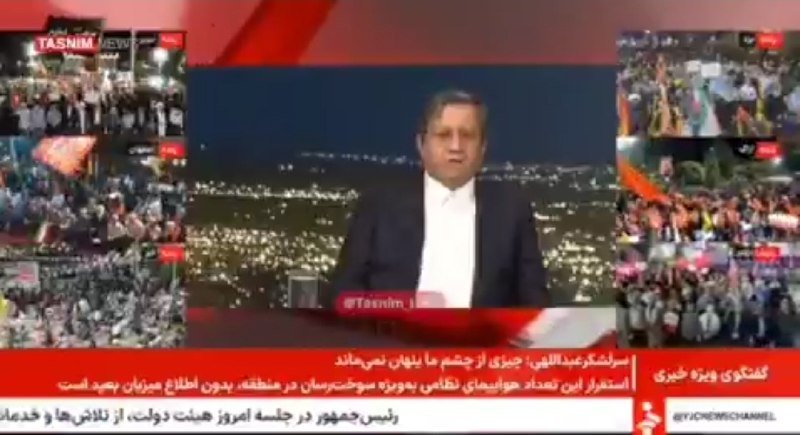
Within a 44-minute window on 20 August 2026, three relay posts recorded President Donald Trump announcing what one of them described as an "unprecedented economic operation" against Iran. The Indian Express Telegram account posted at 03:52 UTC under the headline "Economic warfare on an unprecedented scale." The CGTN-affiliated X account followed at 04:34 UTC, headlining the move as "ECONOMIC D-DAY" and carrying Trump's formulation of the "most crushing economic operation" ever imposed on a country. The @intelslava Telegram channel posted at 04:36 UTC in English, attributing the "unprecedented scale" framing to "the American official" rather than to the president himself. Each post attributes the language differently and, to differing degrees, to different speakers.
The substantive policy content the cited posts actually carry is thin. None of them names a legal instrument, lists designated persons or entities, identifies a target country code, or sets a timeline for implementation. The single most concrete item in the available material is the attribution ladder: one post records the announcement as a Trump statement, one as language from an American official, and one as a CGTN post combining the two. The framing differences between the three posts are the most observable part of the announcement, and the absence of operational detail is the most newsworthy part of what the framing leaves out.
What the three cited posts actually say
Stripped to what the source items support, the documented record is threefold. First, an announcement of an economic operation directed at Iran, with the strongest phrasing, Trump's "most crushing economic operation ever imposed on a country", appearing on the CGTN X post. Second, a parallel framing cast as "economic war and isolation on an unprecedented scale," attributed on the @intelslava post to "the American official." Third, the Indian Express's wire-copy headline, "Economic warfare on an unprecedented scale," which folds the two registers together. The cited posts do not specify whether the underlying action is an executive order, an OFAC designation wave, a Commerce Department entity-list addition, secondary-sanctions guidance, tariff action, or a financial-messaging system pressure operation. They do not specify how many new designations are contemplated, which jurisdictions might be drawn into secondary-sanctions exposure, or when the implementation begins. The available source items do not specify that mechanism, and this article has not independently established it.
Monexus assessment: the cited posts give the administration the announcement; the technical contents are a separate filing that has not yet been published in the available evidence.
The attribution ladder across the three posts
The three posts do not agree on the speaker. The CGTN X account attributes the "most crushing economic operation" formulation to Trump directly. The @intelslava post attributes the "economic war and isolation on an unprecedented scale" formulation to "the American official," with the Trump announcement described as a separate statement. The Indian Express's wire headline collapses the two into a single label. The differences are small but consequential: a presidential statement triggers one set of expectations about implementation pace and institutional routing, while an official's framing suggests a calibrated leak designed for foreign-bank and foreign-ministry audiences. The cited posts do not specify which channel, Trump's social media, a White House statement, or a press gav briefing, was primary, and Article has not independently established that ordering. The available source items do not specify whether the White House issued a written statement, an executive order, or a proclamation, and the cited posts do not specify whether the operation was announced unilaterally or in coordination with a named partner. Where the source items are silent, this article declines to fill the gap.
The regional reaction the cited posts do not capture
The available source items are exclusively relays of either Trump's own framing or American-official framing. They do not specify a same-morning response from Tehran, Beijing, New Delhi, Moscow, Brussels, or any Gulf Cooperation Council capital. The available source items do not specify whether Iran's foreign ministry, the Chinese ministry of foreign affairs, India's external affairs ministry, or any European foreign ministry issued a statement in the 03:52-04:36 UTC window. They do not specify whether OPEC, the Shanghai Cooperation Organisation, or the BRICS grouping issued a same-morning comment. The available source items do not specify whether the announcement coincided with or preceded any specific Treasury, Commerce, or Justice Department filing. The most honest framing for a reader is that the cited posts record the announcement and its language; they do not record the response, and they do not record the operative filings that would ordinarily accompany an economic operation of the kind described.
Monexus assessment: until a Treasury or Commerce filing, or a first-party statement from a foreign ministry, appears in the cited evidence, the announcement is a rhetorical event with a delayed technical sequel.
What the language choices suggest, and what remains uncertain
The three posts in circulation carry three formulations of the same announcement. CGTN's post uses the strongest superlative register and the wartime "D-Day" analogy; the @intelslava post uses the technocratic register of sanctions practitioners and a softer attribution to "the American official"; the Indian Express's wire headline uses the hybrid "economic warfare on an unprecedented scale." Monexus analysis: the simultaneity of those registers suggests an announcement designed to land on multiple audiences at once, but the available source items do not specify whether the sequencing across the three posts was coordinated, accidental, or driven by the relay structure of Telegram and X. The reading is speculative; the language choices are documented. The structural frame is the familiar one of US financial statecraft: a US administration announcing the rhetorical shape of an economic operation against Iran, distributing the language through high-velocity channels, and leaving the operative contents for subsequent filings, including any SDN designations, any Commerce entity-list actions, and any secondary-sanctions guidance for third-country banks, shippers, and energy buyers. The cited posts do not specify that those filings will arrive within a particular window; the forecast that they will arrive within 48-72 hours is this publication's expectation, not a documented commitment. The cited posts do not specify whether the operation will affect Chinese, Indian, or Turkish counterparties more heavily than European ones, or whether the targeting will be calibrated to the JCPOA-snapback architecture, the snapback timeline, or some other benchmark.
The first concrete test of the announcement's seriousness will be whatever filing appears next from the Treasury or Commerce departments, naming designated persons and entities. The cited posts do not specify when that filing will arrive. The second test is whether any named third-country counterpart issues a first-party statement, at foreign-minister level or below, acknowledging the announcement. The available source items do not specify that silence from Beijing or New Delhi in the first 24 hours is itself a signal; that interpretation is this publication's assessment, not a cited fact. The third test is whether the "most crushing" superlative is matched by the dollar volume of new designations, which is a quantity the cited posts do not specify. The cited posts do not specify whether the operation will be executed unilaterally, in coordination with the United Kingdom, France, or Germany, or under a United Nations Security Council mandate, and the available source items do not specify whether any European Union foreign-affairs council meeting was scheduled in response.
For now, the most accurate summary is this: on 20 August 2026, the Trump administration announced the rhetorical shape of an economic operation against Iran, the announcement was carried by three relay posts in a 44-minute window, and the operative contents, the legal instrument, the designated entities, the timeline, and the third-country exposure, were not specified in the cited posts. The phrase "economic D-Day" is a frame, not a fact. The phrase "most crushing economic operation ever imposed on a country" is a superlative, not a substantive disclosure. The question is whether the filings that follow will match the frame, and the cited posts do not specify that answer.
Desk note: Wire copy this morning emphasised the rhetorical escalation; Monexus foregrounded the gap between the announced scale and the absent technical contents, and held open the Iranian, Chinese, Indian, European, and Gulf first-party responses that the cited posts do not capture.
Wire provenance
This editorial synthesis draws on the following public wire/social posts:
- https://t.me/intelslava/92853
- https://x.com/CGTNOfficial/status/2090296318694723796
- https://t.me/IndianExpress/814234
- https://ift.tt/VOGkvEs
- https://ift.tt/VO