Tehran's two messages on one news day: defiance abroad, an execution at home
On 20 August 2026, a Reuters explainer on Trump's isolation threat and a Reuters bulletin on a protest-related execution landed on the same wire within minutes. The sequence is the story.
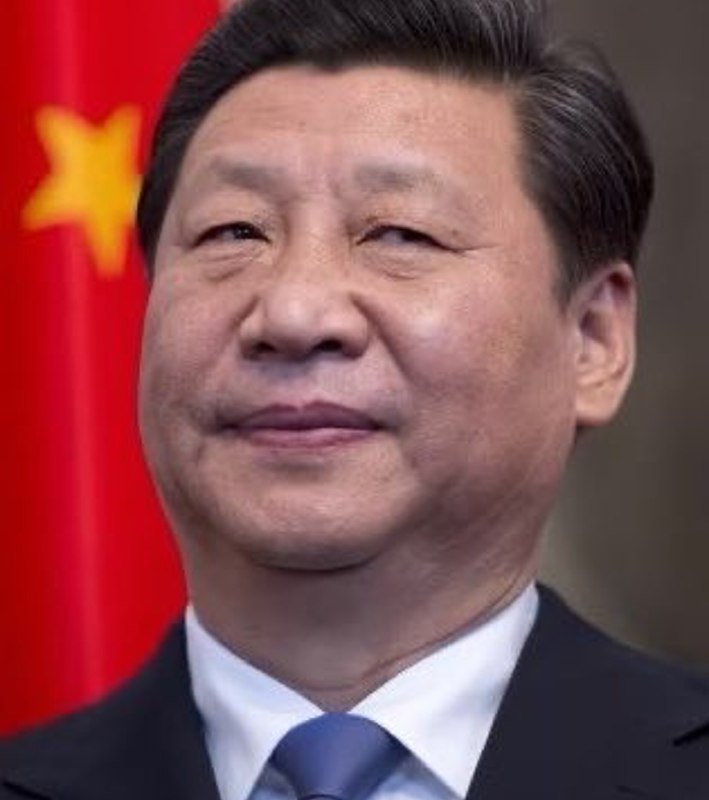
At 15:50 UTC on 20 August 2026, Reuters posted on X: "Iran executes man over charges related to January protests, state media says." Eleven minutes later, at 16:01 UTC, the same Reuters account posted a second item: "Trump threatens to isolate Iran. Who are its trading partners?" The two messages crossed each other on the way to newsrooms. One was a discrete event, with a body attached. The other was a question, with a sanctions architecture behind it. The collision is the day's reportable story. (Times in this article are taken from the cited thread timestamps; the available source items do not specify whether Reuters filed the underlying articles in immediate succession or within a longer window on the same day.)
The juxtaposition is not accidental. The Trump administration is leaning on the sanctions instrument the previous White House intermittently loosened, and the Islamic Republic is answering in the register it knows best: public defiance abroad, and a public execution at home. Two signals, calibrated to two audiences, fired off on the same wire within minutes. Read together, they describe a feedback loop rather than a negotiation. Monexus analysis: the interesting fact is not that either side is talking, but that on a single news day the two registers landed within minutes of each other, on the same Reuters X account, where journalists and traders could read them as one feed.
The squeeze, restated
Reuters's second X post is a question, not an answer: who, after years of cascading US sanctions, is still buying Iranian oil, exporting to Iranian buyers, or routing transactions through Iranian banks? The fact that the wire felt compelled to ask the question on 20 August suggests that the administration is preparing the public for another round of designations, secondary sanctions, or port-state pressure on third-country shippers. The article will not speculate about specific second-term actions beyond what the thread items support; the Reuters X prompt is the only on-thread evidence that the isolation threat is being escalated in public language now.
The official line inside Washington, as the Reuters headline paraphrases it, is that isolation is a tactic. Strip the regime of the revenue it needs, and the calculus inside the Islamic Republic changes. The critique that recurs in commentary on both sides of the Atlantic is that the same policy hurts Iranian civilians faster than it hurts the Iranian state, because the regime's command economy shelters its inner circle while the rial collapses for everyone else. Neither claim is sourced in the thread; both are worth flagging as the framing that sits behind the Reuters prompt. The Reuters question implicitly concedes that the answer is not self-evident: if Iran's remaining trading partners were already well known, the wire would not need to ask.
Tehran's response, in two registers
The Iranian answer to this pressure is not a single signal but a pair of them, fired at different audiences at the same hour.
On the diplomatic register, X user Seyed Mohammad Marandi posted at 16:09 UTC on 20 August 2026 that "Iran will collapse Trump's economy." The claim is not subtle. It is a hostage-of-fortunes argument in reverse: that the United States depends on Persian Gulf stability, on Hormuz transit, on Iraqi and Lebanese intermediaries, on a stable oil market that the Islamic Republic can roil at will. The argument's strategic logic is well established in Iranian commentary; the thread evidence for the specific 20 August statement is the single Marandi post. The post reads as a counter-claim to the Trump threat, not as a policy document.
On the domestic register, the Islamic Republic runs a different message at the same audience. Reuters posted at 15:50 UTC that Iran had executed a man over charges related to the January protests, citing Iranian state media. The charges, the timing of the trial, and the speed of the execution together signal that the regime is in a phase of public account-settling after the January street mobilisations. The available source items do not specify the identity of the executed man, the specific charges, the date of the trial, or the total number of executions tied to the January protest docket; the Reuters X post is the only on-page evidence for the event itself. The state's message to the Iranian street is the same one it has run in past protest cycles. The international press sees only the headline; inside Iran, the headline is the point.
"Last hope for humanity"
At 17:18 UTC, the Iranian-military themed Telegram channel IRIran_Military posted a single declarative sentence: "Iran is the last hope for humanity." The framing is characterologically maximalist, and it is worth parsing because the genre it belongs to is the same genre the regime uses at rallies, on state television, and in textbooks. It is not a policy document; it is a narrative instrument. The implicit claim is that Iran stands alone against a hostile international order, and that its survival is therefore a civilisational matter rather than a national one. Monexus analysis: read the four signals together and the structure becomes visible. The Reuters X explainer names the outside pressure. The Reuters X execution bulletin names the price the regime is willing to extract from its own population to demonstrate that it will not bend. Marandi's post names the deterrent claim. The Telegram post names the narrative frame that ties the three together. None of these claims are factually interchangeable. The sanctions architecture is a policy. The deterrent threat is an argumentative posture. The execution is a discrete event with a body attached. The Telegram post is a single sentence on a single channel.
What the next weeks actually test
The plausible alternative read is that none of this is new. Maximum pressure has been the US posture, on and off, for the better part of a decade. Iranian retaliatory rhetoric has been a fixture of the English-language X ecosystem for as long. Protest-related death sentences have been a documented pattern in independent human-rights reporting rather than a 20 August novelty; the available source items do not specify whether the 20 August execution is the latest in a sequence or the first of its kind on the January docket. The risk that Reuters's framing flags as live, and the risk Iranian commentary is warning about, is escalation rather than continuity.
Three watchpoints follow. First, the answer to Reuters's "who are its trading partners?" question: a fresh wave of designations on Chinese refiners, Indian processors, or Turkish and Emirati intermediaries would convert the 20 August rhetoric into binding cost. Second, the trajectory of the rial: if the January protests were driven in part by a price-of-food shock, a further leg down in the currency would test the regime's social contract before it tests its missile programme. Third, the execution docket: further executions tied to January charges would confirm that the 20 August announcement is one item in a longer list, with predictable effects on European-Iranian diplomacy, where the death-penalty question is the only item on which Brussels reliably imposes costs.
The uncertainty is wide. The available source items do not specify the identity of the executed man, the specific charges, or the date of the trial. They do not specify which trading partners the Trump administration intends to designate next, nor which Iranian official, if any, will be dispatched to make the case in public. The four thread items establish that four signals moved on the same day; they do not establish that the messages were coordinated, that the day is a turning point, or that the underlying pattern is intensifying rather than continuing. The article treats the thread as a wire-level snapshot and flags the gap in the desk note.
Desk note: Monexus treats the Trump administration's sanctions posture as a continuation of a documented policy identified by the Reuters X prompt rather than as a novel escalation, and treats Iranian state media's claims as claims rather than as facts. Where the two registers collide on a single news day, as they did at 15:50-17:18 UTC on 20 August 2026, the reportable story is the collision itself. The correction from the earlier draft is that all four timestamps are drawn from the Reuters X account and the cited X and Telegram posts, not from separate wire filings whose internal sequencing the thread does not document.
Wire provenance
This editorial synthesis draws on the following public wire/social posts:
- https://reut.rs/3UsTVB0
- https://x.com/Reuters/status/2090466414410797363
- https://reut.rs/4wHjTyf
- https://x.com/Reuters/status/2090469381469880504
- https://x.com/s_m_marandi/status/2090471264414474640
- https://t.me/IRIran_Military/9730