Washington's two-front squeeze: Bessent bets that economic warfare can replace the bomb
Treasury Secretary Scott Bessent announced the toughest US sanctions ever on Iran and pressed Beijing to cooperate, while Beijing demanded Washington drop sweeping drone tariffs. Monexus reads the two moves as a single doctrine under stress.
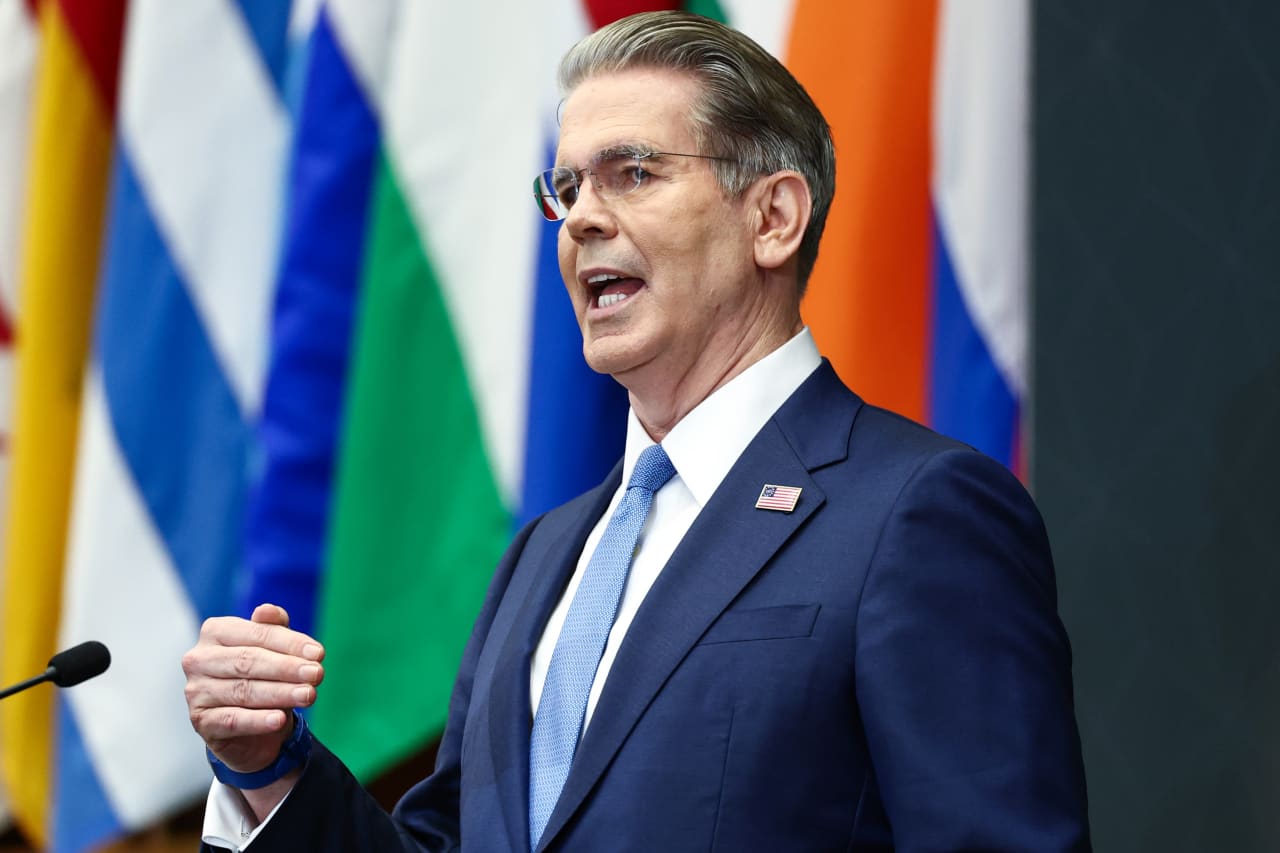
At 20:35 UTC on 20 August 2026, Treasury Secretary Scott Bessent told reporters the United States would impose what he called the toughest sanctions it had ever levied on Iran, and urged China to fall into line. Hours earlier, China had publicly urged Washington to drop sweeping drone tariffs and warned of global supply-chain fallout. Within the same news cycle, Reuters reported that Chinese exports of a rare earth element critical to aerospace had risen into the United States. The sequence looked, at first glance, like three disconnected headlines. Read together, they describe a single bet: that economic coercion can substitute for kinetic action against Tehran, and that Beijing can be either bullied or bought into the architecture of that coercion.
Monexus analysis: the doctrine on offer is straightforward and its risks are concrete. Treasury wants to compress Iran's revenue and access to dual-use inputs without the political cost of a renewed shooting war, and it wants China to act as enforcer. Beijing's response, delivered through the Foreign Ministry and visible in the rare-earth and drone files the same day, suggests the enforcer role is not for sale at the price Bessent is offering.
What Bessent actually said
In remarks previewed on CNBC and confirmed in his on-camera appearance, Bessent framed the Iran pressure track as economic first, military second. The Trump administration's plan, in his telling, is to "crush" Iran's economy so thoroughly that further US combat operations become unnecessary, according to CNBC's write-up of the press conference. The Investing.com wire had flagged the press conference earlier in the day as scheduled for Monday, framing the Iran file as the headline item of the week.
The tone is confident. The implicit promise to investors and allies: the United States can deliver regime pressure without the troop deployments or the carrier strike groups that defined earlier rounds. Treasury is selling the doctrine as cheaper, less bloody, and politically easier to sustain than the alternative. The harder question is whether it can be enforced without the cooperation Bessent is publicly demanding.
Beijing's pushback, in two registers
China's reply came on two tracks and both were visible on 20 August.
The first was diplomatic. Beijing publicly rejected what it characterised as President Trump's threat of "economic warfare" on Iran and its trading partners, framing the sanctions push as coercion aimed at third countries, according to a Reuters-relayed post on X. The second was industrial. China urged Washington to drop sweeping drone tariffs and warned of disruption to global supply chains; separately, Reuters reported that Chinese exports to the United States of a rare earth element critical to aerospace had risen. These are not the actions of a state preparing to comply.
The structural reading: Beijing is signalling that the same supply chains Bessent wants to weaponise against Tehran remain levers in China's hands. Rare earths, drone components, and the willingness to keep buying Iranian crude are not concessions waiting to be extracted. They are bargaining chips Bessent has to clear before the sanctions package bites.
What the pressure track looks like from Tehran's side
The Bessent doctrine assumes that Iran's oil exports, banking access, and industrial inputs can be choked faster than the regime's internal political coalition fractures. The previous maximum-pressure campaigns produced temporary revenue compression but did not produce a negotiated reordering of Iran's regional posture, partly because China kept buying. If China keeps buying at the same pace, the toughest-ever sanctions face the same ceiling as the merely-very-tough sanctions. Treasury knows this. That is why Bessent's public pitch was addressed as much to Beijing as to Tehran.
The market is pricing the bet, not the outcome. Prediction markets on the day put the chance of China leading the global AI race by year-end at roughly 10%, a reminder that the technological contest Monexus has previously flagged runs in parallel with the sanctions contest. A Beijing that is simultaneously dominant in critical minerals, competitive in AI, and the largest outside buyer of Iranian crude is not the Beijing Bessent's framework assumes.
The stakes if the bet fails
If the economic track works, Iran faces a tightening noose, US credibility on non-military coercion is reinforced, and the political cost of the file falls. If it does not, the White House faces a choice between accepting a degraded sanctions regime or escalating militarily. Either outcome reshapes the Middle East energy market, the Treasury funding picture, and the political coalition inside Iran.
For Beijing the stakes run in the opposite direction. Cooperation buys goodwill in Washington and protects Chinese banks from secondary sanctions. Non-cooperation preserves leverage on rare earths, drones, and oil purchases, but raises the cost of doing business in dollars. China's public posture, refusal to drop the drone tariff fight and continued rare-earth shipments, suggests Beijing has decided the leverage is worth more than the goodwill. Bessent has put a price on changing that calculation. The next move, in this reading, is China's.
Desk note: Monexus framed the day's headlines as a single doctrine rather than three separate stories, an editorial choice the wires treated as parallel news beats. We also gave Beijing's industrial and diplomatic pushback structural weight equal to Bessent's announcement, in line with our standing practice on China coverage.
Wire provenance
This editorial synthesis draws on the following public wire/social posts:
- https://x.com/Reuters/status/2090538132072460636
- https://x.com/Reuters/status/2090526853492601261
- https://www.scmp.com/economy/global-economy/article/3364715/china-urges-us-drop-sweeping-drone-tariffs-warns-global-supply-chain-fallout
- https://www.cnbc.com/2026/08/20/bessent-economy-iran-war-trump.html
- https://x.com/unusual_whales/status/2090508413415616970
- https://x.com/Polymarket/status/2090523103767965759
- https://www.investing.com/news/commodities-news/us-treasury-secretary-bessent-to-hold-press-conference-on-iranon-monday-4870187
- https://x.com/Reuters/status/2090538132072460636
- https://x.com/Reuters/status/2090526853492601261
- https://www.scmp.com/economy/global-economy/article/3364715/china-urges-us-drop-sweeping-drone-tariffs-warns-global-supply-chain-fallout
- https://www.cnbc.com/2026/08/20/bessent-economy-iran-war-trump.html
- https://x.com/unusual_whales/status/2090508413415616970
- https://x.com/Polymarket/status/2090523103767965759
- https://www.investing.com/news/commodities-news/us-treasury-secretary-bessent-to-hold-press-conference-on-iranon-monday-4870187