Army Secretary Driscoll on track to exit by year-end as Hegseth friction deepens Pentagon bench strain
The Wall Street Journal reports Army Secretary Dan Driscoll is expected to leave by year's end, citing months of friction with Defense Secretary Pete Hegseth over commercial-technology adoption and senior-level engagement; the Pentagon and Driscoll's representatives declined to comment.
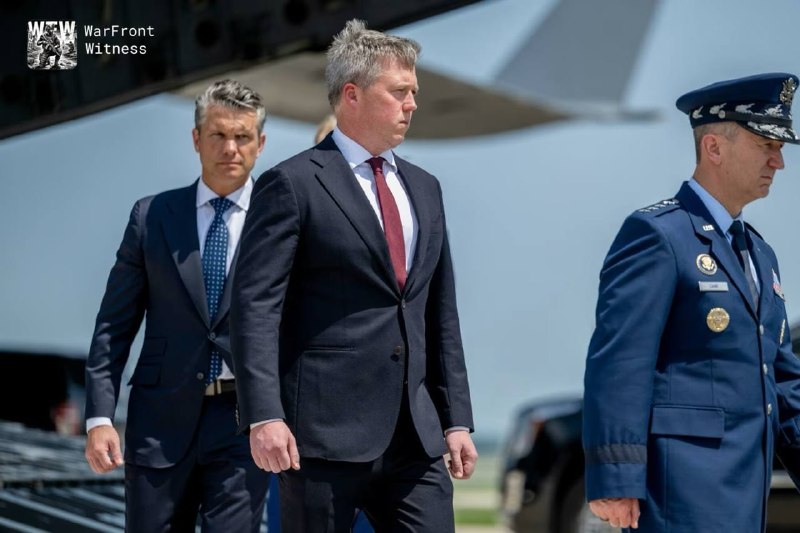
At 22:40 UTC on 21 August 2026, the Telegram channel wfwitness carried a Wall Street Journal dispatch: US Army Secretary Dan Driscoll is expected to step down by the end of 2026, possibly sooner, after months of reported friction with Defense Secretary Pete Hegseth. The aggregator osintlive relayed the same WSJ report earlier the same day with a longer summary, and the conflict-tracker ClashReport posted a parallel headline in the late afternoon UTC. Iran's FARS news agency, writing in English on its Telegram channel, summarised the same report under the headline "US Deputy Secretary of War Resigns," a rank error that itself speaks to how the story is travelling through non-Western wires.
The timing matters. A Senate-confirmed service secretary departing on the eve of the administration's final budget cycle would land the Army in another acting-leadership transition. ClashReport's framing is blunt on the point: the departure "would deepen a leadership gap in the Army, which already lacks depth at the top." What the WSJ report adds, beyond the personnel headline, is a substantive description of the friction that earlier reporting had gestured at: Driscoll has pushed commercial-technology adoption modelled on practices used in Ukraine, and he has been involved in arranging senior-level visits and Army reform discussions. The Pentagon and Driscoll's representatives declined to comment on the WSJ report, per osintlive's summary.
What the WSJ report actually says
The four source items converge on a narrow set of facts and diverge on detail. The Wall Street Journal, cited by every channel in the cluster, reports that Driscoll "is expected to step down by the end of the year, or possibly sooner." wfwitness, ClashReport and the osintlive/OSINTdefender relay all attribute the timing to "people familiar with the matter." wfwitness and ClashReport name "months of tension" with Defense Secretary Pete Hegseth as the underlying cause; osintlive uses the more careful formulation "reported tension" and adds that the friction has run over commercial-technology adoption modelled on Ukraine and over Driscoll's role in arranging senior-level visits and reform discussions.
None of the cited posts quote Driscoll or Hegseth on the record. osintlive is explicit that the Pentagon and Driscoll's representatives "declined to comment" when approached. The story, in other words, is currently a WSJ scoop filtered through four wire relays, with a documented non-comment from the principal side, and the underlying WSJ piece sits behind a paywall. The available source items do not specify whether Driscoll has tendered a resignation letter, whether he has been asked to leave, or whether he is negotiating a landing. They do not name a successor.
It is worth flagging a prior marker on the record. Earlier reporting in 2026, surfaced separately from the cited cluster, carried a Washington Post headline that read "After clashes with Hegseth, Army secretary says he isn't going anywhere." That earlier public rebuttal is the obvious counterweight to today's expected-exit framing. It does not appear in any of the four threads under audit here, and Monexus has not independently re-verified its text; readers should treat today's expected-departure line as a fresh WSJ characterisation rather than as a settled fact that has survived contestation.
The substantive disagreements the threads do identify
The osintlive relay, read carefully, supplies more than the other three channels do. It describes the friction as running along two lines: first, a disagreement over the Army's commercial-technology posture, with Driscoll advocating adoption modelled on practices used in Ukraine; second, a process dispute tied to Driscoll's role arranging senior-level visits and Army reform discussions. wfwitness and ClashReport name the existence of the friction without naming the substance; FARS restates the WSJ headline without either naming the substance or naming Hegseth. Together, the threads establish that the cause is not a single disputed doctrinal or procurement decision but a portfolio of personnel and modernisation choices running over several months.
The "JD Vance ally" tag, applied to Driscoll in the ClashReport summary, is a parallel characterisation of his political position inside the administration. Monexus treats that label as a framing offered by the channel rather than as an independently verified fact about Driscoll's standing; the cited threads do not establish it on the record.
Monexus analysis: what a year-end exit would actually change
A confirmed resignation before the calendar turns would land inside a narrow policy window, and the precise position of that window is an analytical call rather than a reported fact. Monexus analysis: with the administration approaching its final full budget cycle, a service without a confirmed secretary is a service whose political case is being made by an acting official whose authority is, in practice, provisional. That matters for the service's arguments over end-strength, over modernisation accounts, and over base realignment decisions that touch Congress's parochial interests. It also matters, on the osintlive account, for the commercial-technology agenda that Driscoll has personally championed, since that agenda travels with the official who carries it.
There is a counter-reading worth airing. The Army's institutional position has not, on the available evidence, collapsed because of one expected departure. The service has functioned through previous acting-leadership stretches, and the underlying combat-credibility questions are settled inside the uniformed chain, not inside the secretary's office. The dominant framing, that a Driscoll exit is a destabilising blow to civilian control, is defensible, but only if the friction with Hegseth had reached the point of impairing decisions that needed political sign-off. The cited threads do not establish that. They establish that the friction existed along identifiable substantive lines, that the Pentagon declined to comment, and that an exit is expected.
The honest assessment is closer to the following. The Pentagon's political leadership is thinner than it has been in a decade. A WSJ-sourced expectation of a year-end departure is a credible signal that the thinning has not stopped. Whether it is the start of a wider shake-out, or simply the resolution of a single bad relationship, is something the available threads cannot resolve.
What to watch by 31 December 2026
Three signals will tell readers whether the WSJ scoop was an early read on a broader shake-out or a contained personnel matter. First, the official channel: a resignation announcement, a presidential statement of gratitude, or a continuing "declined to comment" posture that would amount to the same answer in different words. Second, the succession: a nominated replacement and the speed of any confirmation hearing would tell the market for Pentagon talent how the White House views the office and, on the osintlive reading, how it views the commercial-technology agenda Driscoll carried. Third, the leak pattern: if other senior civilians in the building begin to surface in similar WSJ read-outs over the autumn, the Driscoll exit stops looking like an isolated dispute and starts looking like the visible edge of a quieter turnover.
Until at least one of those signals lands, the responsible read is restrained. Driscoll is reportedly on his way out, over identifiable substantive disagreements. The Pentagon declined to comment. The Army reportedly already lacks depth at the top. Beyond those three documented points, the cited threads do not say.
Desk note: Monexus treated this as a WSJ scoop filtered through four wire channels, kept the substantive-cause claims attached to osintlive where they originate, recorded the documented "declined to comment" rather than framing the Pentagon as silent, and declined to invent the existence of a resignation letter, a successor, or any named doctrinal text behind the friction.
Wire provenance
This editorial synthesis draws on the following public wire/social posts:
- https://t.me/wfwitness/107894
- https://t.me/osintlive/565869
- https://www.wsj.com/politics/national-security/army-secretary-expected-to-step-down-by-years-end-d7477efbtweet
- https://t.me/farsna/457449
- https://t.me/ClashReport/93207