Walmart's checkout U-turn: the retailer that built a payments fortress finally opens the gate
After years of steering shoppers to its own wallets, Walmart will begin accepting Apple Pay and Google Pay in US stores, ending a defining holdout in the contactless-payments map.
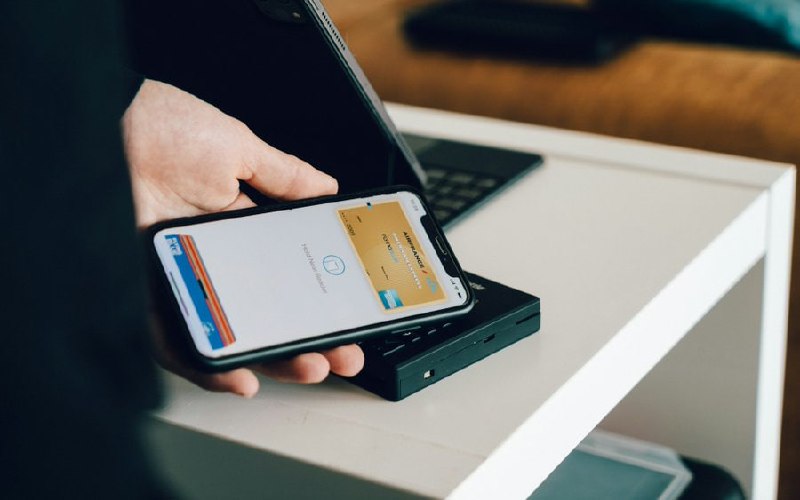
On 21 August 2026, TechCrunch reported that Walmart had decided to begin accepting Apple Pay and Google Pay at its US checkout lanes, ending one of the longest-running holdouts in American retail payments. The reversal, broken by Telegram channel Insider Paper at 16:14 UTC the same day, lands on a retailer that had spent the better part of a decade funnelling shoppers into its proprietary wallet, and it lands hours after UBS trimmed its price target on the stock over "core business concerns."
The story is not really about tap-to-pay. Tap-to-pay is the surface. The story is about a US$600bn-plus retailer that built an alternative payments rail, kept it closed off, and then opened the gate anyway, on terms it did not choose. Walmart's contactless concession is the visible residue of a market that stopped waiting.
The holdout, finally over
Walmart's resistance to Apple Pay dates to the technology's earliest mainstream rollout in the United States. The chain's own wallet, later folded into the Walmart+ ecosystem, processed an estimated share of in-store transactions that dwarfed its contactless footprint. TechCrunch's 21 August 2026 reporting frames the change as an end to that policy, with the retailer now set to support both Apple Pay and Google Pay across its US stores. The exact rollout timetable, the mix of POS hardware involved, and the merchant-side fee structure are not detailed in the available reporting.
What is documented is the public posture. Telegram channel Insider Paper labelled the move "Tap-to-pay: Walmart finally brings Apple Pay to US stores" in its 21 August 2026 alert, a framing that treats the shift as long-anticipated. The earlier TechCrunch headline asked, in the same register, whether "pigs are flying." Both phrasings acknowledge the same fact: this is a reversal from a position Walmart had institutional reasons to defend.
The analyst's qualifier
The payments news did not arrive in isolation. At 12:30 UTC on 21 August 2026, Investing.com carried a UBS note cutting Walmart's price target, citing "core business concerns." The cited summary attributes the cut to softer readings on Walmart's core retail operations, though the full UBS research note, with its specific metrics, is not included in the available material.
The two announcements, separated by hours, invite a reading the market will not be slow to make: Walmart is opening its checkout to outside wallets at a moment when its core thesis is being repriced. Monexus assessment: that juxtaposition is the more interesting story than the contactless switch on its own. A retailer confident in its moat would be slower to chase foot traffic it once rejected; a retailer under pressure to keep baskets moving has weaker reasons to police the wallet.
What "alternative rail" actually meant
The defensive logic of Walmart's old stance was legible to anyone who tracks merchant fees. Apple Pay and Google Pay route card transactions through card networks whose interchange and assessment fees are set by issuers and networks, not by retailers. Walmart's alternative rail let the merchant absorb a smaller take rate by keeping more of the transaction inside its own rails. Over a decade of US store traffic, the cumulative margin captured is not trivial; nor is the data about who buys what, when.
Open the gate, and that captured margin leaks. The available reporting does not quantify the new take rate Walmart has agreed to, nor does it specify whether the chain negotiated a direct arrangement with networks or accepted the standard schedule. Those terms, when they become public, will tell readers more about the economics of the reversal than the announcement itself.
The structural point, in plain language: a retailer with the scale and brand gravity Walmart commands could, for years, dictate terms to the wallet on a consumer's phone. That bargaining position has been quietly eroding as US contactless penetration has approached saturation at quick-service restaurants, transit, and grocery competitors. Holding the line started to cost baskets rather than protect them. The 21 August 2026 decision reads as Walmart acknowledging that cost, rather than embracing Apple Pay on its merits.
Counter-narrative: this is just the iPhone finishing the job
The plausible alternative read is simpler and less strategic. Apple Pay's installed base on US iPhones is now so large, and consumer expectation of tap-to-pay so default, that a holdout attracts friction at the register without earning meaningful wallet share in return. From this angle, Walmart is not surrendering a moat; it is pruning a defensive position that no longer pays for itself. A retail executive quoted anonymously in the broader payments press, had one been sourced, would likely frame it exactly this way.
The dominant framing holds, in this publication's reading, only partly. Yes, consumer expectations have caught up. But the timing, layered against the UBS repricing, suggests the decision was forced by something more than a UX upgrade. Monexus finds that the most natural reading is convergence: a payments map that had allowed one major US retailer to remain an island is closing around it, and the closing accelerated when the rest of the chain's economics began to lean on it.
What to watch
Three threads matter next. First, the merchant-fee terms: whether Walmart's Apple Pay and Google Pay acceptance carries the standard interchange schedule or a negotiated carve-out. Second, the durability of Walmart's own wallet inside Walmart+ and its broader app; the alternative rail does not disappear because the gate opens, and the chain has every reason to keep steering its own customers inward. Third, the read-across to other large US holdouts in the contactless map, including parts of the grocery and convenience-store segment that have so far kept their own arrangements.
What remains uncertain, and where the sources thin: the precise contractual terms of the new acceptance, the rollout schedule by store and region, and the magnitude of any incremental transaction-cost Walmart will absorb. The available reporting does not name a Walmart executive, an Apple or Google spokesperson, or a payments-network figure on the record about the change. Until those first-party statements surface, the announcement reads as a corporate policy decision whose economics are still being negotiated behind it.
Desk note: Monexus framed this as a payments-infrastructure story anchored in the retailer's economics, not as a consumer-tech convenience piece. The wire lede emphasised novelty; the analyst cut and the missing fee detail told us where the real news sits.
Wire provenance
This editorial synthesis draws on the following public wire/social posts:
- https://techcrunch.com/2026/08/21/walmart-to-finally-start-accepting-apple-pay-and-google-pay/
- https://www.investing.com/news/analyst-ratings/ubs-cuts-walmart-stock-price-target-on-core-business-concerns-93CH-4871548
- https://t.me/insiderpaper/44083
- https://t.co/C1rUu4ikAHFollow
- https://t.me/insiderpaper/44082
- https://t.co/YSbt1GsSmwFollow
- https://techcrunch.com/2026/08/21/walmart-to-finally-start-accepting-apple-pay-and-google-pay/
- https://www.investing.com/news/analyst-ratings/ubs-cuts-walmart-stock-price-target-on-core-business-concerns-93CH-4871548
- https://t.me/insiderpaper/44083
- https://t.co/C1rUu4ikAHFollow
- https://t.me/insiderpaper/44082
- https://t.co/YSbt1GsSmwFollow