Carney retaliates: Canada to match US tariffs dollar-for-dollar from 8 September
Ottawa says it will impose dollar-for-dollar counter-tariffs from 8 September after Washington raised duties on roughly $20bn of Canadian goods, framing the response as measured reciprocity.
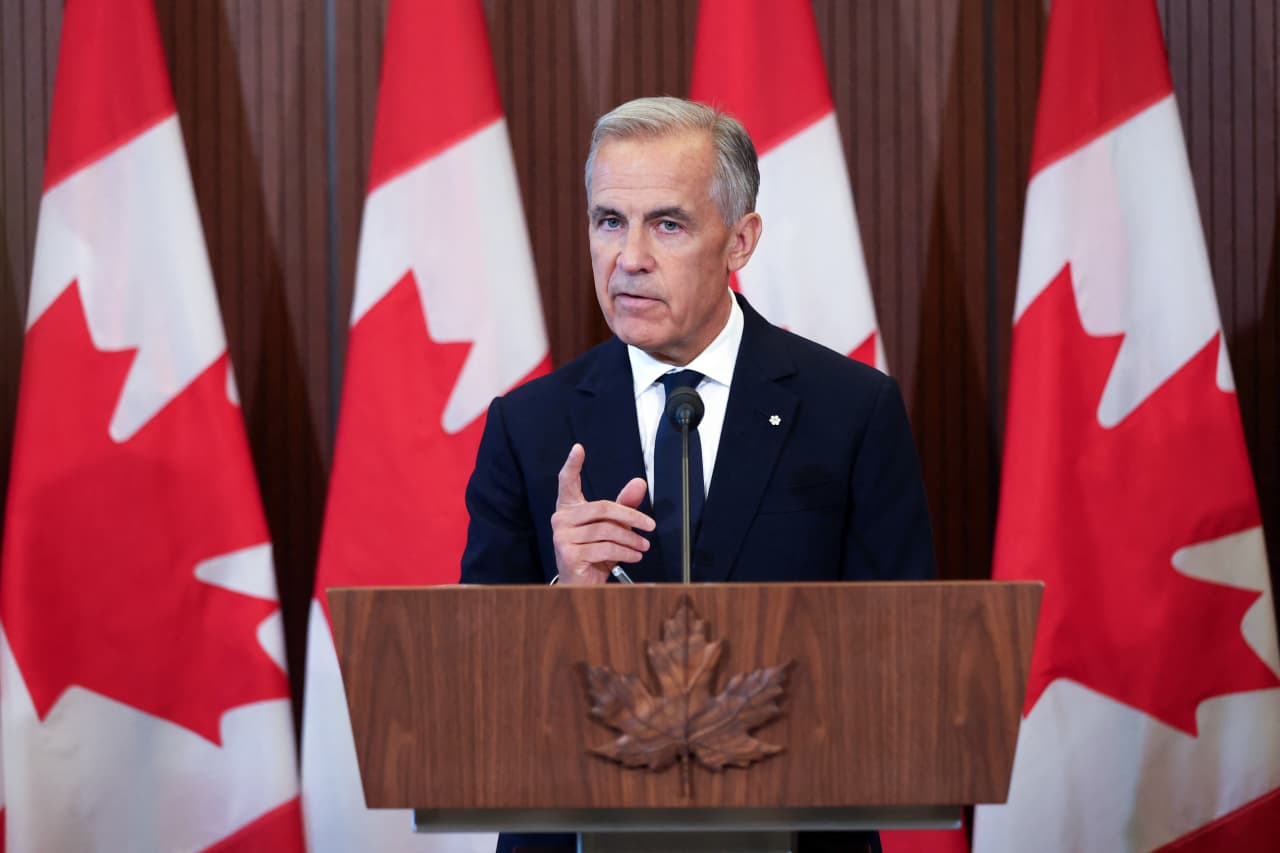
OTTAWA, 22 August 2026, 19:00 UTC. Prime Minister Mark Carney announced on Saturday that Canada will impose retaliatory tariffs on United States goods effective 8 September, a dollar-for-dollar match to a US measure that raised duties on nearly $20bn of Canadian products. Carney spoke hours after Washington moved, and the symmetry he promised ties the rate and timing of the Canadian response to the size of the US package rather than to a wider posture shift.
The announcement landed against a backdrop of collapsed trade talks between the two capitals, according to MarketWatch reporting at 18:55 UTC on Saturday. Carney framed the package as measured and reversible. That framing matters more than the rates do: a government preparing for prolonged escalation typically announces a wider envelope and invokes emergency powers; a government looking for an off-ramp ties its response to a specific, reversible trigger. Carney did the latter.
What the sources confirm
Al Jazeera reported at 19:00 UTC on 22 August that Carney "spoke hours after the US imposed 50 percent tariffs on nearly $20bn worth of Canadian goods." MarketWatch, reporting at 18:55 UTC the same day, framed Canada's package as a "dollar-for-dollar" retaliatory measure after trade talks broke down. The substantive content of Carney's Saturday statement is carried in those two wires; both name the dollar-for-dollar formulation and the September 8 effective date.
Two Polymarket posts on X bookend the Saturday news cycle. The earlier post, at 15:43 UTC, carried Carney's vow to match US tariffs "dollar for dollar" after trade talks collapsed. The later post, at 20:30 UTC, flashed a sharper line: that Carney had declared Canada "at war" with the United States. Read together, the two posts are consistent with a government trying to project resolve while preserving a diplomatic off-ramp. The substantive policy claims (the rate peg, the September 8 date, the dollar-for-dollar framing) rest on Al Jazeera and MarketWatch; the Polymarket posts function as relays of the same underlying remarks, with the later post offering a more pointed characterisation.
Why the language is the story
The choice between "reciprocity" and "retaliation" is itself a tell. Carney's dollar-for-dollar formulation pegs the Canadian response to the dollar value of the US measure, not to a generalised countervailing duty. In practice, that means Canadian negotiators intend to publish a list of US products tracking Washington's package on a one-for-one basis. The Polymarket wire's "at war" line sits uneasily beside that posture; the more natural read is that Carney was signalling resolve to a domestic audience while keeping the underlying dispute narrow.
The September 8 date matters for a second reason: it falls on a Monday, after the US Labor Day holiday, leaving a five-business-day window in which the two governments could revisit the underlying dispute before tariffs bite. A government that wanted escalation would have set an earlier effective date; a government that wanted a settlement lever chose a date that preserves it.
The structural read
Monexus analysis: the dollar-for-dollar peg and the September 8 effective date together describe a symmetrical rather than escalatory posture. That distinction will read as restraint to markets and as weakness to hawks in Washington, and which reading wins will determine whether the next move is a partial rollback or a wider list. The structural uncertainty is not the rate itself. It is whether the two governments treat the dispute as a negotiation over a specific issue or as the opening of a longer re-pricing of the bilateral relationship.
The available source items do not specify the sectoral composition of either the US measure or the planned Canadian response, nor do they confirm whether services trade falls inside the Canadian package. The Polymarket "at war" line and the Al Jazeera / MarketWatch "dollar-for-dollar" line are consistent only if the former is read as domestic political theatre and the latter as the operative policy commitment. The cited posts contain no US first-party statement confirming the 50 percent rate independently of Carney's relay, and this article has not independently established whether Washington's move was issued under emergency authority, sectoral statute, or executive order.
What to watch before 8 September
The first concrete signal will be the published Canadian retaliation list, expected within days. A list concentrated in politically sensitive US sectors would point to leverage-building; a list spread thinly across inputs would point to signalling. Either move would tell markets something about Ottawa's confidence in a negotiated settlement before tariffs bite.
The available source items do not specify whether the Canadian package will include services trade, nor whether provincial premiers have been consulted or have commented publicly. They do not specify whether the US measure survives any domestic legal challenge under existing US trade statutes. What is certain is that both governments now have a five-business-day window before tariffs bite, and both have public reasons to use it. The Polymarket posts will continue to flash sharper language than the wires; the operative test will be whether Carney's office holds the "reciprocal" line or lets "war" harden into the operative frame.
Desk note: Monexus treated the Polymarket posts as relays of underlying Carney remarks rather than independent confirmation; the dollar-for-dollar framing and the September 8 effective date rest on Al Jazeera and MarketWatch, both of which carried the same formulation. The "at war" characterisation appears only in the Polymarket relay and is treated here as one reading of Carney's remarks, not as a settled policy position.
Wire provenance
This editorial synthesis draws on the following public wire/social posts:
- https://www.aljazeera.com/news/2026/8/22/carney-canada-will-enact-retaliatory-us-tariffs-starting-september-8?traffic_source=rss
- https://www.marketwatch.com/story/canada-announces-retaliatory-tariffs-on-u-s-goods-after-trade-talks-break-down-45081c2f?mod=mw_rss_topstories
- https://x.com/Polymarket/status/2091261732727484597
- https://x.com/Polymarket/status/2091189645459501489
- https://www.aljazeera.com/news/2026/8/22/carney-canada-will-enact-retaliatory-us-tariffs-starting-september-8?traffic_source=rss
- https://www.marketwatch.com/story/canada-announces-retaliatory-tariffs-on-u-s-goods-after-trade-talks-break-down-45081c2f?mod=mw_rss_topstories
- https://x.com/Polymarket/status/2091261732727484597
- https://x.com/Polymarket/status/2091189645459501489