Ottawa walks, tariffs at 50%
US-Canada trade talks broke off on 22 August 2026, sending 50% tariffs live on roughly $20 billion of Canadian goods and putting Ottawa on a dollar-for-dollar retaliation footing.
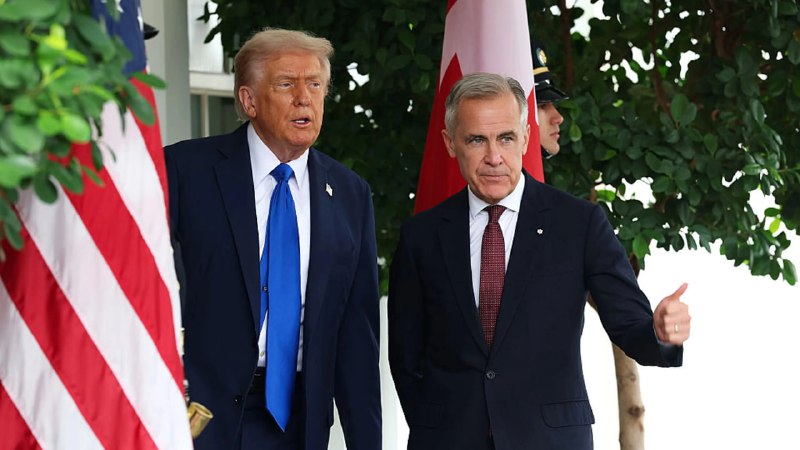
At 04:04 UTC on 22 August 2026, a Polymarket breaking alert posted on X reported that US-Canada trade talks had collapsed at the last minute, triggering 50 percent US tariffs on roughly $20 billion of Canadian goods. By 13:24 UTC the same day, The Cradle's Telegram channel carried the political fallout: Ottawa had walked away, and US tariffs of 50 percent on some Canadian goods had begun. The widening gap between those two posts, roughly nine hours between the market alert and the diplomatic write-up, captures the shape of the day.
The tariffs are not a surprise. They are the announced endpoint of a negotiation Ottawa says it never wanted to be in, and a punishment Washington telegraphed in advance. What matters now is the shape of the response.
What the wire says, in order
Read the cited sources in chronological order and a timeline emerges. At 04:04 UTC, Polymarket's account put the headline number on the wire: 50 percent tariffs, roughly $20 billion in Canadian goods, talks collapsed at the last minute. The Polymarket post is the earliest timestamped item in the cited set and the only one that places the breakdown inside a specific clock window. At 13:24 UTC, The Cradle's Telegram channel carried a parallel account: tariffs have begun, Ottawa walks away, dollar-for-dollar retaliation pledged.
What the cited posts do not specify is just as important. The Cradle wire does not state the precise minute the tariffs took legal effect, nor does it name the goods inside the $20 billion envelope. Polymarket's alert does not identify which side walked away first. Neither post quotes a named official. The relay chain from primary sources to this article is, in places, one hop deep: Telegram and X wires citing the same underlying developments without providing the underlying documents. Where the relay is thin, this article has said so.
The Quebec factor
The domestic Canadian reaction is the second story hiding inside the trade story. An Investing.com world-news dispatch timestamped 10:18 UTC on 22 August 2026 reported that Quebec has lost appetite for a quick separation from Canada in the wake of the tariffs. The mechanism the dispatch identifies is direct: a federal government willing to absorb a 50 percent hit on $20 billion of exports and impose reciprocal costs on the United States is, by definition, defending Quebec's export economy alongside its own.
Monexus assessment: the sovereignty question in Quebec does not disappear, but its timing has been pushed back. The cited dispatch does not provide polling data on Quebec independence sentiment, and this publication has not independently established which province was the most independence-leaning before the tariffs. What the source does establish is that Quebec's appetite for a quick separation has cooled, and that the cooling correlates with the tariff moment. Whether that cooling is durable, or merely a rally-around-the-flag reflex during the first news cycle, is the open question.
The day before the collapse
Twenty-four hours before the breakdown, the cited set carried a different signal. An Investing.com economy-news report dated 21 August 2026 at 21:09 UTC had Donald Trump publicly expecting the United States to reach a trade deal with Canada. The headline is brief, and the cited post does not specify the venue, the tone, or the exact phrasing of the expectation. What the headline does establish is that, as of the evening before the collapse, the US side was still framing the talks as a negotiation heading toward a deal.
Monexus analysis: the 21 August expectation and the 22 August collapse are not contradictory when read as sequence rather than contradiction. They describe a posture in which a deal is announced as imminent, the counterparty is pressed to accept terms, and if the counterparty refuses, the breakdown is treated as the counterparty's choice. The 50 percent figure, in that reading, is a price the US side is willing to pay in the short term rather than back down on a position it had already publicly committed to. The cited sources do not state this motive; the framing is this publication's.
Stakes and the next 72 hours
The forward view is narrow and specific. Watch three signals.
First, whether Ottawa's dollar-for-dollar retaliation moves from announcement to formal implementation at the Canada Border Services Agency. The Cradle's wire reports the retaliation as pledged, not as enacted through a published order. The difference matters: a pledge preserves room for a face-saving climb-down, a formal order locks in a trade war.
Second, the composition of the $20 billion basket. The Cradle's wire does not specify which goods fall inside the 50 percent envelope, and this publication has not independently established whether the affected lines are concentrated in metals and forestry products, spread across agriculture and manufactured intermediates, or some mix. The political cost in the United States depends on the answer: tariffs on industrial inputs hurt assemblers and construction, tariffs on agricultural goods hurt farm-state senators.
Third, whether provincial premiers who publicly back Ottawa's retaliation hold the line when the first layoff announcements hit. The Quebec shift suggests the political base will. The business base is less certain, and the cited sources do not specify how Canadian industry associations have responded.
The structural read is straightforward, and it is this publication's. Two G7 economies that share the world's longest undefended border have imposed mutual 50 percent tariffs on roughly $20 billion of trade in a single news cycle. The immediate cost lands on factory workers, farmers, and cross-border logistics operators in both countries. The medium-term cost lands on consumers in the form of higher input prices. The long-term cost, the kind that does not show up in a quarterly GDP print, is the slow erosion of the integrated North American supply chain. The next 72 hours will tell us whether 22 August 2026 is remembered as a breakdown or as the start of a rout.
Desk note: Monexus is sourcing this from a Polymarket breaking alert on X, The Cradle's Telegram wire, and two Investing.com relays. No first-party statement from the Prime Minister's Office, the White House, or Global Affairs Canada has been independently confirmed in the cited posts. Where the relay chain is thin, we have said so plainly.
Wire provenance
This editorial synthesis draws on the following public wire/social posts:
- https://t.me/thecradlemedia/66656
- https://x.com/Polymarket/status/2091013514638885288
- https://www.investing.com/news/world-news/hit-by-trump-tariffs-quebec-loses-appetite-for-quick-separation-from-canada-4872328
- https://www.investing.com/news/economy-news/trump-expects-us-to-reach-trade-deal-with-canada-93CH-4872164
- https://t.me/thecradlemedia/66656
- https://x.com/Polymarket/status/2091013514638885288
- https://www.investing.com/news/world-news/hit-by-trump-tariffs-quebec-loses-appetite-for-quick-separation-from-canada-4872328
- https://www.investing.com/news/economy-news/trump-expects-us-to-reach-trade-deal-with-canada-93CH-4872164