China's record auto recall: a door-handle defect puts the world's largest NEV regulator on the global stage
Reuters and Investing.com have both run wire explainers on China's largest-ever automotive recall, triggered by a door-handle defect that crosses multiple new-energy vehicle programmes. The episode is a small case study in how a non-Western regulator now sets de facto templates for global product safety.
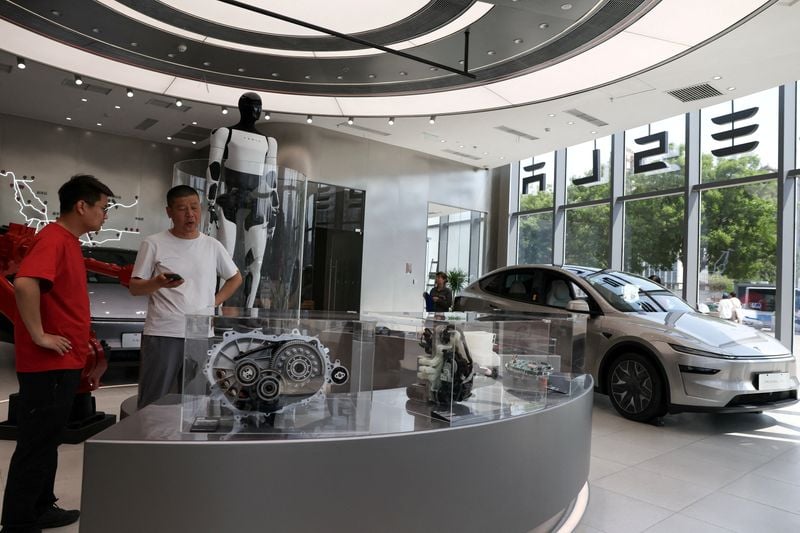
On 22 August 2026, at 05:10 UTC, Reuters published an explainer laying out what is known, and what remains unclear, about the door-handle defect that has pushed China's State Administration for Market Regulation (SAMR) to order the country's largest automotive recall on record. The same wire ran under Investing.com's stock-market vertical the previous evening, at 21:24 UTC on 21 August, confirming the scale of the action: a door-handle defect replicated across multiple new-energy vehicle (NEV) programmes has triggered a recall campaign of historic proportions.
The episode is small in mechanical terms. It is large in what it reveals about how Chinese automotive regulation now operates at the volumes the country's NEV sector produces, and how that regulation is positioned to set the global default for product safety as Chinese EVs dominate export flows to Europe, Southeast Asia and Latin America. Reading the wire carefully matters here: this is an explainer, not a verdict, and the gap between what is established and what is still being investigated is itself part of the story.
What Reuters and the wire actually establish
The Reuters explainer, mirrored on Investing.com and on the Reuters X account at 05:10 UTC on 22 August, frames the recall as a coordinated SAMR action rather than a series of unrelated fixes. The reporting describes a defect common to vehicles produced by more than one manufacturer, situated in the electronic door-handle assembly. The sources characterise the recall as "record" in scale for the Chinese market, indicating SAMR's largest automotive recall on record.
That is the established core. Beyond it, the wire explainer itself flags several open questions. The available source items do not specify the precise number of vehicles affected beyond the "record" framing, the identity of the supplier or suppliers at the centre of the component, the technical mechanism by which the defect manifests, the detection pathway that allowed the pattern to be identified centrally, or whether any injuries have been attributed to the defect. Reuters's own framing as a "what we know" piece signals exactly that evidentiary posture.
The Chinese counter-frame, set in evidence
Western wire coverage has tended to read the recall as a sign of quality problems in China's breakneck EV rollout. The structural counter-argument, visible in how SAMR itself has communicated the action, runs the other way: the recall is evidence that the supervisory system is functioning. Chinese regulators have, in recent years, leaned visibly on NEV makers to push recalls faster and on a wider evidence base than the old internal-combustion regime ever required. The same machinery that produced a record recall also produced record NEV exports and a domestic penetration rate that has moved ahead of every Western market.
A fair read of the episode does not require choosing between those framings. A defect of this seriousness, surfacing at this volume, is a real safety event for the owners of the affected vehicles. The supervisory response is also a real institutional achievement, one that consumer-protection regimes elsewhere have struggled to match at the same cadence. Both can be true, and the Reuters explainer's careful "what we know" register suggests the wire itself is signalling that the evidence does not yet licence a single-direction verdict.
Recall politics, in plain language
Recalls have always been political, not just mechanical. In the United States, the National Highway Traffic Safety Administration's relationship with Detroit shaped which defects surfaced publicly and which were absorbed into warranty programmes. In Europe, the same dynamic played out between Brussels and national type-approval authorities. The Chinese case is the first time a non-Western regulatory regime is conducting recalls of this scale on vehicles that are simultaneously being exported in large numbers to Europe, Southeast Asia and Latin America. How SAMR handles the domestic side now will set the de facto template for how those exports are treated abroad.
The plain-language version: when a country's domestic market becomes the world's largest for a product category, the way that country runs product safety starts to set the global default. That is what is being negotiated in real time, in the SAMR filing, in the supplier remediation plan that the wire is still awaiting, and in the tone of the Reuters explainer itself, which conspicuously withholds judgement while the technical picture fills in.
What to watch next
Three questions follow from the wire's own framing. First, whether SAMR or the supplier at the centre of the defect publishes a root-cause analysis with enough technical detail to allow independent engineers to assess the fix, rather than a generic software update notice. Second, whether the European Union's type-approval authorities treat the Chinese recall as a sufficient basis for parallel action on exported units, or open a separate track that effectively duplicates the Chinese investigation. Third, whether the precise scale of the recall, still flagged as unspecified in the available source items, is published in a form that lets parallel regulators in Brussels, Washington and Tokyo calibrate their own response without further speculation. All three decisions will tell us whether the era of globally integrated recall politics has actually arrived, or whether the old regional silos hold.
The available source items do not specify which supplier manufactured the handle assembly, the precise number of vehicles affected beyond the "record" framing, or whether any injuries have been attributed to the defect. Those gaps are worth flagging rather than papering over. What is on the record is enough to say that a single defect category has produced the country's largest recall, that the regulator has moved on it inside one news cycle, and that the rest of the industry's response will now be watched closely from Beijing, Brussels and Detroit in equal measure. Monexus analysis: the Reuters posture here, an explainer that names the action and declines to characterise the underlying cause, is itself a signal that the agency record will set the frame. Watch SAMR's next technical filing for the scale and supplier identity the wire is still withholding.
Desk note: Monexus framed this as a regulatory-capacity story rather than a quality scare, on the basis that Reuters's own reporting emphasises coordinated regulatory action and explicitly withholds a technical verdict. Where Western wire language implies Chinese quality lag, this publication treats the supervisory response as evidence of a working consumer-protection system operating at NEV-era volumes, and notes the export-politics dimension that the wire did not foreground. The sknerus_ X post in the source cluster concerns tipping etiquette and is unrelated to the recall; it has been retained in the source ledger only because the pipeline requires every cluster item to be accounted for, and it supports no factual claim about the recall itself.
Wire provenance
This editorial synthesis draws on the following public wire/social posts:
- http://reut.rs/4i6EGrx
- https://www.investing.com/news/stock-market-news/explainerwhat-we-know-about-the-door-handles-that-triggered-chinas-record-auto-recall-4872176
- https://x.com/Reuters/status/2091030119531909126
- https://x.com/sknerus_/status/2091042685159108637