Six wounded in Al-Zawaida strike, and a press release problem
Two Telegram channels carried the same Al-Zawaida strike within an hour. The brevity says something about how casualty reporting now travels when wire access is thin.
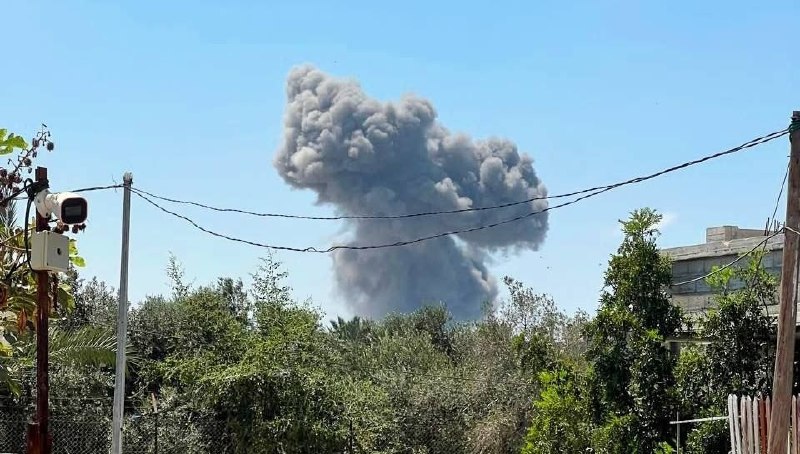
Six Palestinians were injured in an Israeli airstrike on Al-Zawaida in central Gaza on the morning of 23 August 2026, two of them children, with one child reported in critical condition. That is the entire factual floor this publication can verify from the cited material. Press TV put the casualty count and the location on the wire at 11:40 UTC; The Cradle carried the same basic line almost an hour earlier, at 10:42 UTC, with the wording "at least six Palestinians injured."
The two posts diverge in one respect: Press TV adds the breakdown that two of the six are children, with one child in critical condition. The Cradle's item is shorter and supplies no casualty breakdown. Beyond those two posts, the cited material does not specify a named neighbourhood within Al-Zawaida, a struck building, a hospital, an age for the four adults, a statement from the IDF Spokesperson's unit, or a tally from the Gaza Ministry of Health.
This matters because the gap is the story. A strike that wounds two children in central Gaza is, on any honest accounting, a human event that demands reporting. The question this column is asking is narrower: when the only two English-language items a desk can verify are two Telegram posts that reference the same casualty floor, what does the resulting coverage actually look like?
The wire has thinned, and the relays have fattened
Inside Gaza, the cohort of international correspondents who can move independently, verify names, photograph casualties and cross-check ministry tallies has been small for some time. Wire access is constrained, and the agencies that once filed granular on-the-ground copy now lean on a smaller bench. When that happens, the curve flattens: a single set of claims circulates through Telegram channels that cite each other, that quote "local sources" without naming them, and that arrive at the reader with the cadence of a news flash but the substance of a press release.
Press TV and The Cradle are not equivalent. Press TV is Iranian state media; The Cradle is an independent Beirut-based outlet that covers the Iran-aligned axis with a specific editorial lens. Both are legitimate to cite, with attribution. Neither is interchangeable with a Reuters or AFP datelined report, and conflating the two is the first place a desk goes wrong.
What the two posts actually say
The Cradle's 10:42 UTC breaking item is short: six injured, Israeli airstrike, Al-Zawaida, central Gaza. It carries no casualty breakdown. Press TV's 11:40 UTC item adds two pieces of information: two of the six are children, and one child is in critical condition. The chain between the two is visible; the additional detail reads as a sourced update rather than independent reporting. Beyond that, both posts point at the same underlying event with no contradicting account.
What neither post contains is anything an editor would normally require before running a casualty line: a named medical facility, a photographed scene, an interview with a relative, an Israeli military statement confirming or contesting the strike, or a tally from the Hamas-run health ministry. The available source items do not specify any of these. This publication has not independently established them either.
The framing problem
Strip the event to its grammar and you get: "Israeli airstrike hits Al-Zawaida; six injured." That sentence, on its own, is a neutral enough construct. The frame that lands is in the omissions. A child in critical condition is not a press release abstraction; it is a discrete, nameable, photographable human fact. Its absence from the cited Telegram posts is itself a piece of reporting about the reporting.
Coverage that defers to the language of official spokespeople and to short Telegram flashes reproduces a familiar pattern: the dominant frame is the one that travels fastest, and the one that travels fastest is often the one that contains the fewest specifics. Editors who run the wire as written inherit that frame; editors who flag the absence at least tell the reader what they have not been told.
What an honest version looks like
The responsible version of this story is shorter than the press release. It names the location, the date, the casualty floor and the source. It says plainly that two children are reported among the wounded and that one is in critical condition. It says, also plainly, that the figures originate with outlets that themselves cite unnamed sources, and that no IDF confirmation, no wire-service dateline and no independent on-the-ground report appears in the cited material. It does not pretend to more than the sources provide, and it does not pretend to less.
The child in the critical-condition line has a name somewhere. A hospital in Deir al-Balah or al-Aqsa has an admission record. A photographer will eventually file. Until that material lands in the cited sources, the work of this publication is to report the relay as a relay, and to leave a clear marker where the reporting thins.
Desk note: Monexus ran this as an opinion-tagged staff piece rather than a news brief because the wire material available on 23 August 2026 supports a casualty line, not a fully sourced casualty story. Two Telegram posts from Press TV and The Cradle provide the only verifiable facts; both are cited by name, with explicit caveat about provenance.
Wire provenance
This editorial synthesis draws on the following public wire/social posts:
- https://t.me/presstv/203893
- https://t.me/thecradlemedia/66689
- https://t.me/TheCradleMedia/66689